Linen Closet Organization Ideas for a Tidy, Labeled Shelf
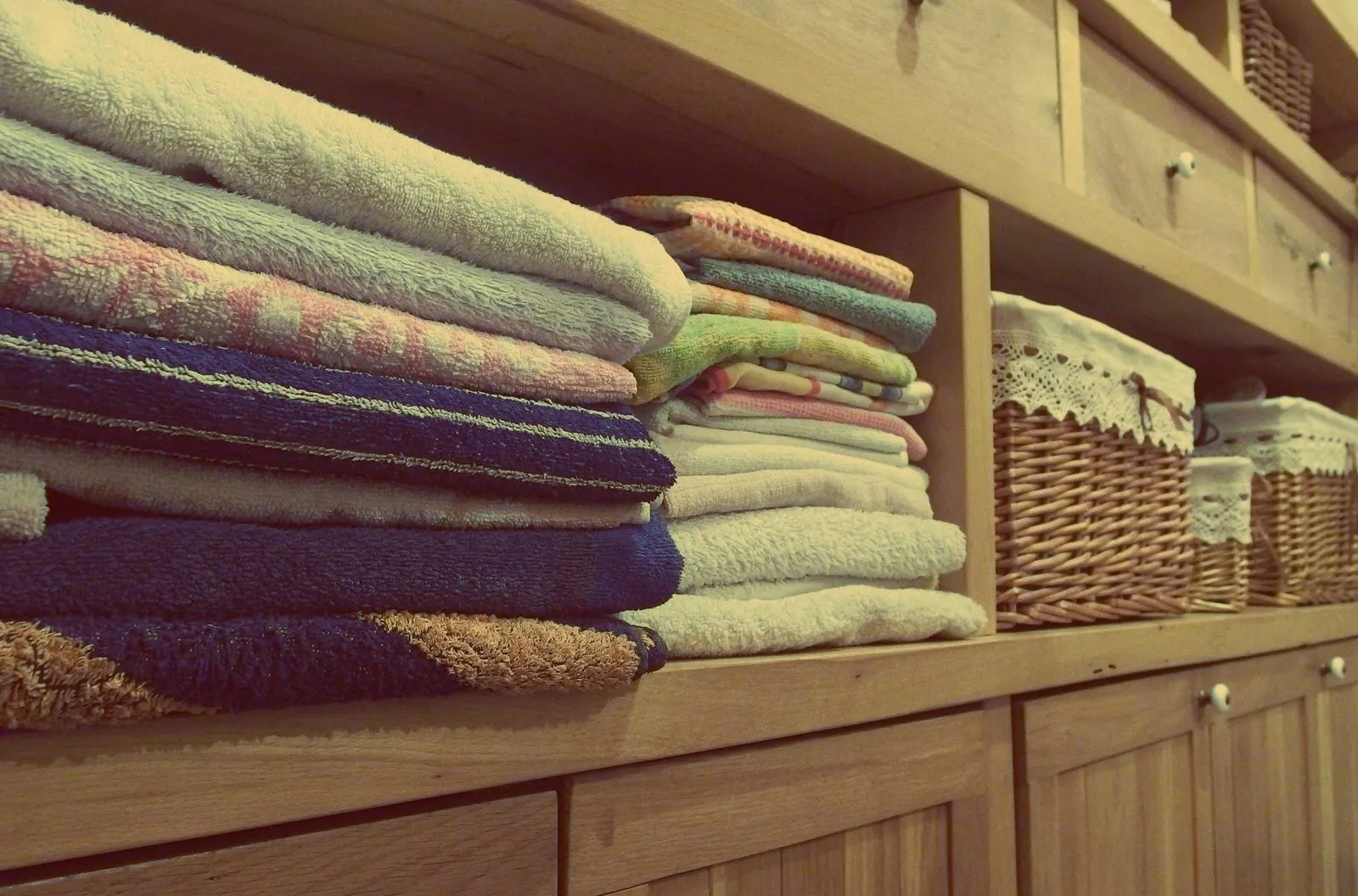
Open the linen closet and it is a guessing game. A fitted sheet is folded into a lump the size of a soccer ball, its matching flat sheet is two shelves down under the beach towels, and the pillowcases went missing somewhere around March. Meanwhile the towel stack is leaning so far it topples the second anyone pulls one from the bottom. Nobody set out to build this. It happened one rushed laundry day at a time, each set shoved wherever there was a gap.
The closet is not too small for what it holds. It is undivided. A linen closet with one deep shelf and no plan will always end up as a pile, no matter how many times you refold it. The fix is a shelf system with three parts: sheet sets folded into single self-contained bundles, shelves assigned to specific categories, and labels that tell every household member exactly where each bundle goes back.
Pull everything out and sort into piles
Before any shelf gets reorganized, empty it completely. Pull out every sheet, towel, blanket, and stray pillowcase and lay it on the bed or the floor. This step is what makes the real inventory visible — most linen closets are storing two or three more sheet sets than the household actually uses, plus a stack of towels that includes the frayed ones nobody wants but nobody threw out.
Sort into five piles: bed sheets by size, bath towels, hand towels and washcloths, blankets or extra bedding, and a “toss or donate” pile for anything stained, thin enough to see through, or a size that no longer matches a bed in the house. A standard linen closet holds two sets per bed comfortably — one on the bed, one in rotation. A third backup set is reasonable; a fourth is what causes the pileup. Donate the rest before anything goes back on a shelf.
Fold every sheet set into one bundle
This is the single change that stops sets from splitting apart. Instead of folding a fitted sheet, flat sheet, and two pillowcases into separate flat stacks, fold the flat sheet and pillowcases into neat rectangles, then fold the fitted sheet around all of them like a pouch, or tuck the whole folded stack inside one pillowcase.
A queen sheet set folded this way lands around 12 by 9 by 4 inches — close to a hardcover book, which is what makes it easy to shelve upright like one. Every piece now moves as a single unit. Pull the bundle for the guest bed and the pillowcases come with it automatically, because they were never separate objects on the shelf. Mark each bundle’s edge with the size (twin, full, queen, king) so you are not unfolding one at 11 p.m. to check.
Zone the shelves top to bottom
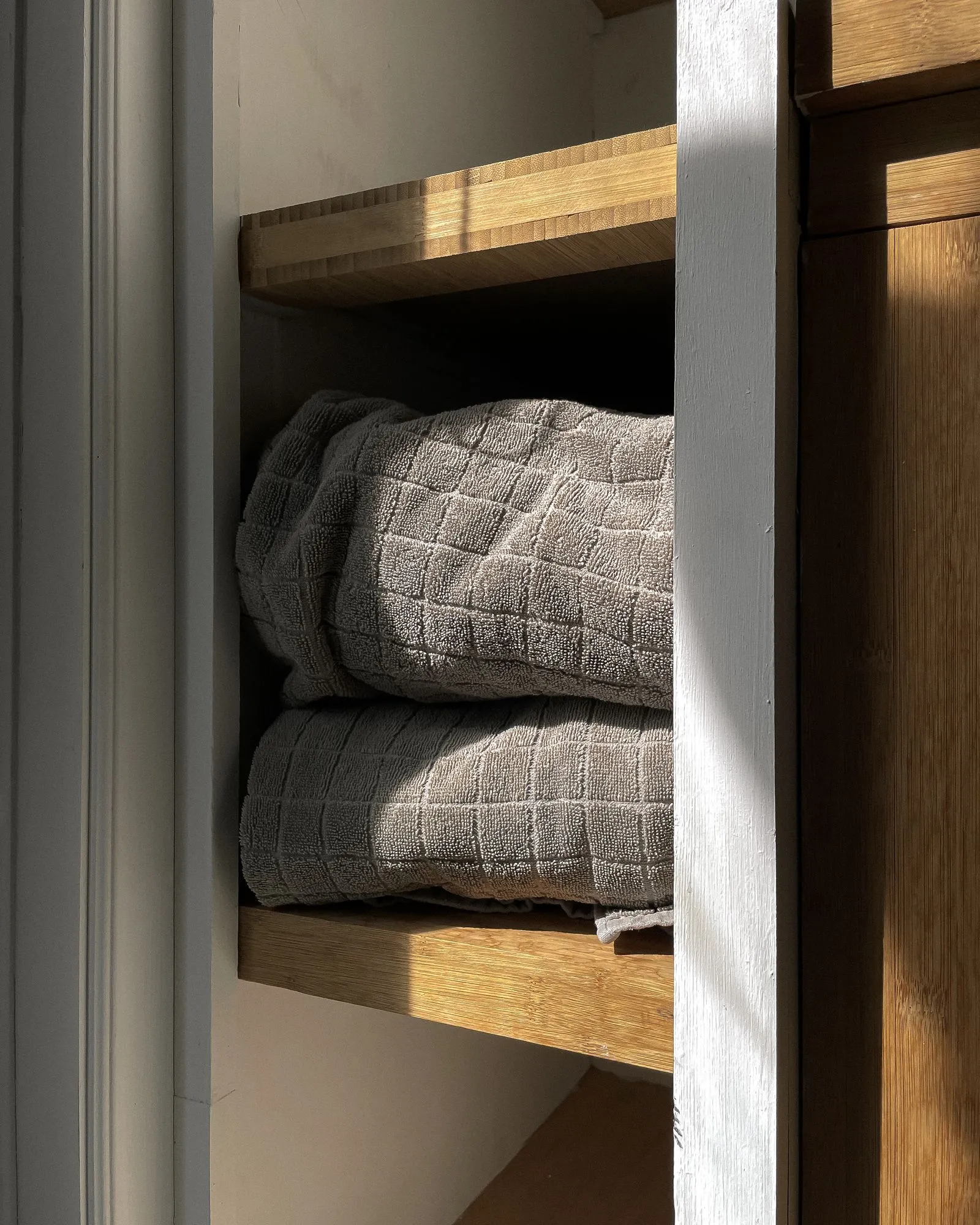
Once the sheet sets are bundled, the shelves need a job description. A typical linen closet has four or five shelves spaced 12 to 14 inches apart, and each one should hold exactly one category, not a mix.
Top shelf: the least-used items — spare blankets, seasonal bedding, or the guest set that only comes out a few times a year. Reaching this shelf takes a step stool anyway, so it should hold what you touch least.
Middle shelves, eye to chest height: the everyday rotation. Sheet bundles for every bed in the house, organized by size left to right, and the bath towel stack. This is prime real estate because it is used daily, so nothing here should require digging.
Lower shelf: hand towels, washcloths, and bath mats — items pulled out and refolded often enough that a low shelf saves the reach.
Floor, if there is one: bulky items only — a spare comforter in a zippered bag or an overflow towel bin. Never loose stacks directly on the floor, where they pick up dust and get kicked out of place.
Keeping each shelf to one category means a glance tells you whether something is running low, instead of having to move six unrelated items aside to check.
Stack towels so they can’t topple
A leaning towel stack is almost always a folding problem, not a shelf problem. Folding a bath towel in thirds lengthwise, then in thirds again, produces a flat rectangle roughly 9 by 13 inches that stacks squarely instead of the rounded, uneven fold most people default to.
Cap every stack at five or six towels. Beyond that height, the stack’s center of gravity shifts high enough that pulling from anywhere but the top makes the whole pile lean. If a shelf needs to hold more than six towels’ worth, split them into two shorter stacks side by side rather than one tall one — two stable stacks of five beat one wobbling stack of ten every time. When there is no linen closet at all, the towels have to live in the bathroom instead, and our guide to towel storage for small bathrooms covers the ladder-shelf and over-door options that work there.
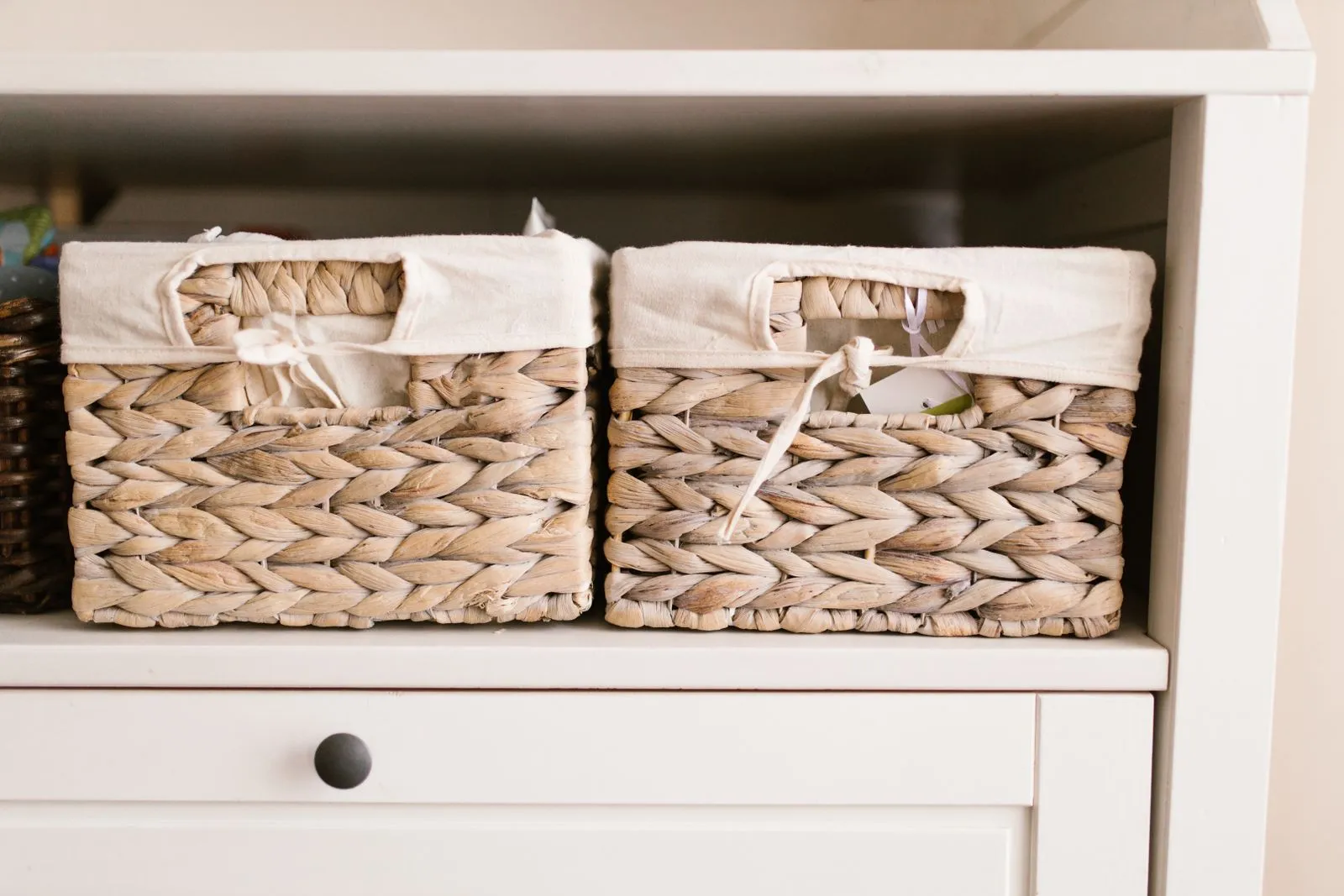
For a shelf that gets touched constantly, like the everyday bath towel shelf, a bin or basket that towels stand up in — rolled rather than flat-stacked — solves the toppling problem completely, since a fallen roll just tips sideways instead of sliding the whole stack forward.
Label every zone, not just the bins
Labels only work if they answer the question someone actually has standing at the closet: which shelf, which stack, which size. A label on the shelf edge itself — not just on a bin — means the answer is visible before anything gets touched.
Keep the wording to two or three words: “Queen Sheets,” “Bath Towels,” “Guest Bedding.” A basic label maker running 15 to 25 dollars prints clean text that holds up better than handwriting on painter’s tape, though tape and a marker work fine as a starting point. Color-coding helps in a shared closet — a blue dot for the primary bedroom’s sheets, a green dot for the kids’ room — so a family member who cannot remember which shelf is which can still match a color from memory.
Label the front edge of the shelf itself, at the height where the category starts, not just the closest bin. That way the system survives even if bins get swapped out or reorganized later, because the shelf still tells you what belongs there.
Give every household member a spot they can maintain
A linen closet organized only by the person who built it falls apart within a month, because everyone else in the house is guessing. Assign zones people can actually remember: one shelf area per bedroom rather than by fabric type, so a kid old enough to change their own sheets can find and return the right bundle without help.
If towels are shared across a household, keep a small reserve — one bundle per bed size, clearly labeled “spare” — that is off-limits for everyday use. That reserve is what prevents someone from raiding the guest set the night before company arrives because the everyday stack ran short.
The two-minute reset that keeps it working
A labeled, zoned closet stays that way because of a habit, not because the labels are permanent. After doing laundry, take two minutes to put sheet sets back as full bundles instead of separate flat pieces, restack towels to the fold line instead of jamming them in sideways, and check whether any zone has drifted below its label — a bath towel stack down to two, a sheet size missing its shelf spot entirely.
Do that after every laundry load and the mismatched-sheet problem disappears for good: every set stays together because it was folded as one bundle from the start, every stack stays upright because it never grew past six, and every family member can find what they need because the shelf, not just the closet, tells them where to look. For the days when the closet itself is the obstacle — no shelves at all, or a cramped reach-in that fights any system — the shelf-divider and bin layouts in our guide to small closet organization create the physical space this system needs, and the swap-and-store approach in our seasonal storage bin guide handles the bedding that only comes out twice a year.