Linen and Towel Storage Ideas for Small Bathrooms
Clean towels come out of the dryer and land wherever there is room: on top of the toilet tank, stacked on the closed lid, balanced on the edge of the tub. There is no linen closet down the hall to hold them, so they migrate to whatever flat surface is closest to the bathroom door. Within a week the stack has slid sideways, a towel has fallen behind the toilet, and the room looks cluttered even right after cleaning.
This is not a folding problem. It is a real estate problem: towels need a fixed, dedicated spot the same way toothbrushes and toilet paper do, and a small bathroom without a closet was not built with one. The fix is to create that spot using vertical space the room already has, then build a small system around it so towels always go back to the same place.
Measure your dead space before you buy anything
Before shopping for shelving, walk the bathroom and note every stretch of unused wall space taller than 24 inches: beside the toilet, above the door, or any blank wall next to the tub. Measure the width and height of each spot with a tape measure.
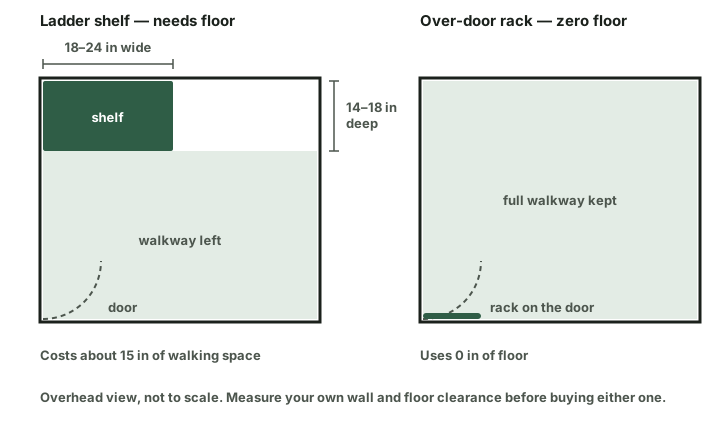
Most freestanding ladder shelves need a footprint of about 18 to 24 inches wide by 14 to 18 inches deep, so check floor clearance too if the piece will stand rather than mount. If nothing on the floor works because the room is too narrow to lose 15 inches of walking space, the back of the door becomes the answer instead, since it uses zero floor footprint. Knowing which of these two you have room for before you shop saves a return trip.
A ladder shelf turns a blank wall into a linen closet
A ladder shelf, sometimes called a leaning shelf, is one of the few pieces of furniture that adds real storage without eating into floor space in any meaningful way. It leans against the wall at a slight angle, usually 15 to 20 degrees, and needs only the footprint of a single dining chair.
Standard models run 16 to 20 inches wide with four or five shelves spaced 10 to 12 inches apart, enough depth for two to three folded bath towels stacked flat per shelf. Reserve the top shelf or two, which are shallower and harder to reach, for lighter items like washcloths. Keep the bottom two shelves, deepest and sturdiest, for the towels used daily. Most ladder shelves hold 15 to 20 pounds per shelf, enough for a stack of four to six towels.
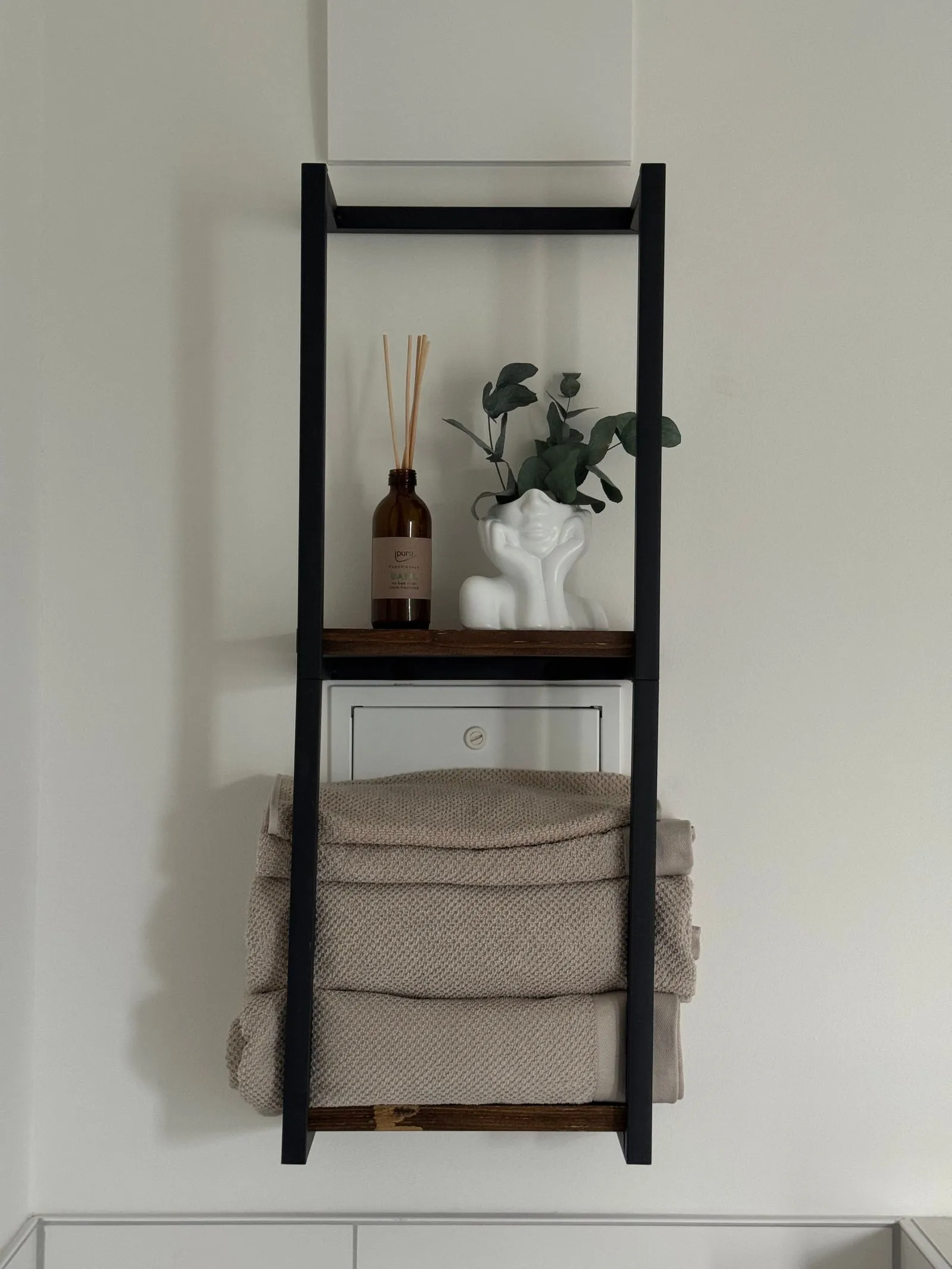
Place the shelf within arm’s reach of the shower or tub, not across the room, so grabbing a towel does not mean dripping across the floor first. If the bathroom is too narrow for even a slim ladder shelf, a single 24-inch floating shelf mounted 60 inches up the wall does a smaller version of the same job for a fraction of the footprint.
An over-door rack works when the floor has nothing to give
If there is no floor space to spare, even 15 inches of it, the back of the bathroom door is the next best option. An over-door rack hooks over the top of a standard interior door, almost always 1.375 to 1.75 inches thick, and needs no drilling.
Look for a rack rated to hold at least 20 pounds, since a fully loaded rack with three or four folded towels can approach that weight. Bar-style racks with two or three horizontal rungs work best for folded towels laid flat; hook-style racks work better for towels hung to dry after use. A hybrid rack with a bar for folded backstock and hooks for the towel currently in rotation solves both problems at once.
On the hook side, Umbra’s Estique over-the-door organizer is a useful reference for what to look for: 14 pegs on a panel 14.25 inches wide by 23.75 inches tall, rated 5 pounds per hook, with wooden balls on the peg ends so a looped towel comes off without snagging. It is listed to fit doors up to 1.5 inches thick, which covers the standard 1 3/8 inch door but not the thick end of the range above, so measure the door edge before ordering anything that hooks over it.
One caveat: a loaded rack changes how the door swings and can knock against the wall. Test it with the door fully open and closed before committing towels to it, and skip this option on a door that gets slammed, since repeated impact eventually bends cheaper racks.
Fold to the shelf depth, not the towel’s natural size
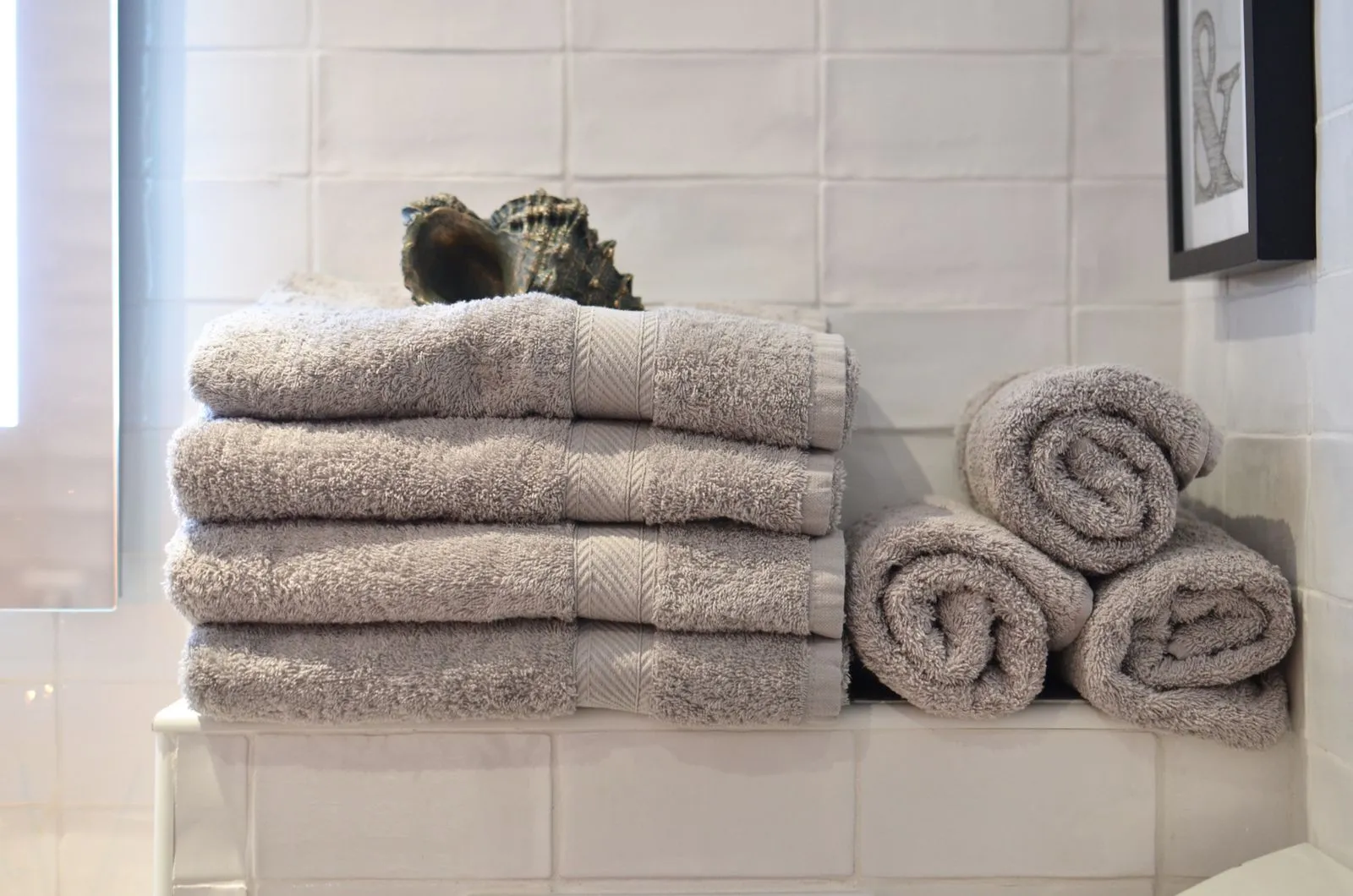
A shelf that is too shallow for the towel’s folded size is the single most common reason a new system falls apart within a month. A standard bath towel, folded in half lengthwise and then in thirds, measures roughly 9 by 13 inches. If the shelf is only 10 inches deep, that folded towel overhangs the edge, catches on anything that brushes past, and slides off within days.
Match the fold to the shelf. On a shallow shelf, roll towels into a cylinder about 5 inches across instead of folding into a flat rectangle; rolled towels also make it easier to see how many are left at a glance. On a deeper shelf, the traditional flat fold works fine and stacks four towels in the height two rolled towels would take.
Hand towels and washcloths should get their own fold, in quarters down to about 6 by 8 inches, since mixing towel sizes on one shelf is what makes a stack look sloppy even when everything is technically folded.
Baskets keep a folded stack from becoming a leaning tower
Even a well-measured shelf benefits from a container, because a bare stack of towels has nothing holding its sides in and will slowly lean and slide every time one towel gets pulled from the middle. A basket about 12 by 16 inches and 6 to 8 inches deep holds four to six folded bath towels while keeping the edges contained.
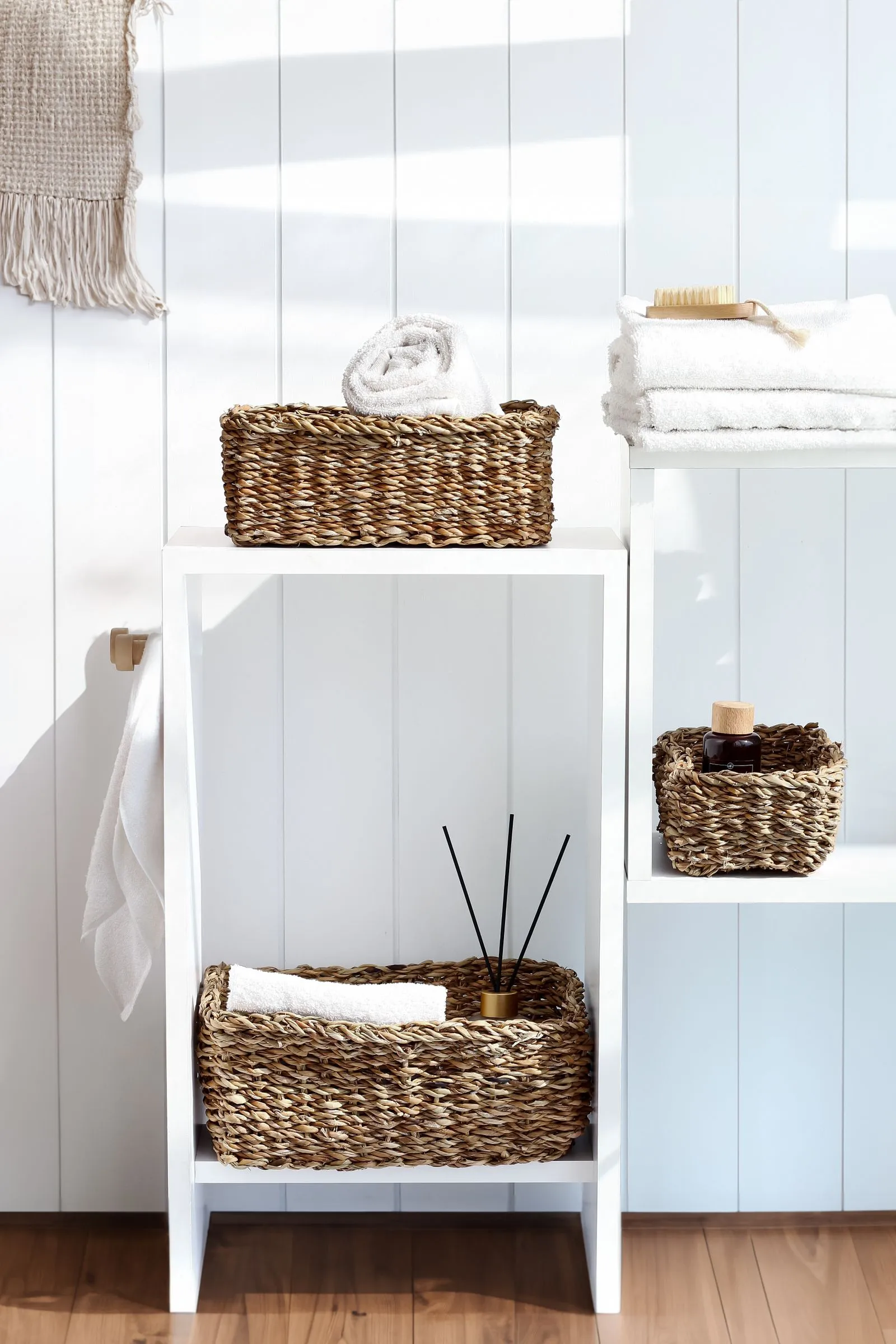
Assign one basket per category instead of one basket for everything: bath towels in one, hand towels and washcloths in a second. A single basket holding every size turns into a dig-through-and-find-it drawer the first time someone is in a hurry, which defeats the reason for adding a basket at all. Open-weave baskets also let damp air escape faster than a solid bin, which matters in a room that stays humid most days.
Zone by how often a towel gets touched
Once the shelf or rack and its baskets are in place, decide what actually lives there. Not every towel in the house needs to be in the bathroom at all times, and cramming all of them onto one small shelf is what causes overflow.
Keep only the towels in active weekly rotation: one bath towel per household member plus one or two spares, and the hand towel currently in use. Store true backstock, extra sets, guest towels used twice a year, somewhere else entirely: a bedroom closet shelf or a bin under a bed. A bathroom shelf trying to hold a full linen inventory for four people will always look crowded, no matter how well it is organized. For more ways to reclaim awkward corners in a tight layout, see our guide to small bathroom storage ideas.
The habit that keeps towels off the toilet tank for good
A shelf or rack only solves the problem on the day it goes up. What keeps a towel off the toilet tank six months later is a two-second habit: every folded towel goes straight from the dryer to its shelf slot, never to a temporary surface “for now.” The moment one towel skips that step and lands on the tank, a second one will too, and within a week the old scattering is back.
Do a 30-second check once a week, on laundry day, when towels come out of the dryer. Refold anything that has gone crooked, straighten the basket if it has started to lean, and confirm the backstock bin still has room before more towels get added to it. If the over-door rack or ladder shelf ever starts to feel too full, that is a signal to cull a worn towel rather than to squeeze one more in. A dedicated towel shelf keeps a small bathroom looking tidy, and it stays that way not because of the furniture but because towels never get the chance to land anywhere else. If the rest of the room still feels cramped once towels have a home, our guide to over-door organizers for renters covers how to put the same door to work for more than just towels.