10 Over-the-Door Organizer Ideas for Small Rentals
Small rentals run out of storage in the same order every time. The coat closet fills up first, then the pantry shelves get shallow and crowded, then the bathroom cabinet stops closing all the way. Meanwhile every door in the apartment sits there flat and unused, holding nothing but its own hinges.
An over-the-door organizer fixes that without a single tool. It hangs on hooks that rest over the top edge of the door, so there is nothing to drill, no landlord to ask, and no deposit at risk. What you get in exchange is a full extra shelf of storage from a door you already own. Below are 10 ways to put that shelf to work, door by door, plus the sizing details that keep the rack from rattling or scraping the frame.
Pantry door for spices and snacks
The pantry door is the highest-traffic option in most kitchens, which is exactly why it earns the widest rack. A shelved wire or canvas organizer with 4 to 6 tiers turns the door into overflow storage for the small stuff that gets lost on deep shelves.
- Spice packets and seasoning envelopes. Taco seasoning, gravy mixes, and bouillon packets are flat and easy to lose behind cans. A shallow pocket tier keeps every packet visible and upright.
- Snack bags and granola bars. Kids and adults both raid the pantry for grab-and-go snacks. A mid-height pocket at eye level turns the door into the actual snack drawer, so nobody has to dig through the shelves to find one.
If the pantry door is the one place in the home where this trick pays off most, our full guide to pantry door organizer goes deep on rack widths, spice zoning, and when a shelf beats a door rack. Consider this article the map of every other door in the house — the pantry door already has its own dedicated playbook.
Bathroom door for toiletries and hair tools
Bathroom cabinets in rentals tend to be small, shallow, and shared by everyone in the unit. The back of the bathroom door has more square footage than most of the drawers combined.
- Travel-size toiletries and backup bottles. Extra shampoo, lotion, and travel bottles bought in bulk don’t need cabinet space. A clear-pocket organizer keeps backstock visible so nobody buys a third bottle of conditioner that’s already in the house.
- Hair tools with a heat-safe pocket. Straighteners and curling irons are awkward to store because they’re long, hot right after use, and dangerous left on the counter. A rack with a heat-resistant pocket lets you hang the tool still warm, cord included, instead of waiting for it to cool on a towel.
Bedroom closet door for shoes and accessories
The inside of a closet door is dead space in almost every rental bedroom. A hanging shoe organizer with 12 to 24 pockets claims that space without touching a single closet rod.
- Everyday shoes at eye level. Sneakers, flats, and sandals worn weekly go in the top few rows where they’re easiest to reach, instead of getting kicked into a pile at the bottom of the closet.
- Small accessories in the lower or side pockets. Sunglasses, belts, scarves, and jewelry pouches are the items that vanish into drawers. A dedicated pocket for each keeps them visible and grabbable on the way out the door.
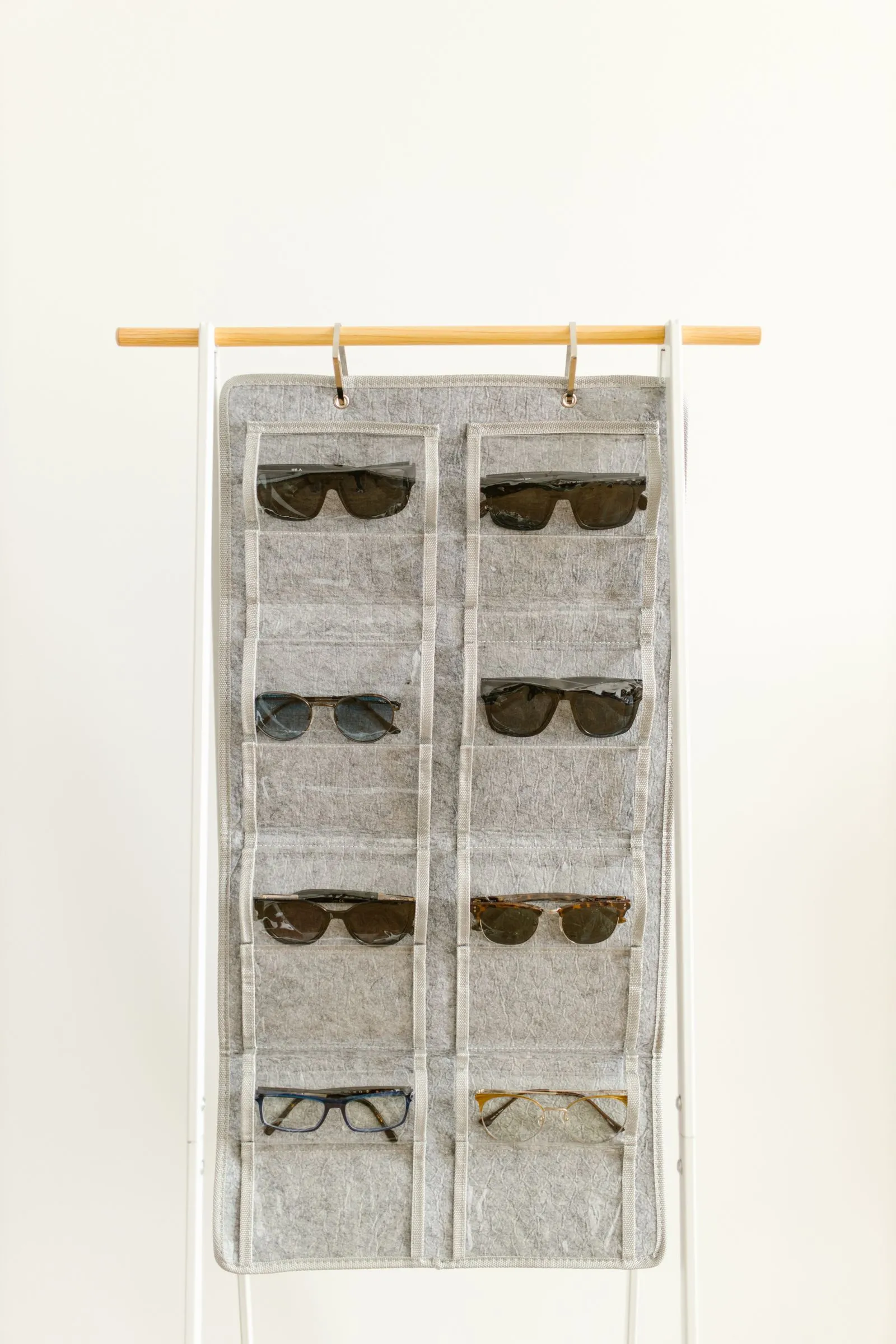
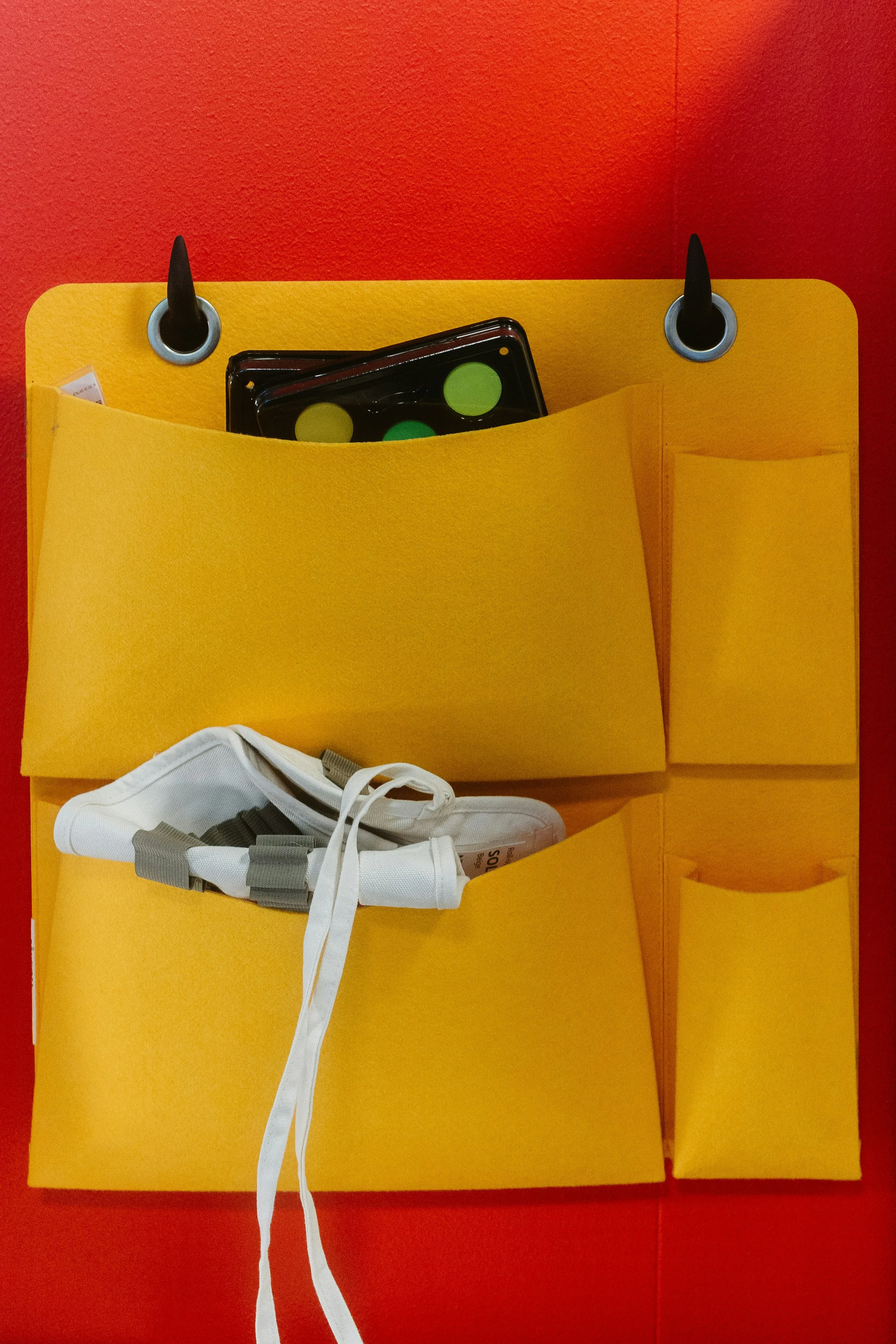
A rack like the one above proves the point: once every pocket has one job, the whole closet door becomes a sorted drawer you can see into at a glance instead of a flat surface you ignore.
Coat closet door for cleaning supplies
Coat closets in small apartments usually have a few inches of dead space below the coats and above the shoes. The back of the closet door is worth more than that gap, especially for cleaning gear that otherwise migrates from room to room.
- Lint rollers, dusters, and microfiber cloths. These are light enough for almost any hook rack and used often enough that they deserve a spot by the door instead of buried in a cabinet.
- A small caddy for glass cleaner and all-purpose spray. A rack with a basket or bin attachment holds bottles upright, so cleaning day starts with opening one door instead of searching three rooms.
Laundry door and kids’ room door for the rest
Two more doors round out the list, and both solve a different kind of clutter.
- Laundry door for stain treaters and dryer sheets. A small pocket organizer on the laundry closet door keeps stain pens, mesh bags, and a box of dryer sheets within arm’s reach of the machine instead of on top of it, where they get knocked into the lint trap.
- Kids’ room door for art supplies and small toys. Clear-pocket organizers sized for crayons, markers, and small toy bins turn the door into a low-effort toy rotation system. Kids can see what’s in each pocket, which cuts down on the dump-everything-on-the-floor search.
Sizing and fit: get this right before you buy
An over-the-door rack that doesn’t fit the door is worse than no rack at all — it bangs against the frame, blocks the door from closing, or falls off within a week. A few measurements up front prevent all three problems.
Door thickness. Interior doors typically run 1 3/8 inches thick; exterior and some solid-core interior doors run 1 3/4 inches. Most racks list a compatible thickness range, usually 1 to 2 inches, so check the door before ordering rather than after the box arrives.
Clearance behind the door. Measure how far the door swings open and whether it clears a wall, another door, or furniture behind it. A rack adds 2 to 4 inches of depth to the door, and a door that used to swing fully open may now stop short.
Felt pads to stop rattling. The metal hooks that hang over the door edge are the single biggest source of noise and paint scuffs. A few self-adhesive felt pads, usually sold in packs for a couple of dollars, go on the inside of each hook where it contacts the door and stop the rattle completely.
Weight limits. Most over-the-door racks are rated for a total load somewhere between 15 and 40 pounds, spread across the whole rack rather than concentrated in one pocket. Check the rating before loading up the top pocket with canned goods or a stack of shoes — an overloaded top pocket is what bends the hooks and pulls the whole rack forward.
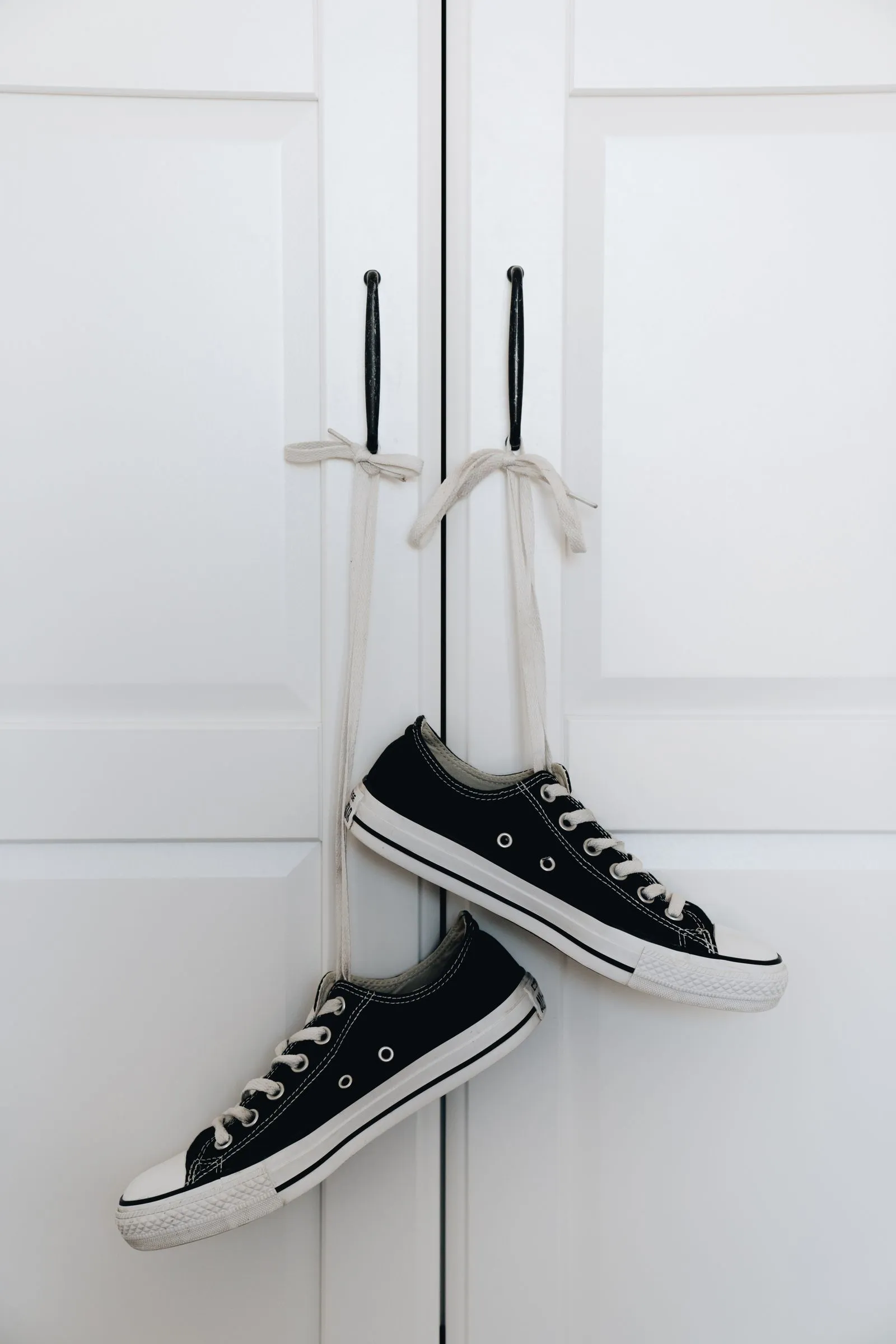
Whichever door you start with, hang the rack empty first and open and close the door a few times before loading it up. That thirty-second test catches a bad fit before anything is stored in it.
The habit that keeps every door pulling its weight
A rack works because someone keeps using it, not because it exists. Once a month, walk past every door rack in the apartment and do a two-minute check: wipe down the pockets, toss anything expired or outgrown, and confirm the hooks are still snug against the door instead of sliding toward one side.
That’s the whole maintenance routine. Skip it and a door rack slowly turns into another catch-all, the same fate that happens to every flat surface in a small apartment. Keep it and the pantry door stays sorted, the closet door keeps shoes off the floor, and every door in the rental keeps doing a shelf’s worth of work without a single screw going into the frame.
If wall space is more your style than door space, our guide to damage-free wall storage for renters covers the hook-and-strip options that do the same job on open wall instead of door panels.