Pantry Door Organizer Ideas for Extra Storage Space
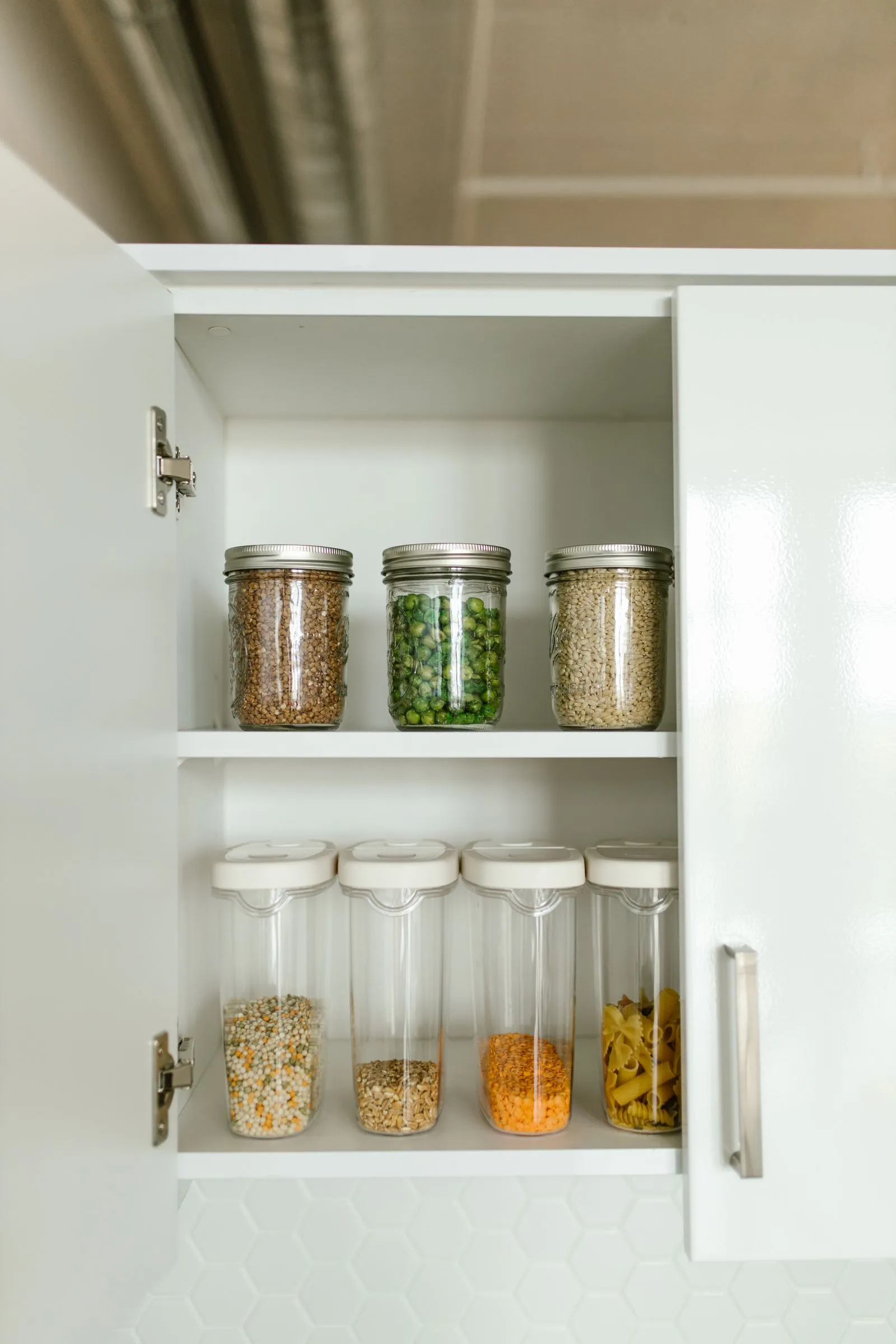
Open most pantries and the shelves are doing all the work while the door does nothing. Spice packets slide behind the pasta, taco seasoning disappears for months, and snack bags get pushed to the back where nobody remembers they exist. Meanwhile the inside of the door sits there flat and empty, closer to your hand than any shelf in the room.
A door-mounted rack turns that wasted panel into a genuine extra shelf. It will not fix a pantry with too much stuff in it, but it does give the small, flat, easy-to-lose items a spot where you can see all of them at once instead of digging.
Measure the door before you buy a rack
Three numbers decide whether a rack fits, and skipping any one of them is how organizers end up back in a box.
Door width and usable height. Most pantry doors run 24 to 32 inches wide. Subtract about 2 inches from each side for hinges and the frame, which leaves 20 to 28 inches of real rack width. Measure floor to the point where the door stops clearing shelving inside, usually 60 to 72 inches, so you know the tallest rack that will not scrape.
Swing clearance behind the door. A loaded rack adds 3 to 5 inches of depth. Open the door fully and measure from the door face to the nearest shelf or wall. If that gap is under 5 inches, a full rack will jam the door before it opens all the way, and you will need a slimmer wire style instead of a deep bin rack.
Door type. A solid wood or hollow-core door with an over-the-door hook rack needs no tools at all, since the rack hangs off the top edge. A door with a full-length mirror or paneled inset has less flat backing surface, so check that the rack’s frame actually contacts wood and not just trim.
Write the width and clearance numbers down. A rack that measures 24 inches wide on the package can still be too tall for a 66-inch clearance once you add the mounting bracket at the top.
Over-the-door wire racks hold the most for the least
A tiered wire rack that hooks over the top of the door is the standard fix, and it earns that spot for a reason. A four- or five-tier version runs about 20 to 35 dollars and needs zero drilling, which matters if you rent.
Each tier holds roughly 15 to 20 small jars or 8 to 10 boxed items, depending on tier depth. Load by weight, not habit: heavier glass spice jars go on the bottom two tiers so the rack’s center of gravity stays low, and lightweight boxed and pouched items go up top where a wobble does not matter.
Leave a half-inch gap between items on each tier. A rack packed edge to edge looks efficient for about a week, then becomes the thing you have to unload three jars from just to reach the one you want.
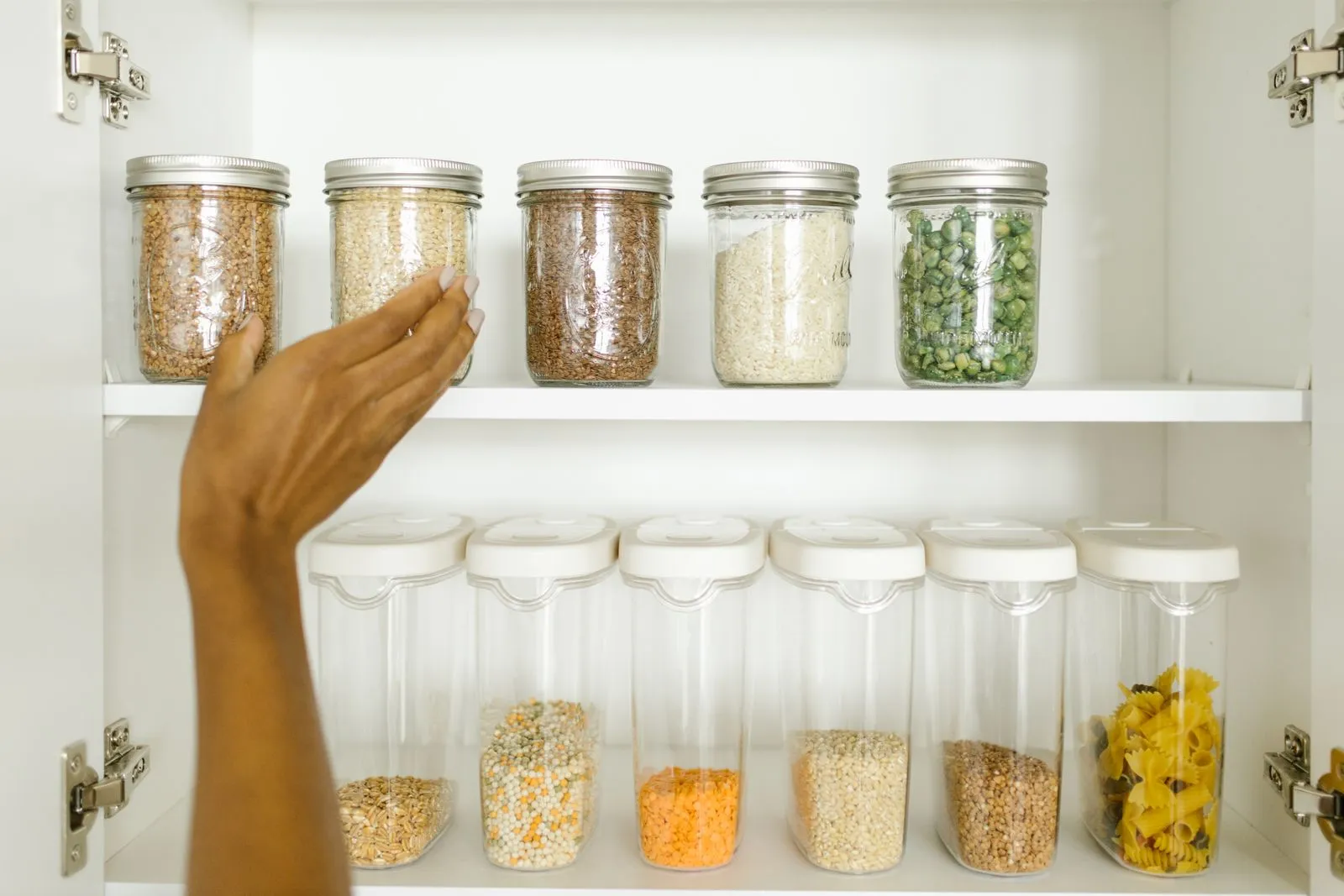
Zone the rack by what you actually reach for
The mistake most people make with a new door rack is filling it in whatever order the items came out of the box. Zone it instead, top to bottom:
- Eye level (tiers 2–3): the seasonings and oils used almost every time you cook — salt, pepper, garlic powder, olive oil.
- Top tier: backup and occasional items — extra vanilla, specialty spices, the cayenne you use twice a year.
- Bottom tier: anything heavy or tall, plus kids’ snacks if you want them within reach without a step stool.
This is the same logic as organizing a spice cabinet, just rotated 90 degrees onto a vertical surface. Group by how often a hand reaches for it, not by category.
A pocket organizer works better for flat, floppy items
Wire racks are built for jars and boxes, but seasoning packets, taco kits, and gravy mix pouches go limp and slide through wire tiers. A canvas or clear-vinyl pocket organizer, the kind sold for shoes, solves that specific problem for 12 to 18 dollars.
Hang it on the same over-the-door hook hardware, or on 3M hooks rated for at least 5 pounds per hook if you want a no-drill mount directly to the door face. Sort packets by meal type in the pockets — taco night, soup mixes, gravy and sauce packets — so a weeknight dinner decision takes one glance instead of a shelf search.
Add labels or the system resets in a month
A door rack with no labels turns back into a junk drawer the first week someone puts something back in the wrong spot. Painter’s tape and a marker cost nothing; a label maker runs about 20 dollars and looks tidier if the rack is visible from the kitchen.
Label the tier, not each individual jar, if the rack rotates stock often — “baking,” “everyday spices,” “backup.” That way restocking does not require reprinting labels every time a brand changes.
What not to hang on the door
Anything breakable near the hinge side. The hinge side of the door moves the least, but a rack mounted too close to it can catch on the frame when the door swings past 90 degrees. Test the full swing before loading anything glass.
Full-size bottles and cans. Standard door racks are built for spice-jar depth, roughly 2 to 3 inches. A can of beans or a large oil bottle will not fit the tier gap and can tip the whole rack forward.
More than the rack’s rated weight. Most over-the-door racks are rated for 15 to 25 pounds total, spread across all tiers. Filled with glass spice jars, that limit arrives faster than it looks — count roughly 0.3 to 0.5 pounds per jar and add it up before you finish loading.
A weekend fix, not a renovation
Buy one rack sized to your measured clearance, mount it in under ten minutes with no tools, and load it in this order: heavy jars low, backups high, packets in a separate pocket organizer if you added one. Live with the zoning for two weeks and move anything that never gets touched down to the bottom tier or out of the rack entirely.
Once the door is doing its share, the shelves behind it have room to breathe. If the rest of the pantry still feels tight, the canister sizing and shelf spacing in our guide to small pantry organization picks up from here. And if a kitchen drawer is the next problem area, the divider math in small kitchen drawer organization uses the same reach-frequency zoning as the rack above.