Bathroom Counter Organization Ideas for a Clutter-Free Sink
A shared bathroom counter fills up the same way every time. One toothbrush becomes two, a bottle of lotion sits next to a half-used bottle of the last lotion nobody threw out, and by the time you notice, there is no clear space left to actually set anything down. Wiping the counter means picking up fifteen individual items first.
Most bathroom vanity counters give you 24 to 36 inches of usable surface around the sink basin, and that space has to serve everyone who uses the bathroom. The fix is not fewer products, necessarily. It is containing what stays out into defined groups so the counter reads as organized instead of covered.
Give each person a tray, not a shelf
The single biggest change for a shared bathroom is switching from “everyone’s stuff mixed together” to one tray per person. A tray, 8 to 12 inches wide, corrals one person’s daily items — toothbrush, face wash, moisturizer — into a single unit that can be lifted and moved for cleaning in one motion instead of item by item.
This does two things at once. It keeps each person’s clutter from spreading across the whole counter, and it makes the daily wipe-down faster because you are moving one tray, not eight bottles.
Two trays fit comfortably on a 30-inch counter with room left in the middle for actual sink use. If the counter is narrower than that, use a single shared tray and accept that daily items rotate through it rather than each person claiming permanent territory.
Group by category inside each tray
Within a tray, loose grouping still beats a jumble. A small dish or short glass inside the tray for cotton rounds and swabs keeps the smallest items from sliding to the tray’s edges. Bottles stand at the back, smaller items in front, so nothing is hidden behind a taller bottle.
Skincare routines with several steps benefit from a tiered tray or a small caddy insert, since a five-step routine laid flat eats far more counter footprint than the same five items stacked two levels.

Move backups off the counter entirely
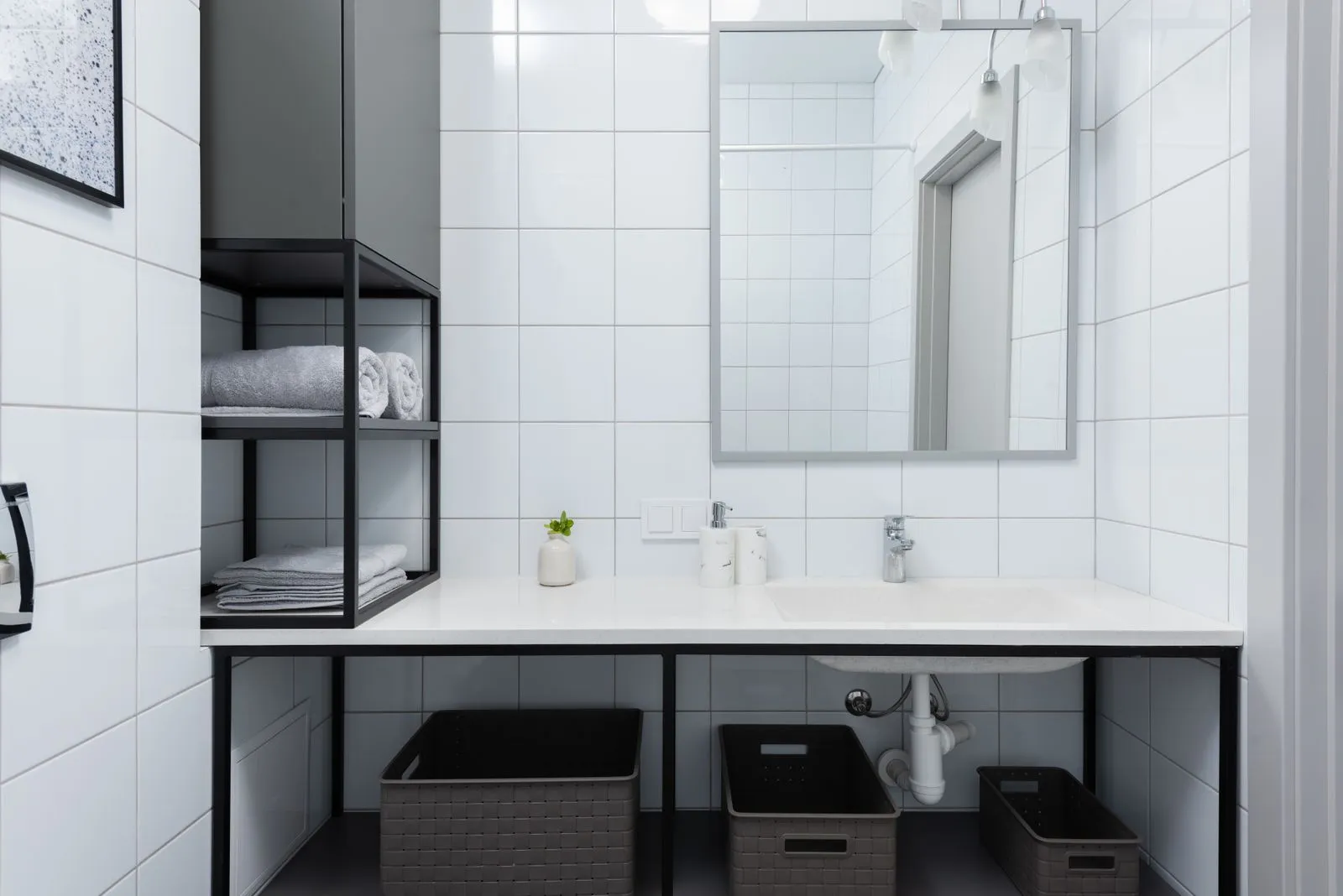
Backup bottles — the spare shampoo, the extra bar of soap, the toothpaste bought two-for-one — do not need counter space at all. They belong in the cabinet or a bin under the sink, brought out only when the current bottle runs dry.
This single habit prevents the most common failure mode: a counter that looks organized on move-in day and is covered again within a month because every backup purchase adds a new item to the surface instead of the storage below it.
A vertical caddy handles what trays cannot
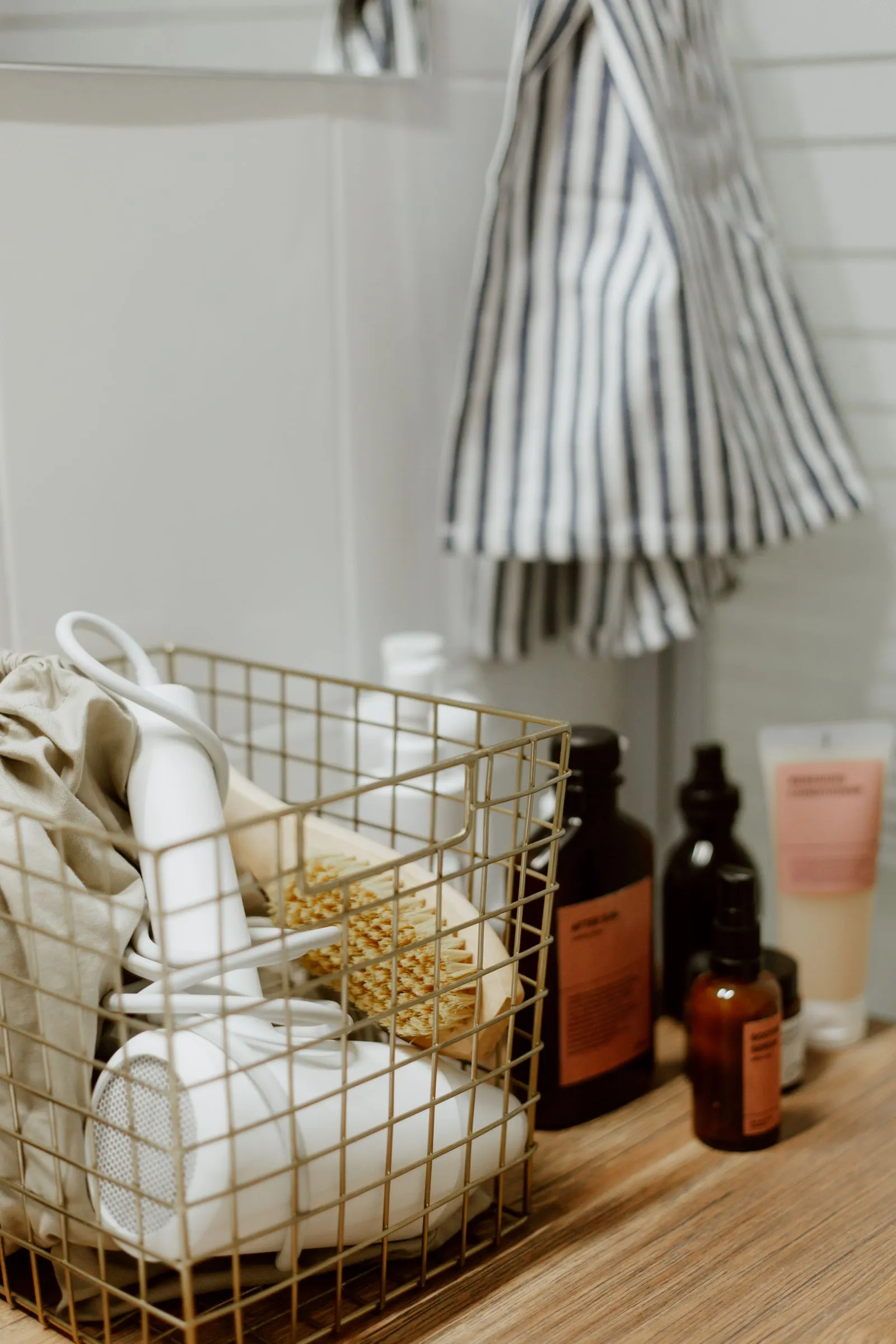
Tall items — hairspray, styling tools, a curling iron that is still warm — do not sit well flat in a tray. A small vertical caddy or a narrow bin, 4 to 6 inches wide, gives those items one upright spot instead of letting them roll across the counter.
For styling tools especially, a heat-safe silicone mat under the caddy protects the counter finish, which matters more in a rental where counter damage can affect a deposit. Hot tools have enough specific requirements that they are worth handling on their own — see our guide to hair tool storage in a small bathroom.
Wall-mounted shelving takes weight off the counter surface
If the counter itself still feels crowded after trays and a caddy, the next move is up, not out. A small floating shelf or a suction-mounted shelf above the counter, 15 to 25 dollars, holds items used daily but not needed at arm’s reach every second — hairbrush, a small plant, a stack of hand towels.
Suction and adhesive-mounted versions avoid drilling into tile, which matters for renters, but confirm the weight rating before loading anything glass onto it. A shelf rated for 5 pounds holding two glass bottles and a ceramic dish is already close to its limit.
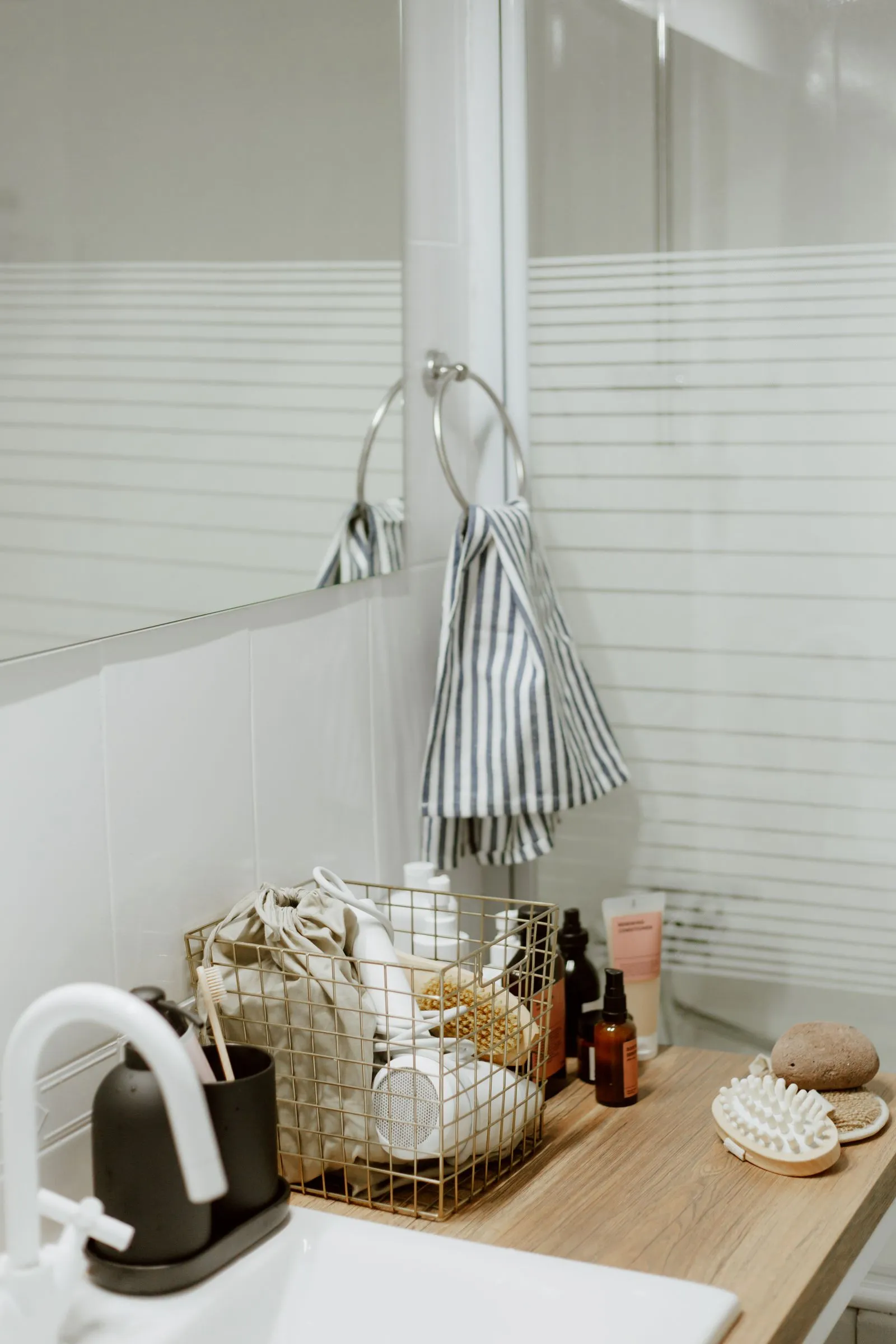
Build a thirty-second daily reset
Organization holds up when it takes almost no effort to maintain. After the last person uses the bathroom each night, a thirty-second pass — cap the toothpaste, wipe the counter around each tray, push anything stray back into its tray — keeps the system from sliding backward.
This works better than a deep clean-and-reset once a week, because a counter that never gets fully chaotic is much faster to tidy than one that has to be rebuilt from scratch.
Mistakes that undo the system
Buying trays before counting products. Measure the counter and count daily items per person first, then size the tray, not the other way around.
Letting backups stay on the counter “for convenience.” Convenience is exactly what turns one backup bottle into five.
Skipping the shelf weight rating. A glass bottle falling off an overloaded adhesive shelf is a worse outcome than the clutter it was meant to fix.
No daily reset habit. Trays and shelves only contain clutter if someone actually puts things back into them each day.
A counter that stays clear
Count what each person keeps out daily, assign one tray per person, and move every backup bottle to the cabinet below. Add a vertical caddy for tall tools and a wall shelf only if the counter still feels crowded after that. The real test is not how it looks on setup day — it is whether the thirty-second reset still works two weeks later.
Once the counter is under control, the cabinet below it usually needs the same treatment. Our guide to small bathroom storage covers the shelves and floor space around this counter setup, and the bin sizing in under-sink bathroom storage handles everything you just moved off the counter into the cabinet.