Under-Sink Bathroom Storage Solutions for Small Cabinets
The cabinet under a bathroom sink looks small from the outside and somehow swallows everything you put in it. A drain pipe splits the space down the middle, the P-trap eats the bottom few inches, and everything else gets stacked on top until you are lying on the floor to find the backup toothpaste.
Bathroom sink cabinets usually run 18 to 24 inches wide and 16 to 20 inches deep, which is not much room to begin with once the plumbing takes its share. The fix is the same one that works for kitchen sinks: stop treating it as one dark box and start treating it as two or three small zones sized to what is actually free.
Measure around the pipe first
Empty the cabinet and take three measurements before buying anything.
- Clear width on each side of the drain. The P-trap is rarely centered, so one side usually has 6 to 10 inches clear and the other has less. Measure both.
- Height under the lowest point of the trap. This is your real ceiling for anything on the cabinet floor, often just 8 to 11 inches in a bathroom vanity.
- Depth to the back wall. Bathroom cabinet doors are often narrower than the cabinet box behind them, so check the opening width, not just the interior.
That last measurement is the one that sends bins back to the store. A tiered organizer that fits the interior can still be too wide to pass through the door opening.
Tiered bins beat one big bin every time
A single deep bin under a bathroom sink becomes a pit almost immediately, because bottles get two and three deep and the ones in back disappear.
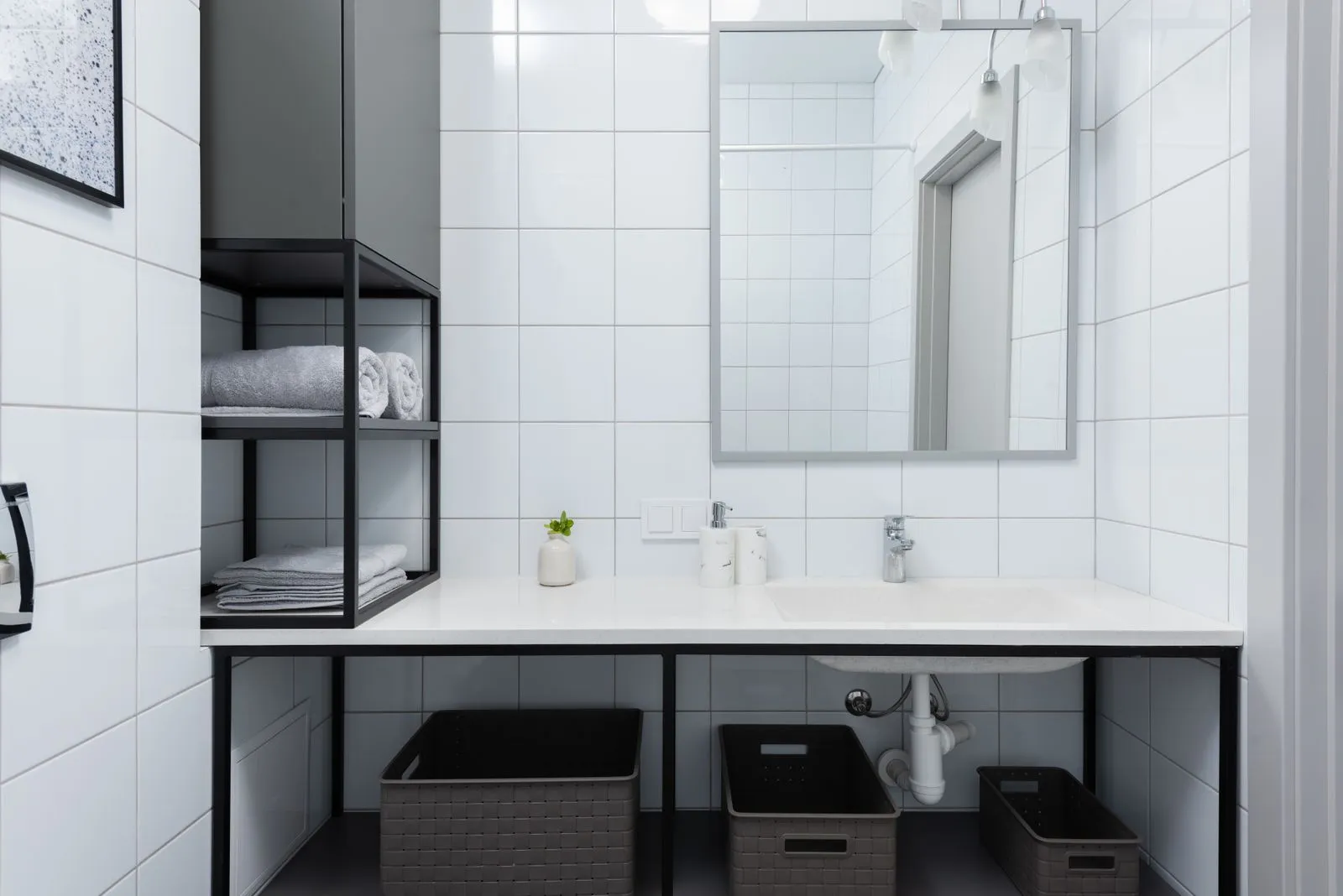
Two- or three-tier stackable bins, sized to the clear width on each side of the trap, fix that by keeping every layer visible from above. Look for bins in the 6 to 9 inch width range so they clear the pipe, and confirm the stacked height fits under your measured ceiling before buying a second tier.
Split the two sides by use. The side you reach with your dominant hand holds daily items — toothpaste backups, floss, cotton rounds. The far side holds occasional items: extra razors, hair tools, cleaning supplies you use once a week.
A slide-out drawer solves the reach problem
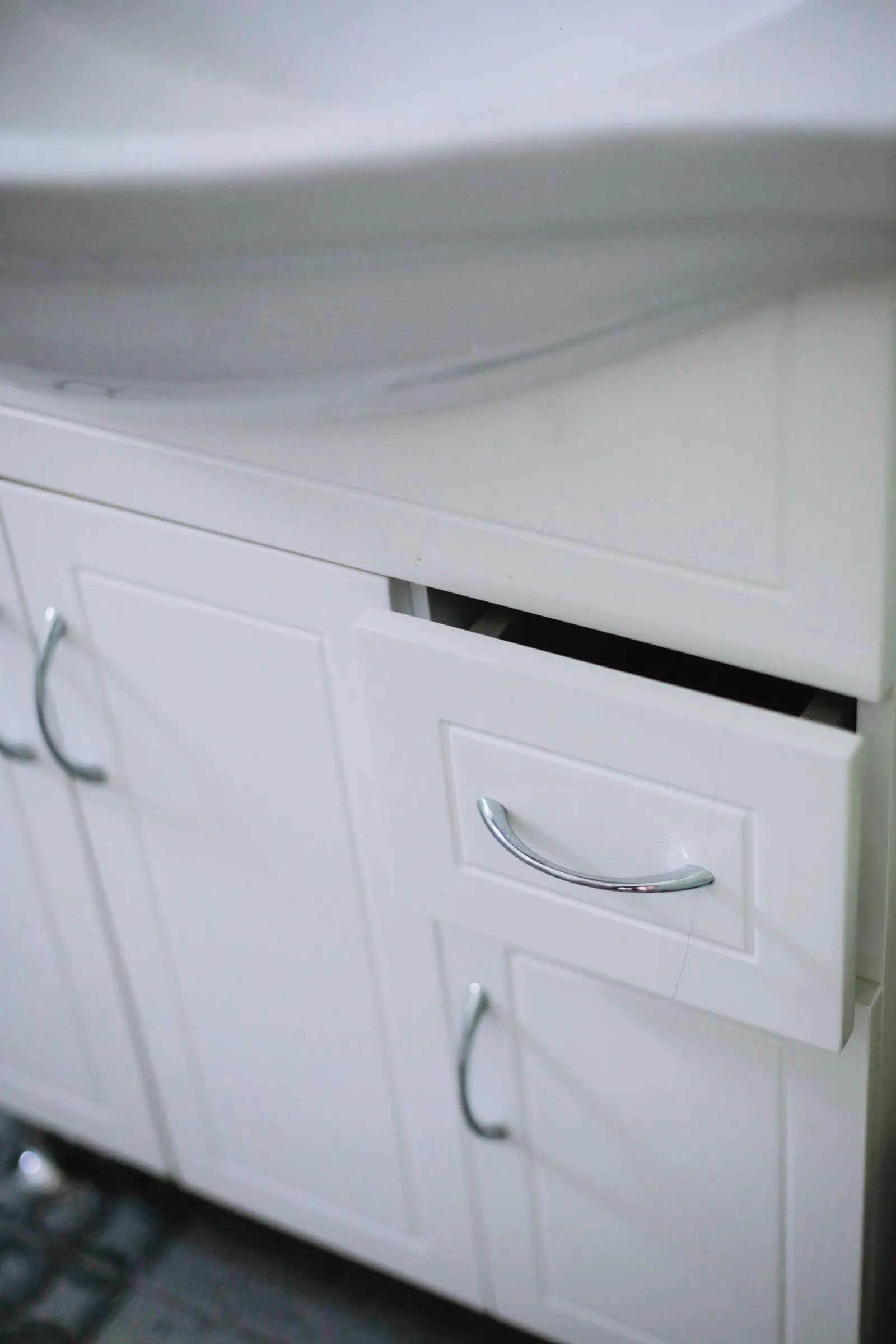
The real annoyance under a bathroom sink is not lack of space, it is lack of reach. A slide-out drawer or pull-out bin on a simple rail brings the back of the cabinet forward instead of making you kneel on tile.
Slide-out drawer kits made for bathroom vanities run about 15 to 30 dollars and mount to the cabinet floor with a few screws, or sit as a freestanding rolling cart if you rent and cannot drill. Either version does the same job: pull, see everything, put it back, done in under ten seconds instead of unloading three bins to reach the fourth.
If you are in a rental and want a zero-tool version, a shallow plastic bin with a lip you can grab and slide manually across a smooth cabinet floor gets most of the benefit for the price of the bin alone.
Baskets do double duty for soft, awkward items
Not everything under the sink is a bottle. Rolled towels, cleaning cloths, and backup toilet paper are soft and shapeless, which means they collapse into gaps between bins and get lost.
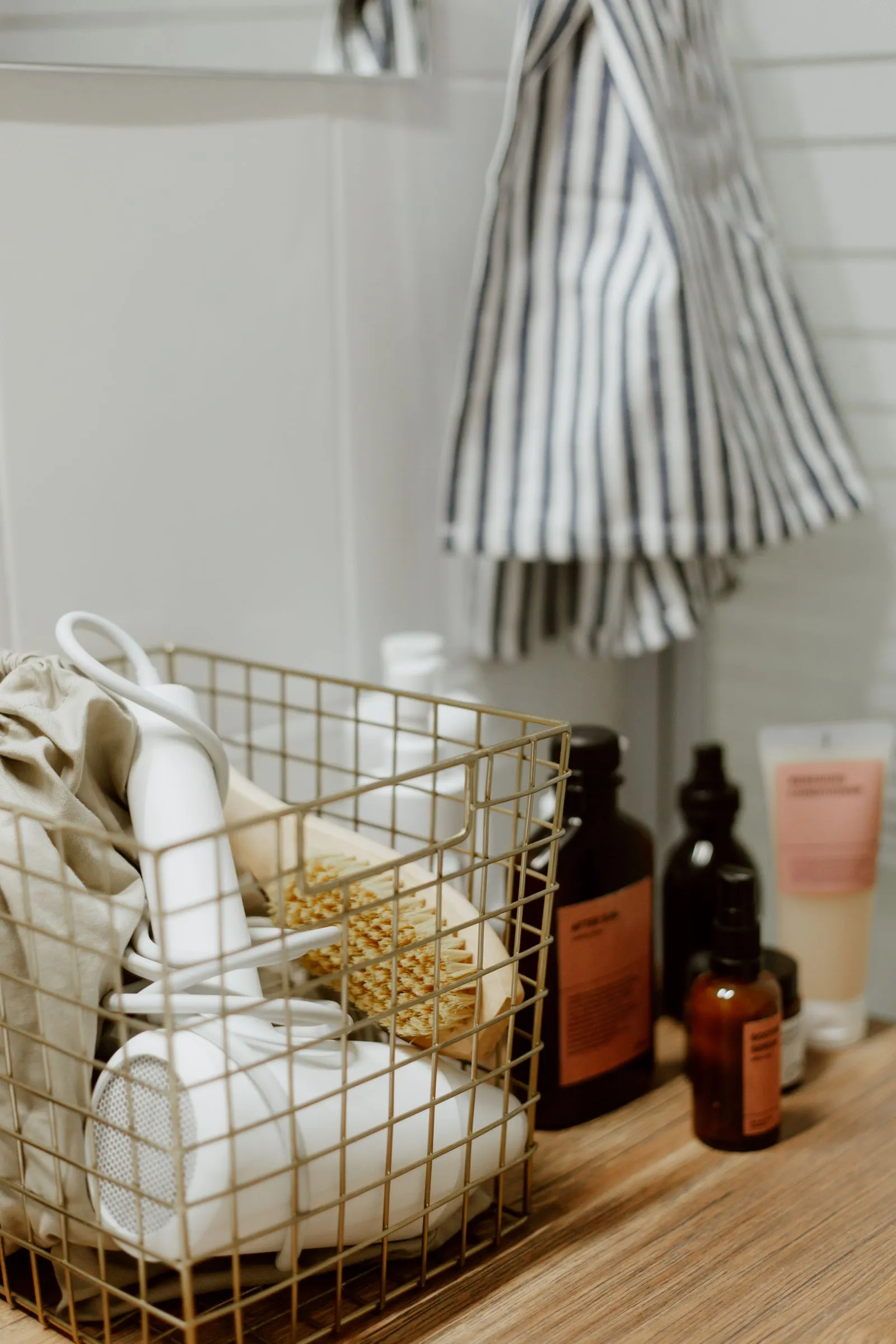
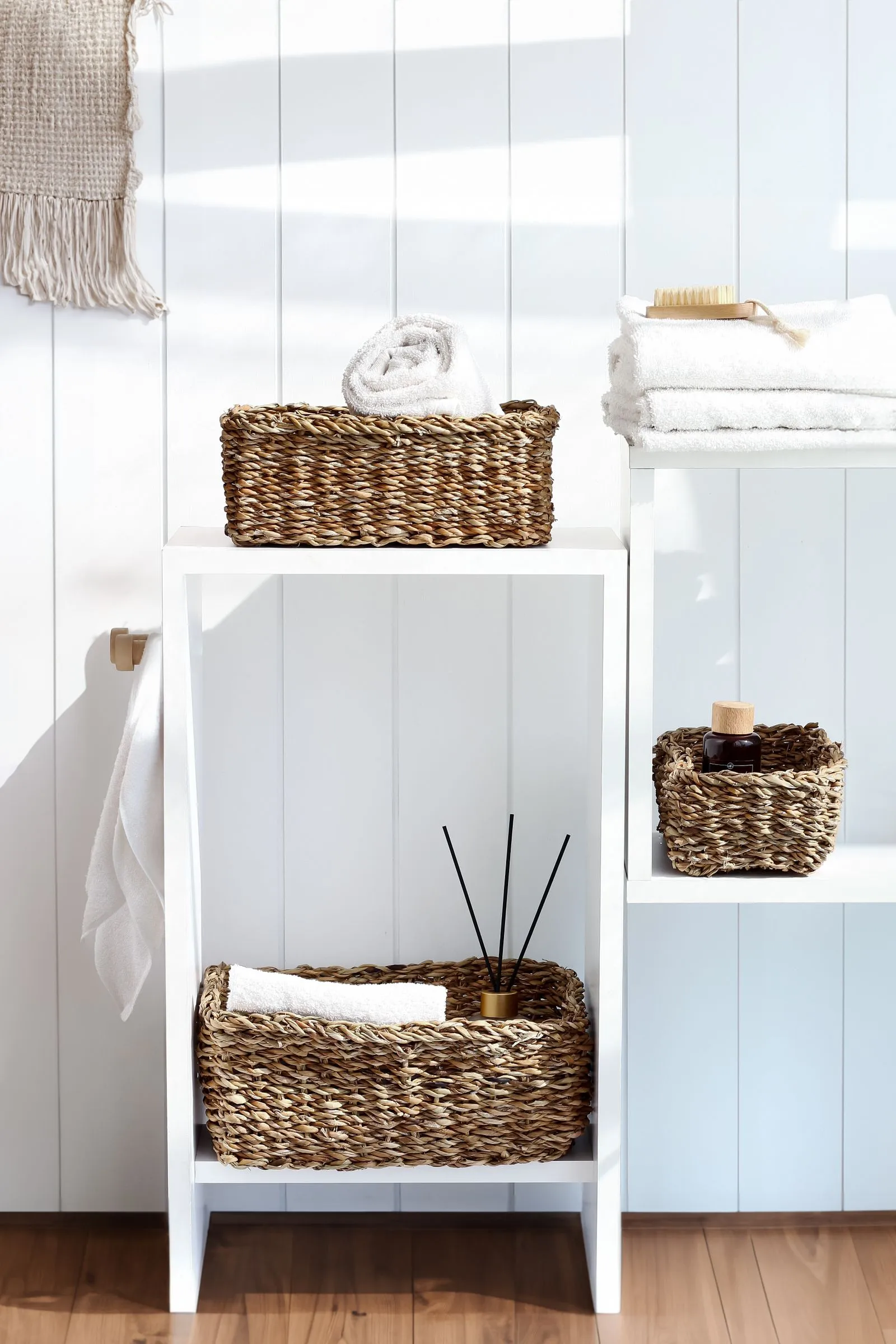
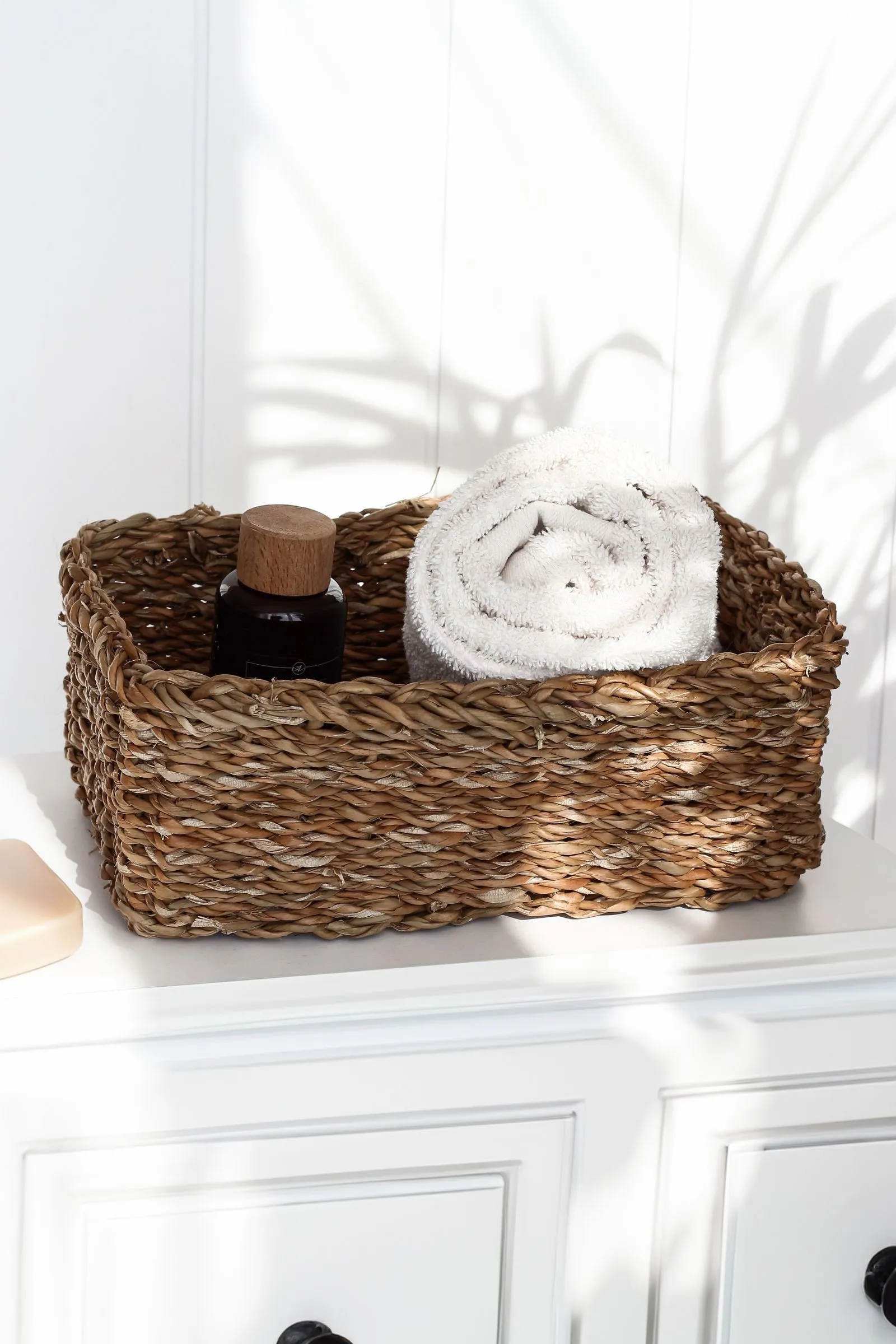
A woven or fabric basket sized to sit on the cabinet floor or top shelf keeps those soft items corralled as one unit you can lift out entirely. It also hides the visual clutter if the cabinet door gets left open, which matters more in a small bathroom that guests see.
Group by task, not by product type
The same mistake shows up here as in kitchen cabinets: sorting by category feels tidy but works badly, because a real task pulls from more than one category at once.
- Daily zone: toothpaste, floss, cotton rounds, a spare toothbrush.
- Hair and styling zone: brush, styling products, backup hair ties.
- Cleaning zone: bathroom spray, a scrub brush, gloves — keep this one in the harder-to-reach spot on purpose.
- Backup zone: extra soap, shampoo, and toilet paper bought in bulk.
If the cleaning group lives in one basket, you grab the basket and start, instead of making four trips to the cabinet mid-clean.
Watch for moisture, not just clutter
Bathroom cabinets sit closer to a source of water than kitchen ones, and a slow supply-line drip or condensation off the tank can soak into particleboard just as easily as a kitchen leak.
A thin silicone mat or plastic liner on the cabinet floor catches drips before they reach the wood, and it means a puddle shows up as a visible wet spot instead of a swollen, moldy shelf discovered months later. For renters, this small step is inexpensive insurance against a deposit deduction.
Mistakes that undo the system
Buying bins before checking the door opening. The interior may have room; the opening decides what actually fits through it.
Storing paper products directly on the cabinet floor. Toilet paper and paper towel backups act like sponges for any moisture that gets in. Keep them in a basket, off the floor, or on a top shelf instead.
One bin for everything. It always turns into digging. Split by side of the pipe at minimum, and by task if you have the bin count for it.
Skipping the moisture check. Look under the sink once a month, on the same day you already do another routine task, so a small drip gets caught early.
Twenty minutes to a cabinet that works
Empty it, wipe it out, take the three measurements, then buy bins sized to fit both the clear width and the door opening. Load by zone, put the softest items in a basket, and add a liner on the floor if you do not already have one. Live with it for two weeks before adding a second organizer — whatever keeps sliding back to the floor tells you which zone still needs a home.
The same measure-then-zone approach carries straight over to other tight cabinets in the house. For the rest of a small bathroom, the shelf and basket sizing in our guide to small bathroom storage picks up where the cabinet leaves off. And if the kitchen sink cabinet has the same pipe problem, the bin and tension-rod layout in under-sink kitchen cabinet organization uses the identical measuring method.