Countertop Clutter Solutions for Tiny Kitchens
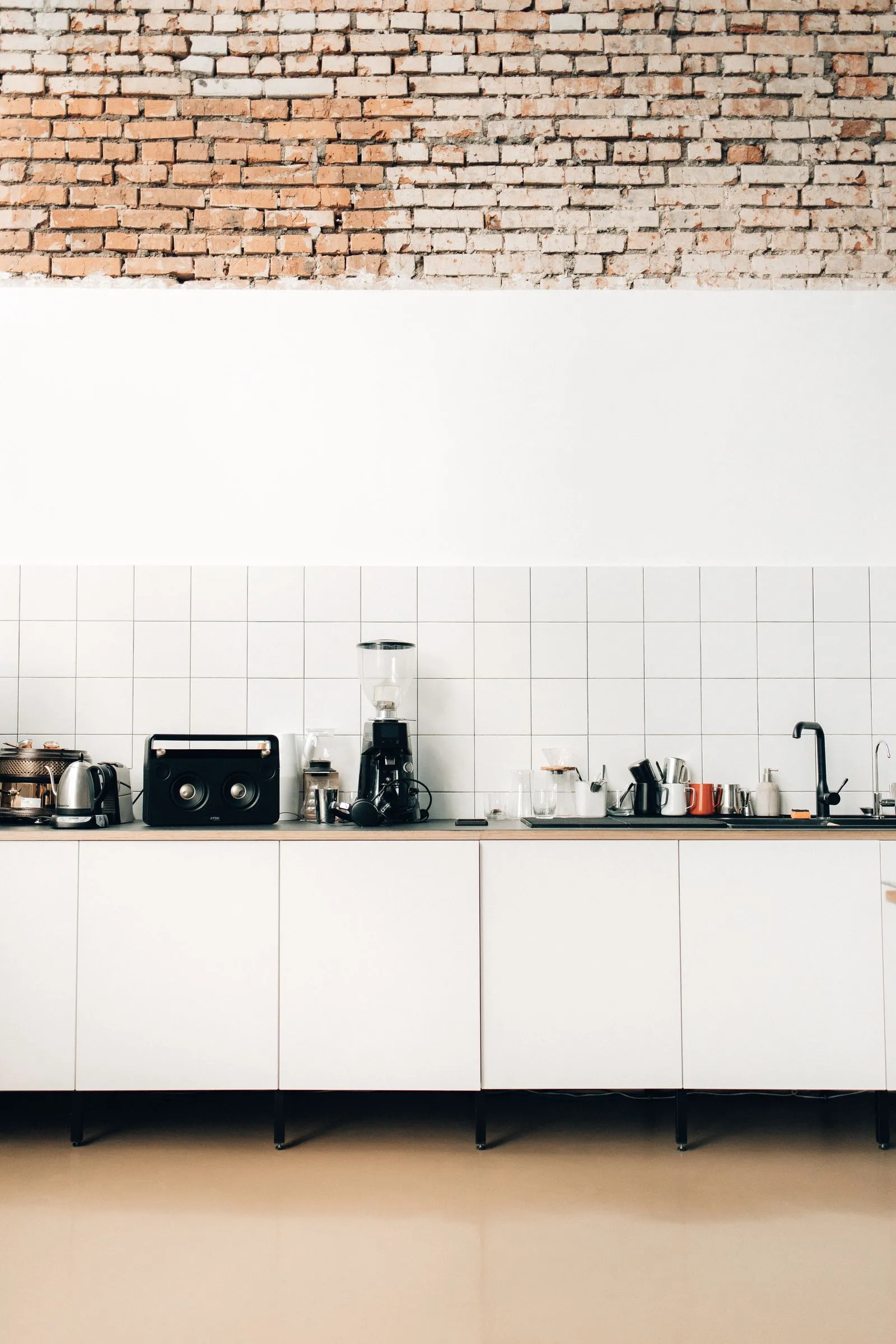
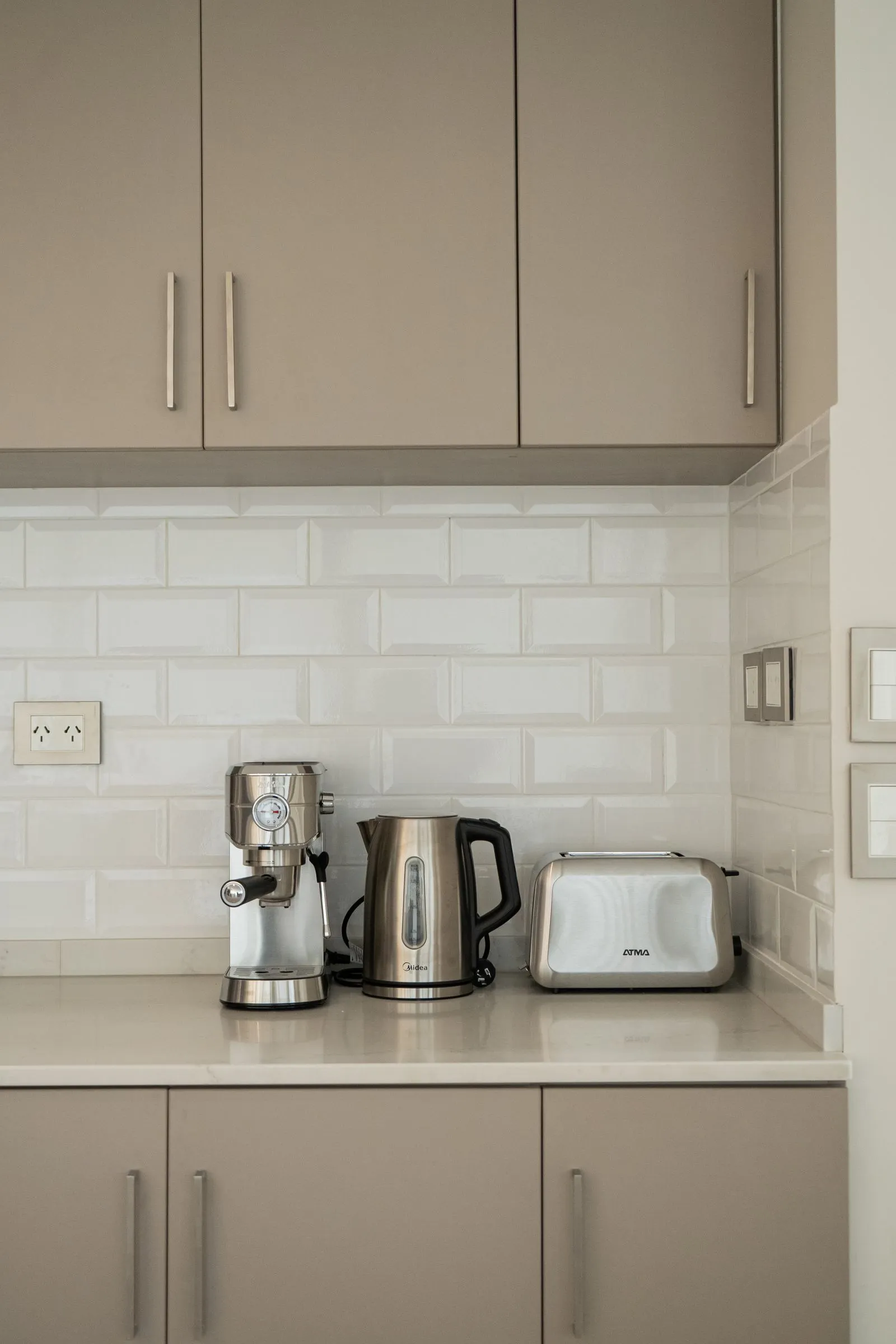
A small kitchen counter fills up fast, and it happens one appliance at a time. The coffee maker earns its spot first, then the toaster, then a blender that gets used twice a month but never leaves the counter because there is nowhere else to put it. By the time you notice, there is a six-inch strip of usable counter left between the sink and the stove, and that strip is where actual cooking is supposed to happen.
Most small kitchen counters run 24 to 36 inches between the sink and the nearest appliance or wall. Every appliance sitting on that stretch is square footage you are not using for prep. The fix is not more counter, since you cannot add any. It is deciding what earns a permanent spot and moving everything else up, off, or away.
Sort by how often it actually gets used
Line up everything currently on the counter and sort into three groups honestly, not aspirationally.
Daily use: the coffee maker if you use it every morning, a dish rack if you hand-wash, anything touched at least five days a week.
Weekly use: a toaster, an electric kettle, things reached for a few times a week but not daily.
Occasional use: a stand mixer, a blender, a slow cooker, anything used a few times a month or less.
Only the daily group has earned permanent counter space. Everything else moves to a cabinet, a shelf, or a rotation system below.
Wall-mounted rails and shelves reclaim vertical space for free
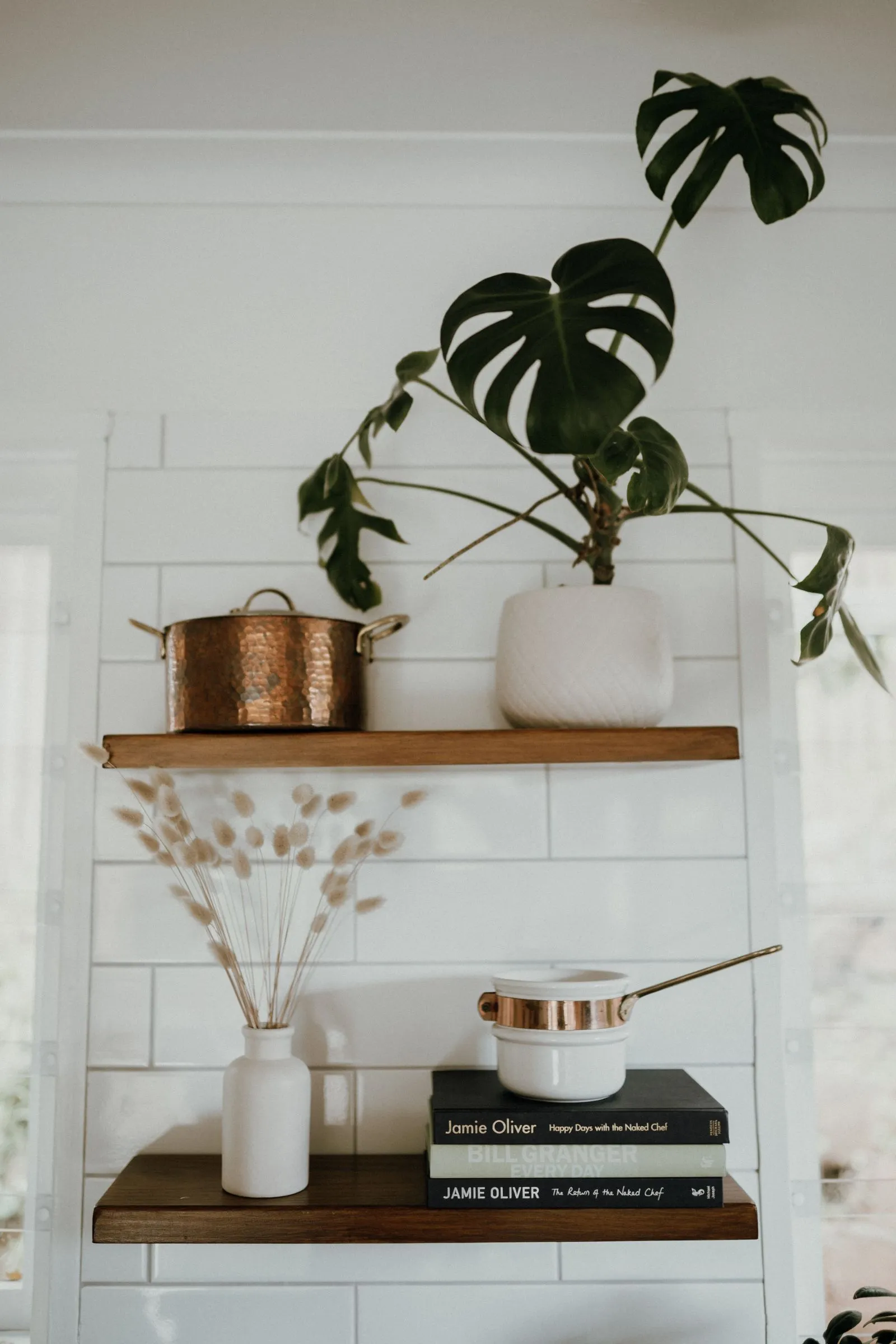
The wall above a counter is almost always empty between the countertop and the upper cabinets, typically 15 to 18 inches of clear vertical space. A wall rail with S-hooks, or a floating shelf mounted at counter-backsplash height, uses that space instead of the counter itself.
A rail costs 10 to 20 dollars and holds hanging utensils, mugs, or a small basket for produce, clearing several square inches of counter for each item moved up. A floating shelf, 15 to 25 dollars, holds a coffee station’s mugs and filters directly above the coffee maker, so the machine stays on the counter but its accessories do not compete for space beside it.
For renters, look for shelves and rails that mount with strong adhesive strips rated for the load, or a tension-mounted rail that wedges between the upper cabinet and backsplash with no drilling at all.
Risers turn one flat surface into two
Under-cabinet space and the gap above a microwave often sit empty because nothing is sized to use them. A wire or acrylic riser, 10 to 20 dollars, sits on the counter and creates a second, elevated surface for a cutting board, a spice rack, or small canisters, stacking storage instead of spreading it out.
This works best directly above an appliance that is already staying on the counter permanently. A riser over a coffee maker’s base, holding filters and a canister of grounds, keeps the whole coffee station in one footprint instead of three separate items in a row.
Rotate occasional appliances instead of storing them all at once
The appliances used a few times a month do not need daily access, which means they do not need counter space at all. Store them in a lower cabinet or a pantry shelf, and only bring one out at a time when it is actually needed.
This single habit change removes more clutter than any organizer, because it stops the counter from being a second storage cabinet. If a cabinet shelf is too shallow for a stand mixer or slow cooker, a simple pull-out shelf or a lazy Susan sized to the appliance base makes retrieval fast enough that putting it away afterward does not feel like a chore.
A charging and mail station belongs off the counter too
Phones, mail, and keys migrate onto kitchen counters because there is no other flat surface near the door. A small wall-mounted shelf or a vertical file rack, mounted just inside the entry or on the end of a cabinet run, gives that clutter a home that is not prep space.
This is a small fix, but in kitchens where the counter doubles as a drop zone, it recovers real inches that appliances alone will not.
Mistakes that bring the clutter back
Keeping an appliance out “just in case.” If it has not been used in a month, it goes in a cabinet. The two extra minutes to retrieve it is worth the daily counter space.
Mounting a rail too close to the stove. Heat from a range can warp plastic hooks and blacken wood shelves over time. Keep wall storage at least 12 inches from any heat source.
Stacking risers taller than the upper cabinet clearance. Measure the gap between counter and cabinet bottom before adding a second riser tier, or the cabinet door will not close.
No fixed spot for mail and phones. Without one, they will always land on the nearest open counter, which is usually the prep zone.
A counter you can actually cook on
Sort what is currently out, move weekly and occasional appliances to storage, and add one wall rail or shelf above the spot where the daily items live. Give the new system two weeks, then check what crept back onto the counter — that item either needs a fixed rotation spot or it genuinely belongs on the counter permanently.
Once the counter is clear, the drawers underneath usually need the same sorting logic. Our guide to small kitchen drawer organization covers dividing what is inside those drawers by frequency of use, the same method used above for the counter. And if pantry shelves are the next clutter zone, the door-rack approach in pantry door organizer ideas reclaims space the same way the wall rail does here.