9 Small Closet Organization Ideas That Actually Work
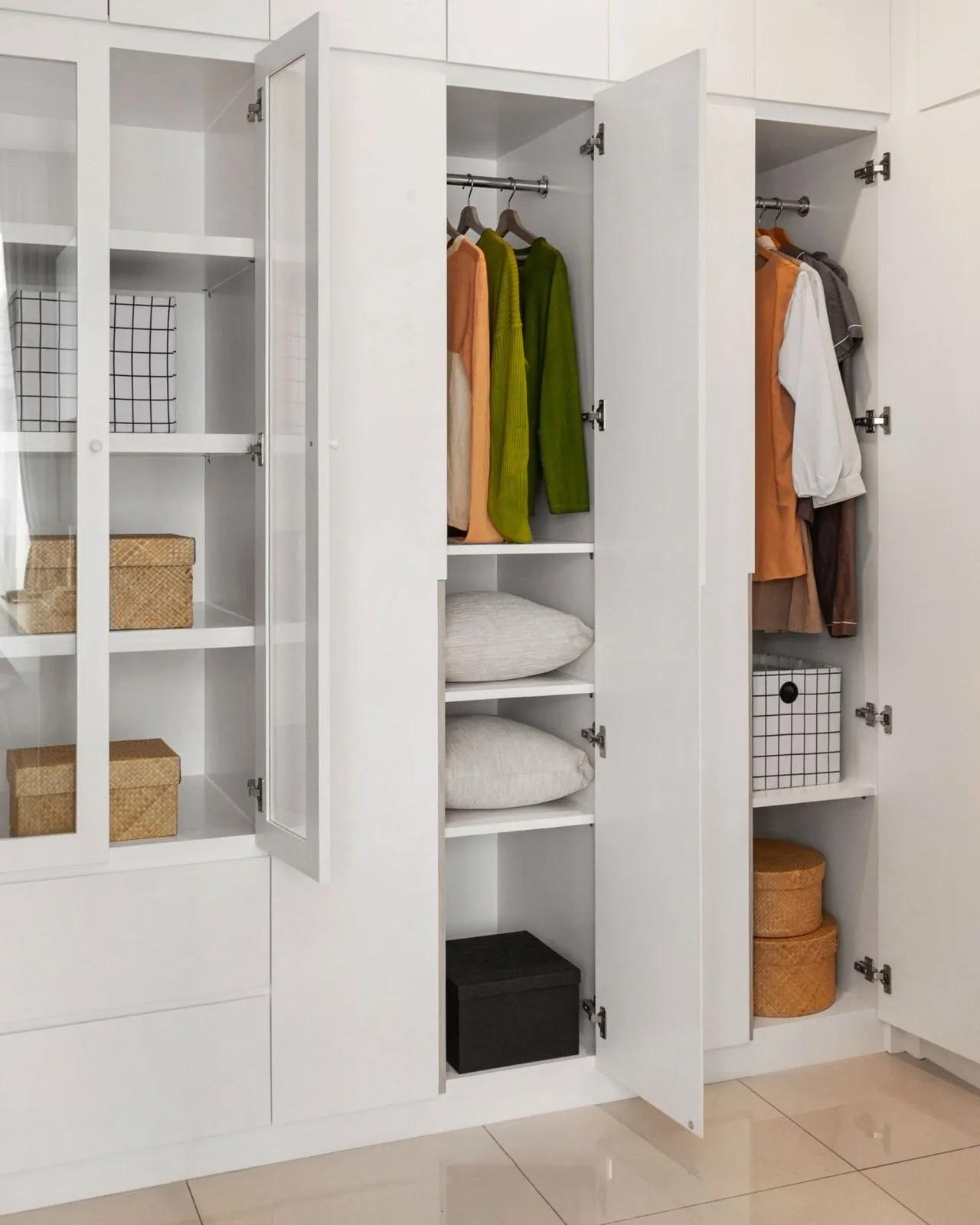
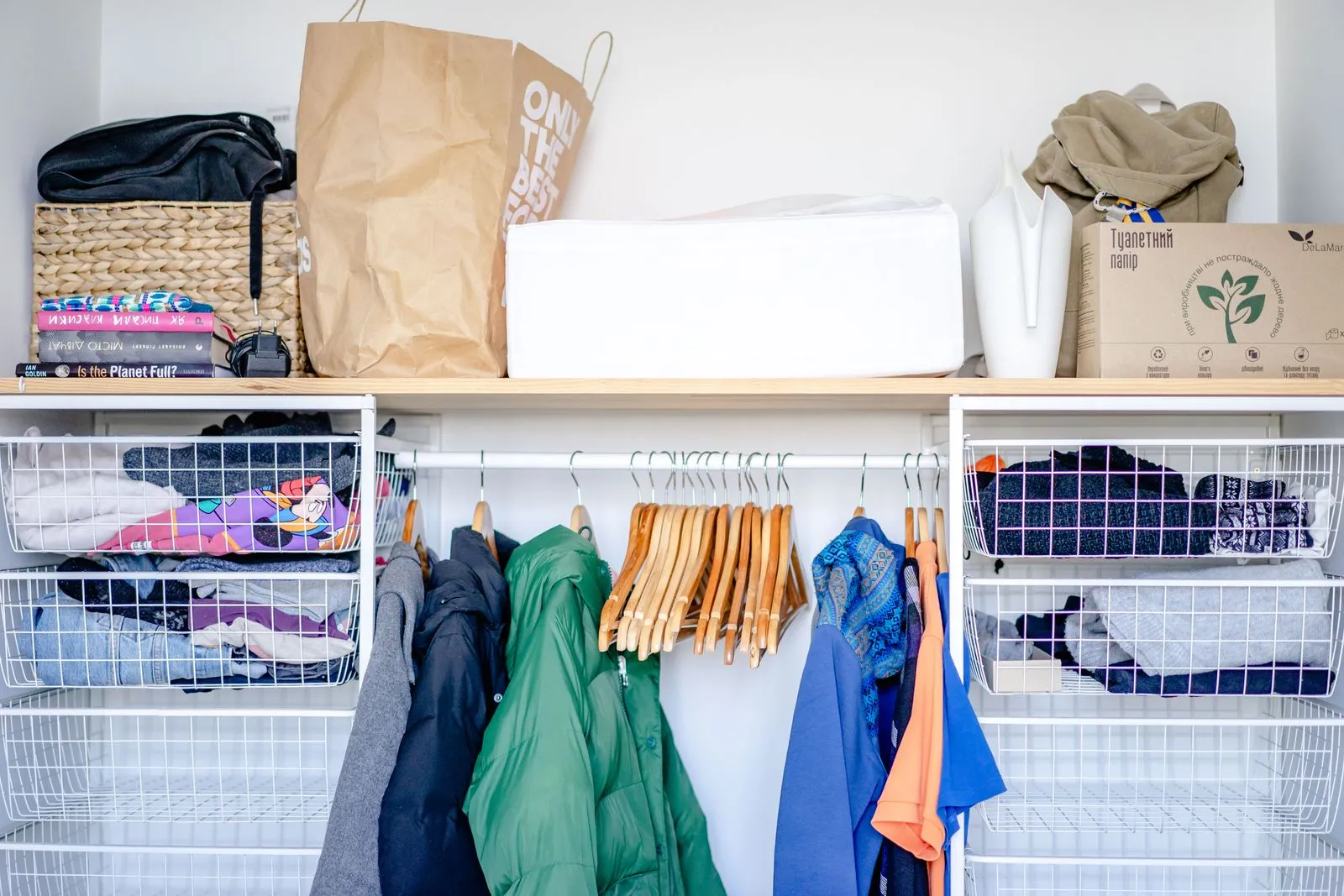
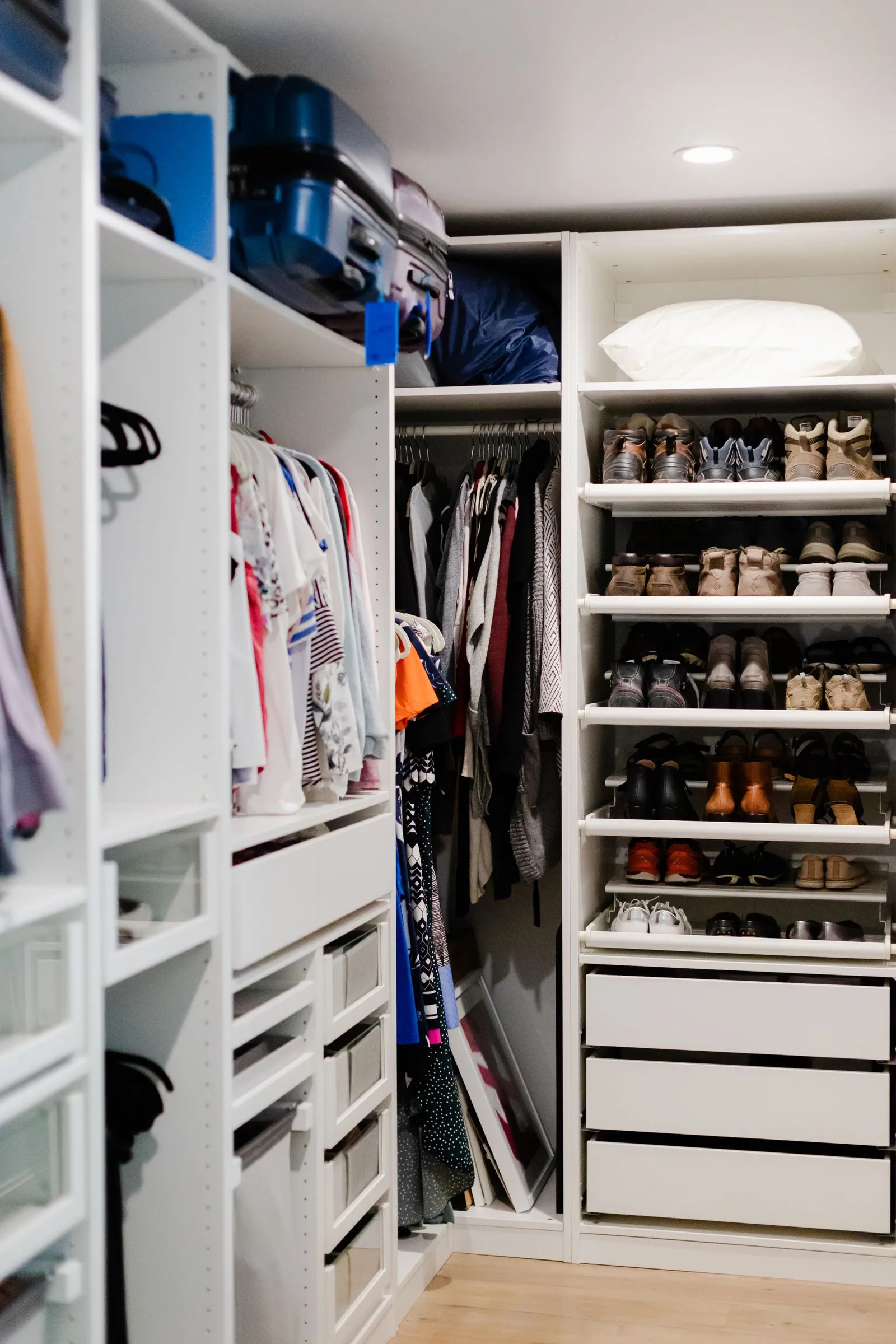
A standard bedroom closet is about 24 inches deep with one rod and one shelf. That layout has been the default in US apartments for decades, and it leaves much of the vertical space inside unused. Clothes pile on the floor, the shelf becomes a landslide, and the closet looks too small to fix.
It usually is not too small. It is under-divided. Most small closet organization comes down to adding horizontal layers to a space that only has one, and none of it requires a renovation or a permanent change your landlord would object to.
Measure the closet first
Take three numbers before you buy anything.
- Rod height from the floor. Builder standard is 66 to 68 inches.
- Interior width wall to wall.
- Depth from the back wall to the inside of the door frame, and separately, the width of the door opening. Many closets are wider than their opening, which limits what you can slide in.
Then measure your longest hanging item, from the top of the hanger hook to the hem. Most shirts run 36 to 40 inches. Dresses and long coats run 50 to 60 inches. Those numbers decide whether idea number one works for you.
1. Add a second rod and double your hanging space
This is the single highest-impact change in a small closet, and it costs less than a takeout dinner.
Shirts, blouses, jackets, and folded pants only need about 40 inches of vertical drop. With one rod at 68 inches, the 28 inches below it holds nothing but air.
A double hang closet rod fixes that. The simplest version hangs from the existing rod on two adjustable arms and drops a second bar to roughly 34 to 38 inches off the floor. No tools, no mounting, and it comes down in five seconds at move-out. A spring tension rod set across the closet at the same height does the same job if your closet has solid side walls.
Keep the upper rod for tops and the lower rod for bottoms. Leave one section undivided at full height for dresses and long coats, or they will drag on the lower rod.
2. Shelf dividers to stop the pile from toppling
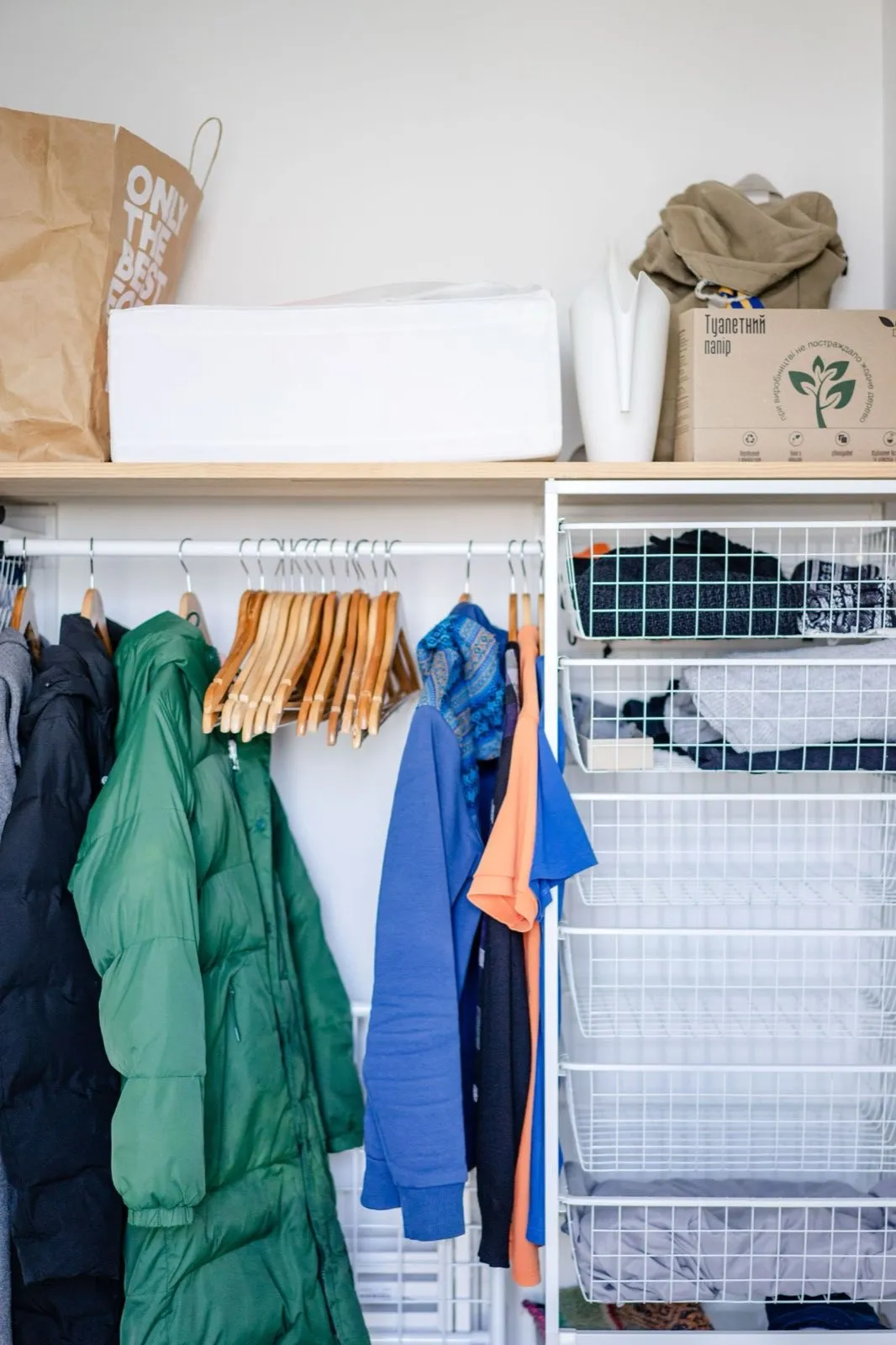
The shelf above the rod is usually one long, unbroken span. Stacks of sweaters on it lean into each other and collapse the moment you pull one out.
Shelf dividers clip or slide onto the shelf edge and split it into vertical bays. Each bay holds one stack, and each stack stays upright.
Set them 10 to 12 inches apart for folded sweaters and 8 to 10 inches for smaller items like t-shirts. Pick a divider designed for your shelf thickness; wire shelving and solid MDF shelving take different clip styles.
3. Split the shelf again with a riser
If your closet shelf sits 12 or more inches below the ceiling, you have another whole shelf up there going unused.
A shelf riser or a small stackable rack sitting on top of the existing shelf creates a second level. Put things you reach for a few times a year on top: extra bedding, off-season hats, a spare bag. Keep the original shelf for what you touch weekly.
Measure your ceiling gap before buying. Risers are commonly 6 to 11 inches tall, and one that is too tall will not slide in.
4. Use the floor deliberately, or not at all
Closet floors default to chaos because nothing defines them. Two approaches work, and the wrong one is leaving it open.
Option A: fill it with a low unit. A shoe rack, a small dresser, or two rows of stackable bins occupy the floor so nothing else can accumulate there.
Option B: keep it completely empty. Hang everything, use a lower rod down to 34 inches, and treat the floor as off-limits. This is easier to maintain than it sounds, because an empty floor is visibly wrong the moment something lands on it.
Mixed floors, where half is a rack and half is open, always fill up with the wrong things.
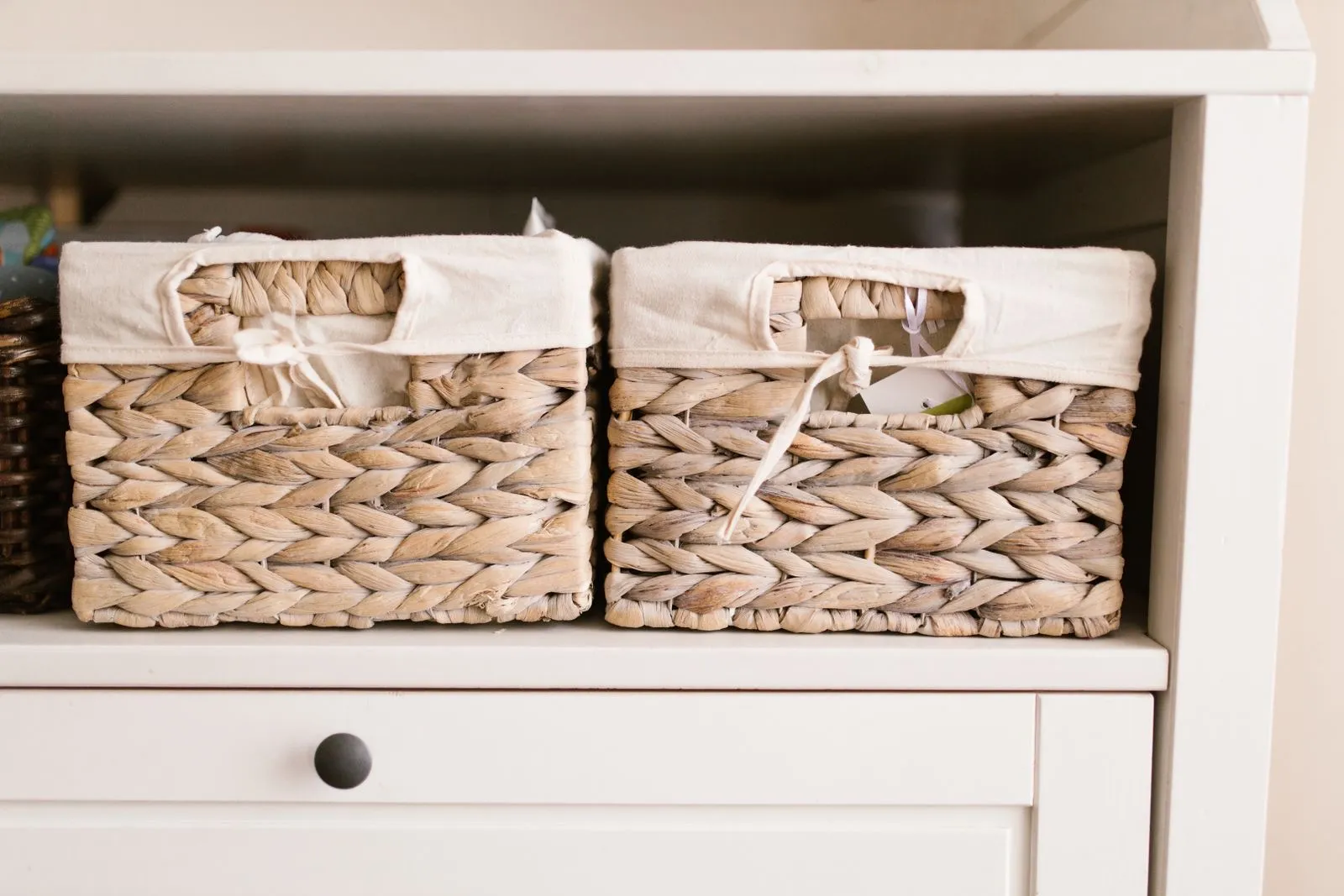
5. Clear bins with labels on the top shelf
High shelves are hard to see into. That is what makes them the place where things get lost.
Clear bins solve half the problem, since you can see contents from below. Labels solve the rest, because you are looking at the bins edge-on from five feet down and cannot read what is inside a stacked bin.
Two rules that make labeling stick. Put the label on the short end that faces out, not the top. And label by category, not by contents list. “Winter accessories” ages better than “gloves, 2 scarves, gray beanie,” which is wrong within a month.
6. Hang the odd items instead of folding them
Some categories waste enormous shelf space when folded. Hanging them frees the shelf for what actually needs to lie flat.
- Belts and scarves on a single multi-hook hanger take about 2 inches of rod.
- Bags and totes on an S-hook over the rod, one per hook, stop them from collapsing in a floor pile.
- Camisoles and tank tops on a cascading hanger stack six items in the space of one.
Anything knit and heavy should stay folded. A hung wool sweater stretches at the shoulders permanently.
7. Over-the-door storage on the closet door itself
The inside of a closet door is a flat surface about 24 inches wide that most people never use.
An over-the-door organizer with pockets holds shoes, or with slightly deeper pockets, holds folded workout clothes, sunscreen, and the small things that never had a home. A slim set of over-door hooks handles tomorrow’s outfit or a robe.
Umbra’s Schnook over-the-door hooks are about as minimal as that gets: five separate stamped-metal hooks, 5 pounds each, that flip over the door with no hardware and come off the same way at move-out. Both ends carry rubber, one as a bumper so the hook neither scuffs the door face nor slides along the top edge, the other so a knit does not snag coming off.
Check the door thickness first. Standard interior doors in US apartments are 1 3/8 inches. Also confirm the door still closes with the organizer loaded, since a full pocket panel can add 4 inches of thickness and hit the clothes on the rod.
8. Bins on the closet floor for the non-clothes things
Closets accumulate things that are not clothes: extra sheets, a hair dryer, wrapping paper, a small toolkit. Those items are what make a closet feel chaotic, because they have no category.
Give them two or three labeled bins on the floor or the lower shelf, sized to fit side by side across the closet width. Once the non-clothes items are contained, the clothing part of the closet suddenly looks organized, because it is finally the only thing you are seeing.
9. Matching hangers, but for a practical reason
Uniform hangers are usually pitched as an aesthetic choice. The real benefit is thickness.
A bulky plastic hanger takes about 3/4 inch of rod. A slim velvet or thin wood hanger takes about 1/4 inch. Across a 48-inch rod that is the difference between roughly 64 and 190 hanging slots. You do not need 190, but you will fit noticeably more without crowding.
Slim hangers also grip fabric, so wide-neck tops stop sliding to the floor. Buy them in one batch and one color, and get rid of the wire ones from the dry cleaner as you go.
Cut before you organize
Every idea above works better on fewer clothes. Before installing anything, do one fast pass: pull out everything you have not worn in a full year and everything that does not fit right now.
Do not agonize over each piece. Put the uncertain items in a bag, date it, and put the bag somewhere out of the closet. If you have not gone into it in three months, you already know.
Mistakes that undo the work
Buying organizers before measuring. A hanging shelf tower that is wider than your door opening will not go in.
Packing the rod solid. A closet packed edge to edge is one you stop putting things back into, because it takes effort. Leave 15 to 20 percent of the rod free.
Storing off-season clothes in the working closet. Winter coats in July take rod space you need in July. Move them to under-bed bins or the top shelf.
Buying pretty bins that do not fit the shelf. Measure the shelf depth. A 16-inch bin on a 14-inch shelf overhangs and eventually falls.
Doing it all in one weekend and never touching it again. Systems drift. Ten minutes every few months keeps it working.
Keep it working
Set one maintenance habit: when you put laundry away, anything that no longer has a spot goes into a donate bag instead of being wedged in. That single rule is what keeps a closet from silently refilling.
If the closet floor was mostly shoes, the same containment logic applies at the front door too. See our guide to small entryway organization for stopping the pile before it reaches the bedroom. And if you rent and want to add hooks or a hanging rail inside the closet without leaving a mark, the mounting and removal rules in our guide to damage-free wall storage for renters apply directly.