Small Entryway Organization Ideas for Renters
Keys land on the counter. Shoes stop wherever they come off. Mail stacks up somewhere it does not belong, and by Thursday the clutter that started at the front door has spread three rooms deep.
Most apartments do not have an entryway. They have a two-foot stretch of hallway between the door and the living room, no closet, and a light switch where a coat hook should be. Mudroom storage advice written for houses does not help. What does help is treating that narrow strip as a designed drop zone with a specific spot for each of the four things you carry in.
Work out what actually comes through the door
Before buying anything, watch yourself for two days. Almost every household drops the same short list.
- Keys and a wallet or phone
- Shoes
- A coat, jacket, or bag
- Mail and packages
If any of those four has no assigned spot, it becomes the pile. Everything below is about assigning the four spots in as little floor space as possible.
Measure the space you have to work with
Three measurements decide what fits.
Usable wall width. The stretch of wall beside the door that the door does not swing into. In apartments this is often only 24 to 36 inches.
Depth you can give up. Leave at least 30 inches of clear walking width, and 36 inches if you can, since that is the width a hallway is normally built to. Measure your hall, subtract 30, and whatever remains is your maximum furniture depth. In a 40-inch hall, you have 10 inches, which rules out a standard console table and points you to a narrow one.
Door swing. Open the door fully and mark where the edge lands. Nothing goes in that arc, including a boot tray. A tray that blocks the door gets kicked aside within a week.
1. A narrow console or slim table for the drop surface
You need a surface at hand height for the things you set down without thinking. Otherwise it is the kitchen counter, every time.
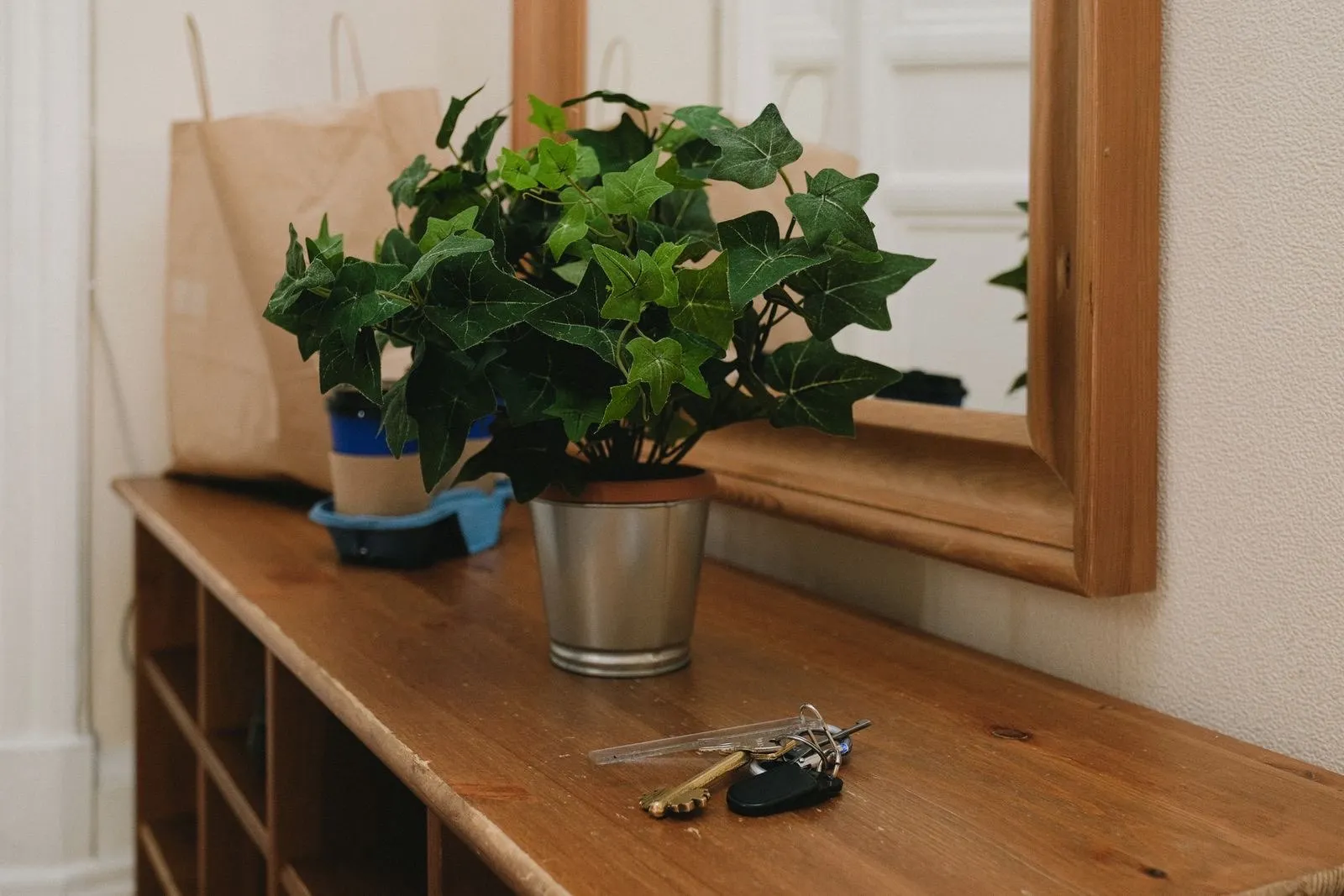
Look for a console 10 to 12 inches deep and 28 to 32 inches tall. That depth is shallow enough to keep a hallway walkable and deep enough to hold a bowl, a lamp, and the mail.
If even 10 inches is too much, go vertical instead. A small wall-mounted shelf 5 to 6 inches deep, or a slim floating ledge, does the same job with no floor footprint. In a rental, mount it with adhesive strips rated well above the load, or use a leaning ladder shelf that needs no wall contact at all.
Under the console is storage, not empty air. Two bins, a basket for dog gear, or a low shoe rack fit under most consoles and keep the floor from filling.
2. Hooks at the right height, mounted damage-free
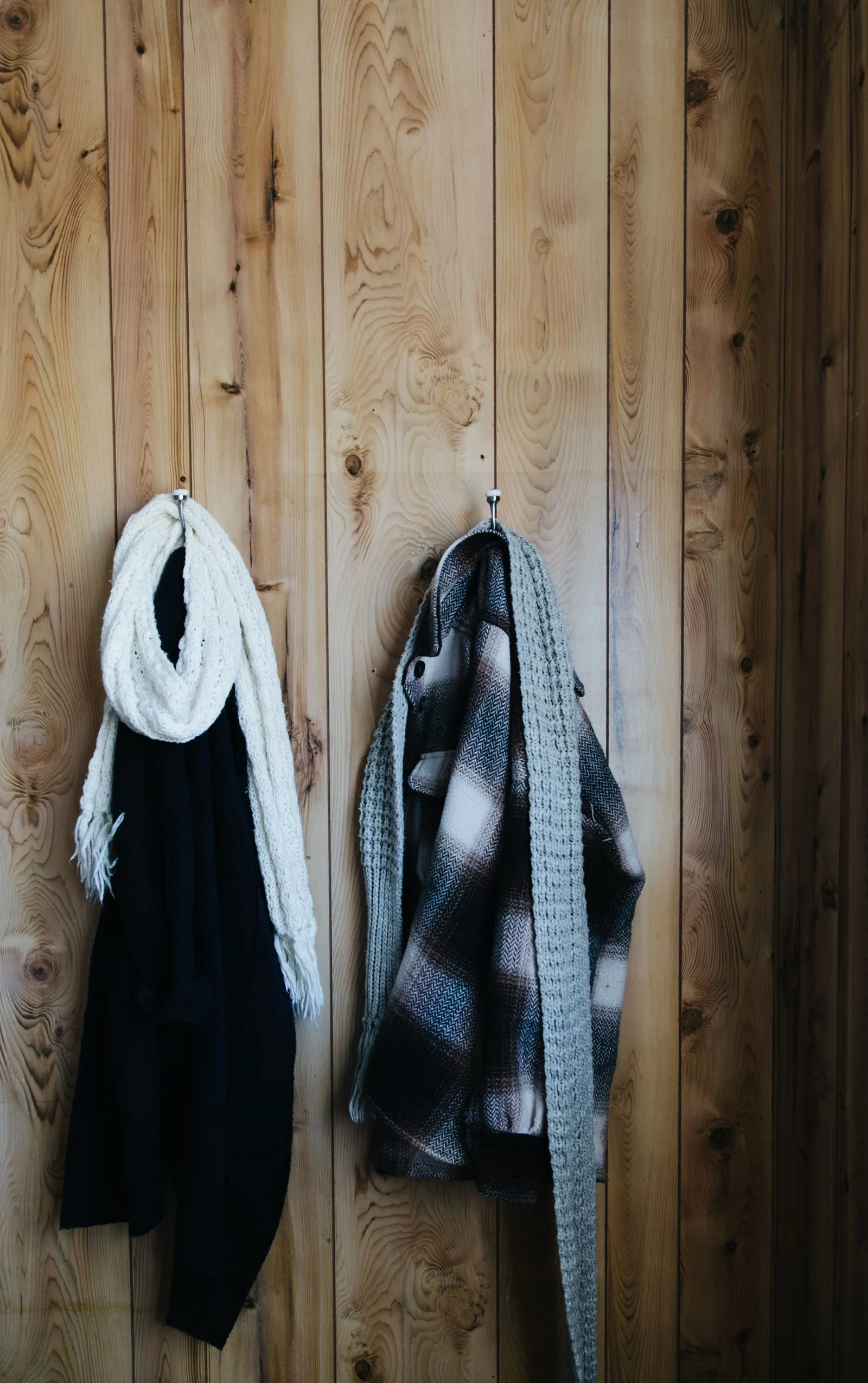
A row of hooks replaces a coat closet in an apartment that does not have one.
Height is what makes hooks work. Set adult hooks 48 to 52 inches from the floor. That is high enough that a jacket hangs clear of the floor and low enough to reach without stretching. If kids use the entry, add a second row at 36 to 40 inches. Kids hang their own coats when the hook is at their height and do not when it is not.
Space hooks 6 to 8 inches apart. Fewer, well-spaced hooks beat a crowded row, because two coats on adjacent hooks at 4-inch spacing tangle and both end up on the floor.
For renters, adhesive hooks are the answer, with three conditions. Clean the wall with rubbing alcohol first, since most cleaners leave a residue that blocks the bond. Let the adhesive cure a full hour before hanging anything. And plan for about half the rated weight, because a wet coat plus a bag is heavier than the dry version you tested with.
At move-out, stretch the release tab straight down slowly rather than pulling outward. That is what keeps the paint on the wall.
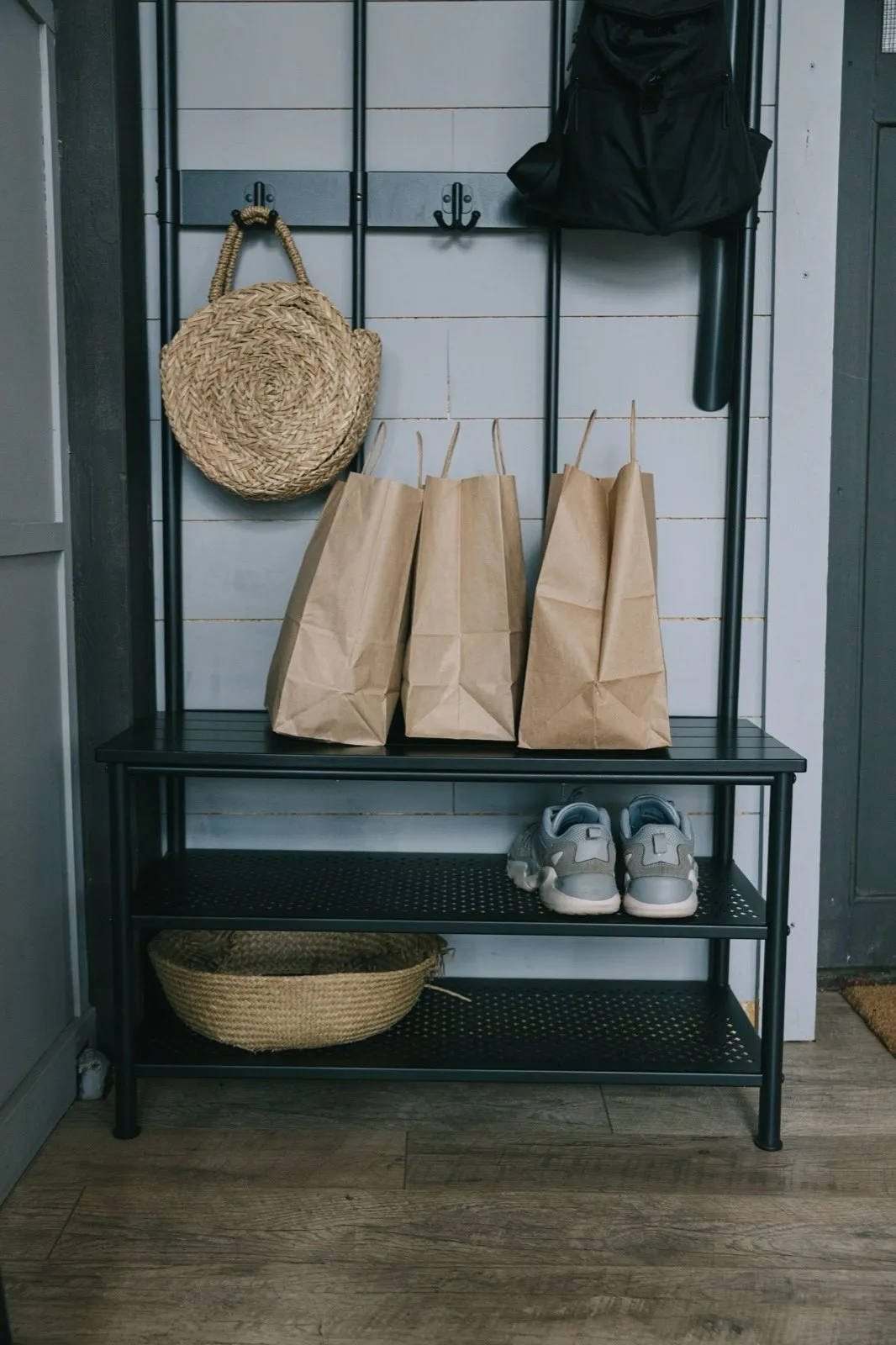
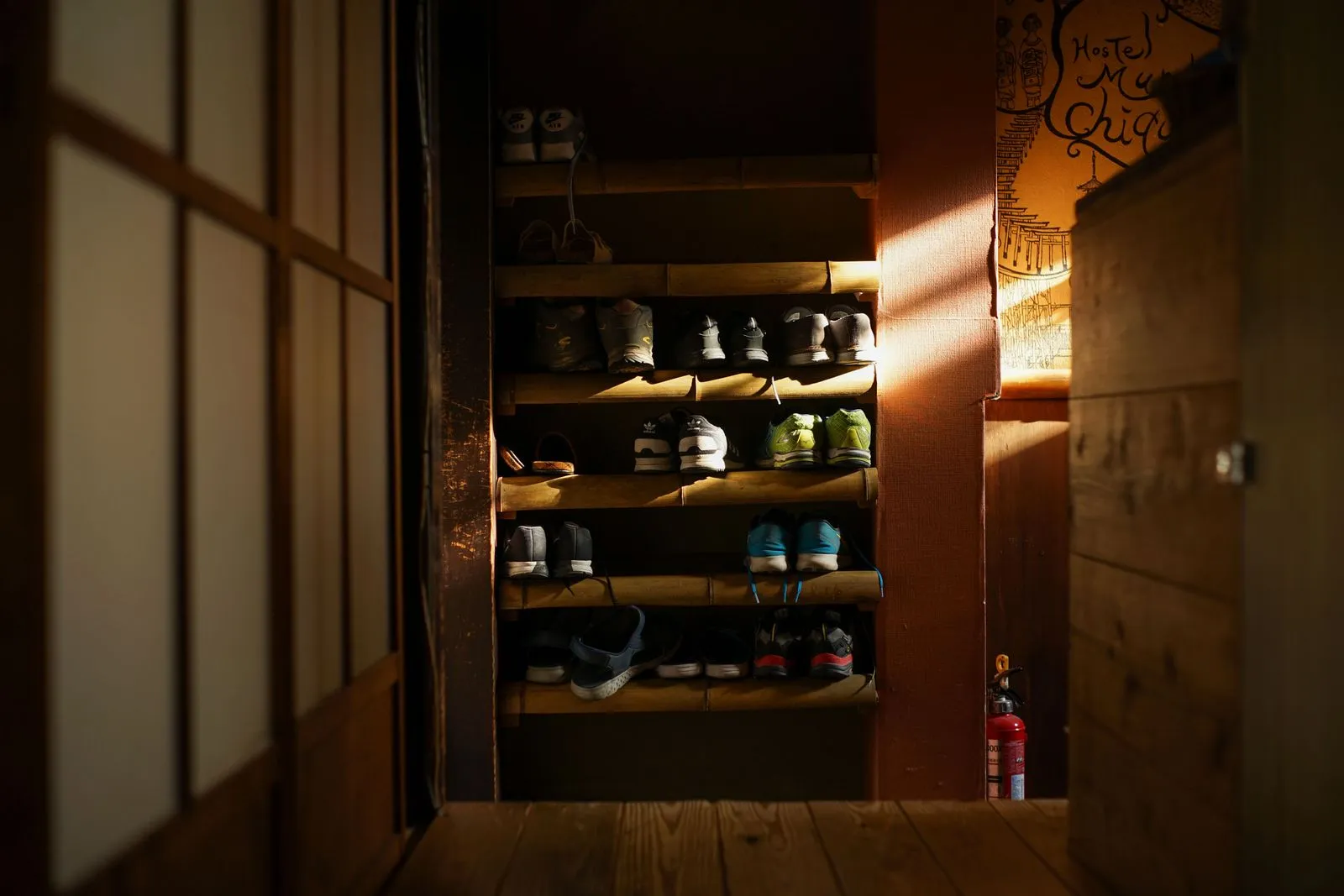
3. A boot tray to contain the shoe pile
Shoes are the thing that spreads. A defined tray is what stops it.
A hard plastic or metal boot tray, roughly 30 by 15 inches, holds three to four pairs and catches snowmelt, rain, and road salt before it reaches the floor. In a rental, that matters beyond tidiness: water sitting on a hardwood or laminate floor by the door causes the kind of damage that comes out of a deposit.
The tray also sets a limit. Four pairs fit. When a fifth appears, the visual signal is obvious and someone takes a pair to the closet. An undefined shoe zone has no such limit and grows until it blocks the door.
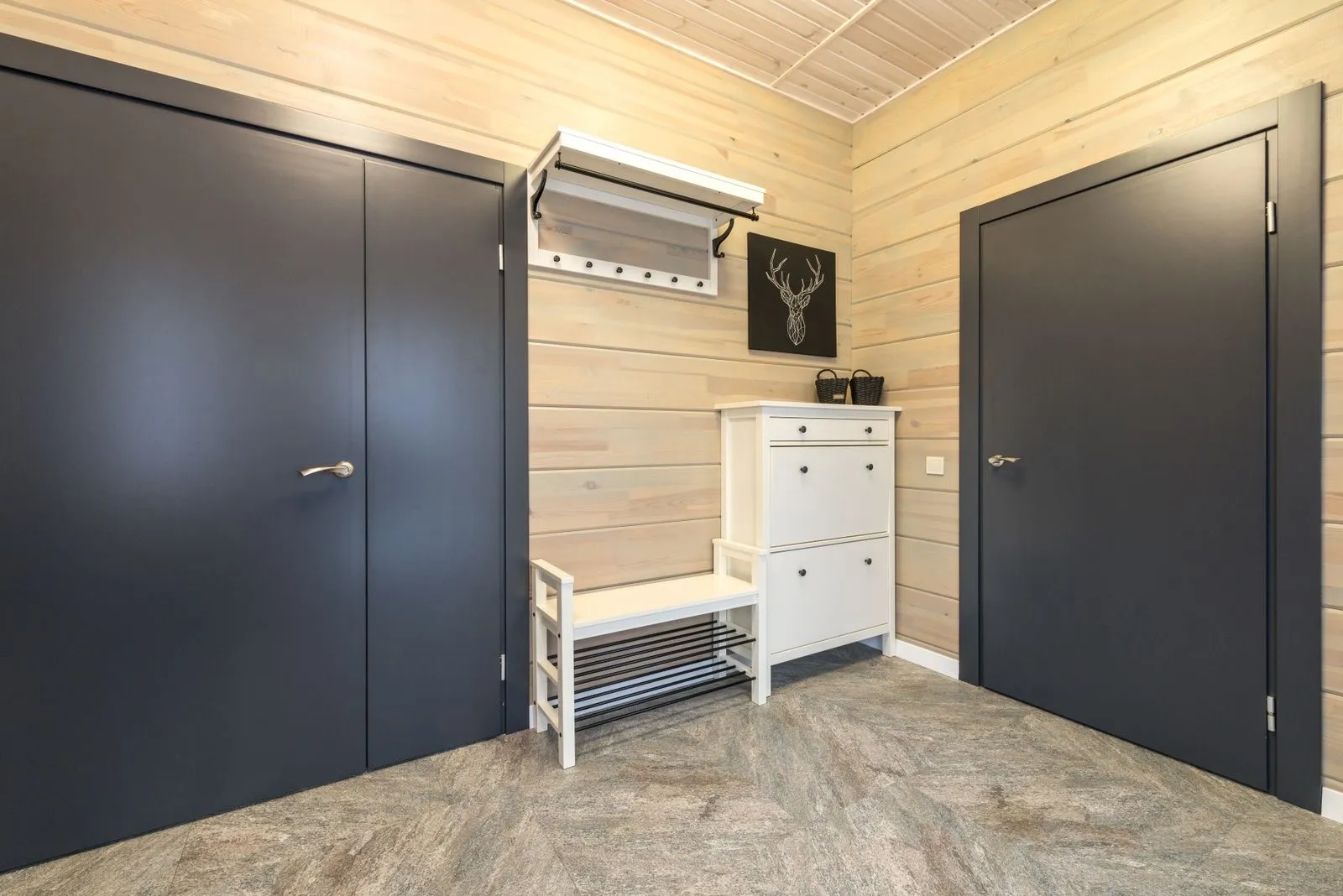
If floor space is genuinely unavailable, a slim over-the-door shoe organizer on the inside of the entry closet door, or a wall-mounted flip-down shoe cabinet about 7 inches deep, holds the daily pairs vertically instead.
4. One spot for keys, and only one
Keys get lost because they have several possible locations. The fix is not a better key hook, it is a single location with no alternatives.
A small bowl or tray on the console works. So does a hook, or a magnetic strip, or a wall pocket. Which one you pick barely matters. What matters is that there is exactly one, it is within arm’s reach of the door, and everyone in the household uses it.
Put the tray where your hand naturally goes when you walk in, which is usually at the same height and side as the light switch. If you have to cross the room to the “official” key spot, you will not.
Keep it small on purpose. A large bowl becomes a junk drawer. A tray that holds keys and a wallet and nothing else stays useful.
5. A two-slot mail system
Mail piles because sorting it takes a decision and the pile defers the decision.
Set up two containers by the door: one labeled for things needing action, one for recycling. Standing at the door, sort each piece as it comes in. Junk goes straight to recycling and never enters the apartment. Bills and anything needing a response go in the action slot.
A wall pocket, two small trays on the console, or a magazine file works. Then set a weekly time to clear the action slot. Fifteen minutes on a Sunday keeps the whole system from backing up.
If you get a lot of packages, add a bin under the console for boxes waiting to be broken down. Otherwise they stack against the wall and stay there.
6. Use the back of the entry door itself
Every front door has a flat surface most people ignore.
An over-the-door rack holds bags, umbrellas, dog leashes, and the reusable grocery totes you keep forgetting to bring. Check two things first. Measure the door thickness, since standard interior doors run about 1 3/8 inches and an entry door may be thicker. And confirm the door still closes and locks with the rack loaded, because a deep organizer can hit the frame.
Add a felt pad where the hook contacts the door face to prevent the scuff mark that develops over a couple of years.
7. A mirror, for a practical reason
A mirror by the door is usually treated as decoration. It has two functional jobs.
It gives you a last-look spot so you stop going back to the bathroom before you leave, and in a narrow hallway it makes the space feel less like a corridor, which makes people willing to put furniture there at all.
A leaning full-length mirror needs no wall mounting, but secure it if you have kids or pets, since a leaning mirror that gets bumped is a real hazard.
Mistakes that make a small entry worse
Furniture that is too deep. A 16-inch console in a 40-inch hall leaves 24 inches to walk through. You will squeeze past it every day and eventually move it.
Too many hooks. A wall of twelve hooks fills with twelve coats, ten of which belong in a closet. Install the number you need for daily outerwear.
A big catch-all basket. It fills with things nobody will ever sort. Small, specific containers beat one large vague one.
Blocking the door swing. Measure the arc. Anything in it gets kicked.
Skipping the floor protection. Wet shoes on an unprotected rental floor is a deposit problem, not just a mess.
Set it up in one hour
Do it in this order and it goes fast. Clear the area completely. Measure the wall, the hall depth, and the door swing. Put the boot tray down first, since it defines the floor. Mount hooks next at the measured height and let the adhesive cure. Add the surface, the key tray, and the mail slots last.
Live with it for a week before adding anything else. The parts you never use tell you what to remove, and the thing you keep setting down in the wrong place tells you what spot is still missing.
If your hooks are carrying more than they should, the weight limits and removal steps in our guide to damage-free wall storage for renters go deeper on mounting. And once shoes stop piling at the door, the bedroom closet usually becomes the next bottleneck, which is where small closet organization picks up.