5 Damage-Free Wall Storage Ideas for Renters (No Drilling)
Your lease says no nails, no screws, no anchors. Your apartment has four bare walls and one closet. Those two facts do not get along, and the usual advice to “add a floating shelf” is useless when drilling costs you a deposit.
Damage-free wall storage has gotten genuinely good in the last few years. Adhesive hooks now carry real weight, and a few tension-based systems hold more than most people expect. The catch is that all of them fail the same way when installed wrong. What follows is five ideas that work in a rental, plus the installation and removal details that decide whether you get your deposit back.
Know your wall before you stick anything to it
Adhesive strips bond to a smooth, non-porous, clean surface. They do not bond to flat or matte paint that is already peeling, to textured or orange-peel drywall, to wallpaper, or to raw brick and cinderblock.
Run this three-step check on any spot before you commit.
- Wipe with rubbing alcohol, not household cleaner. Most all-purpose sprays leave a residue that blocks adhesion. Alcohol evaporates clean. Let it dry a full minute.
- Press a test strip and wait an hour. If it peels off with light pressure, the wall is too textured or the paint is failing. Find a different spot.
- Give the real install a full hour before hanging anything. Adhesive needs time to grab. Loading a hook immediately is the single most common reason things fall off a wall at 2 a.m.
If the paint in your unit is flat or chalky, or if it has been painted over many times, be conservative: use fewer, lighter loads spread across more hooks.
1. A row of adhesive hooks instead of a coat closet
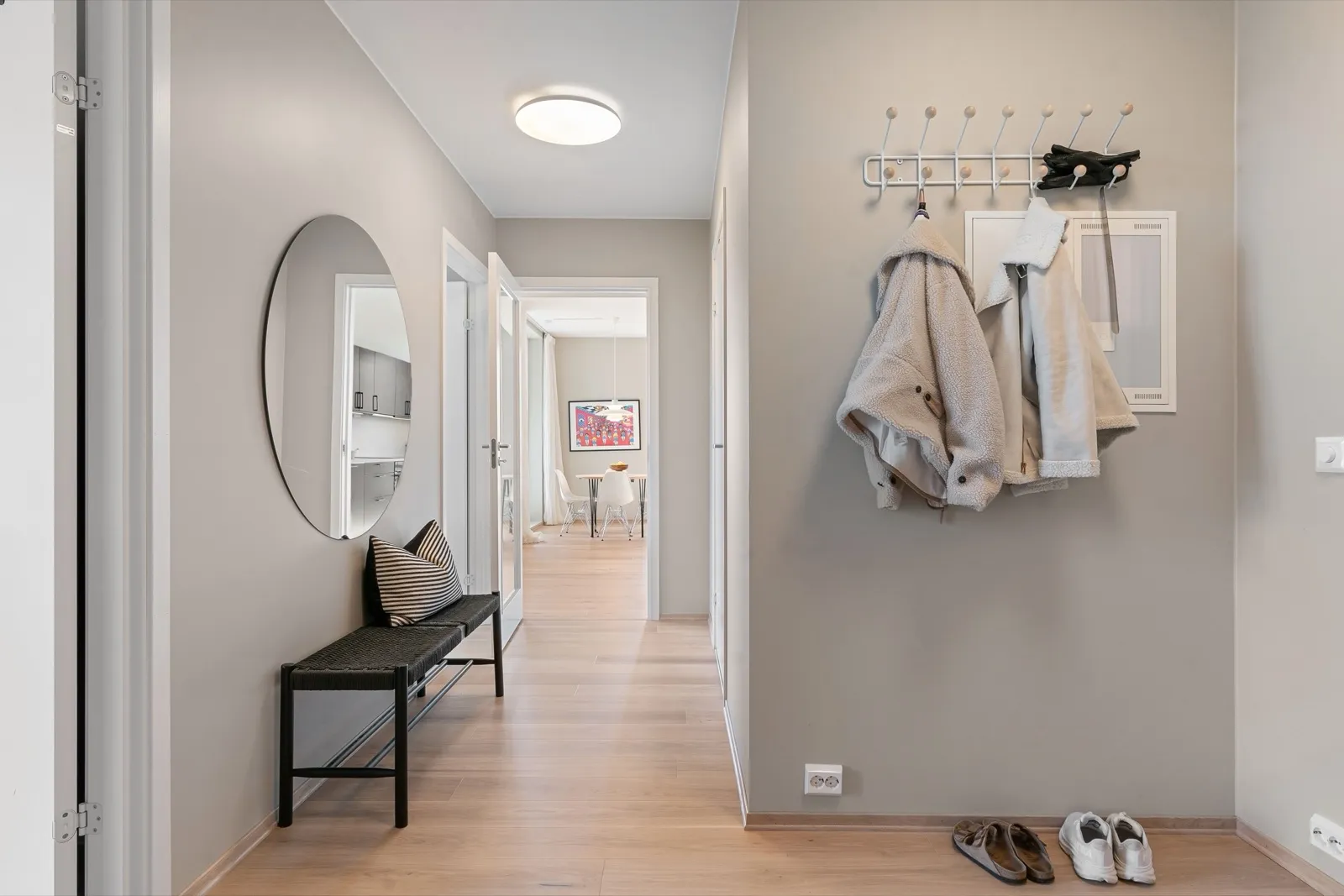
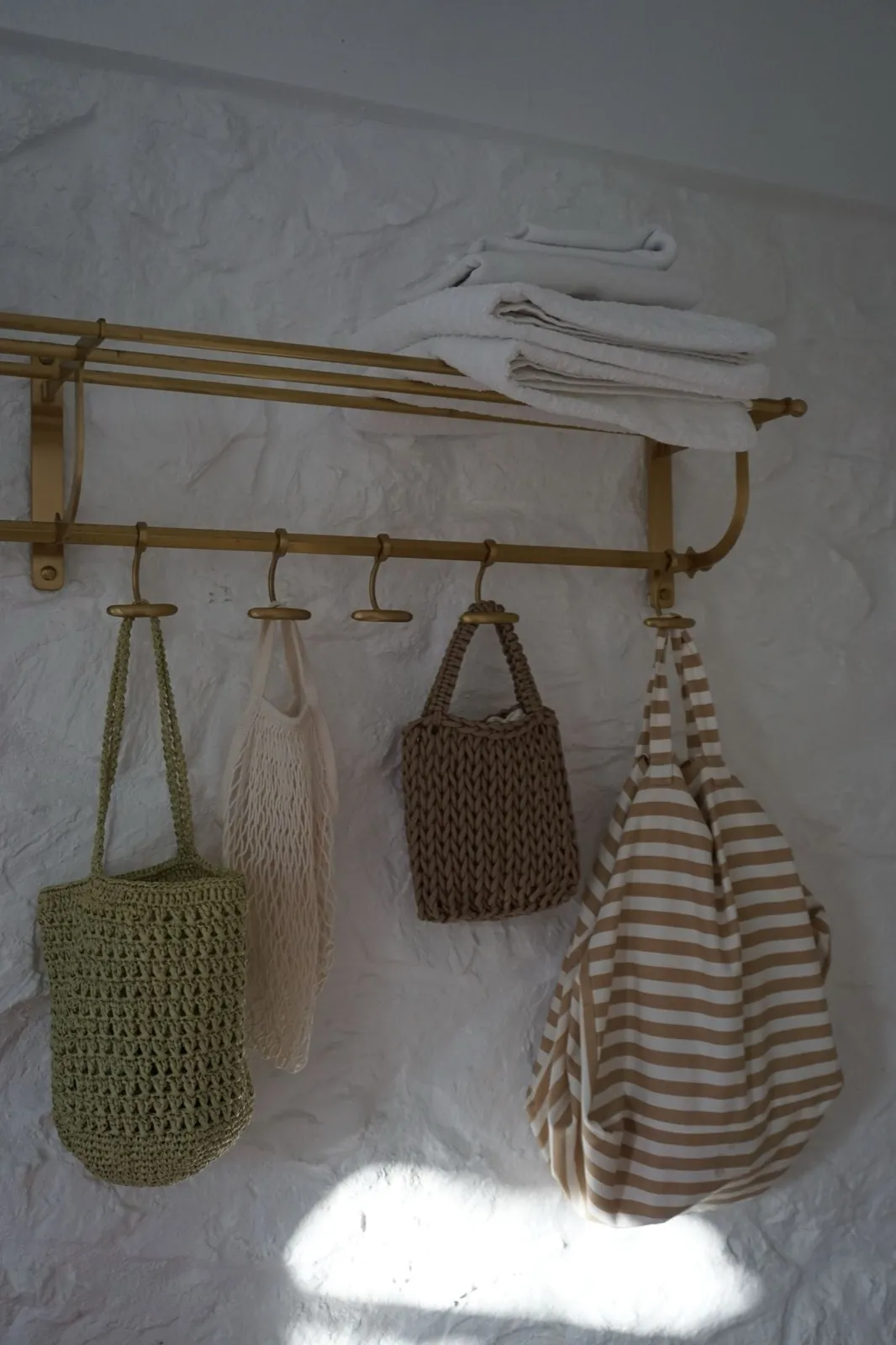
Plenty of apartments have no entry closet at all. A horizontal row of adhesive hooks does the job in about 30 inches of wall.
Set the hooks at 48 to 52 inches off the floor for adults, which puts a hanging coat above the baseboard so it does not brush the wall. Space them 6 to 8 inches apart. Closer than that and two coats crowd each other; wider and you waste the wall.
Weight is where people go wrong. Read the rating on the specific hook, then plan for about half of it. A hook rated for 5 pounds will hold a rain jacket all winter, but a wet wool coat plus a canvas tote is closer to 8 pounds and will pull it down.
Spread the load. Three hooks each carrying one light item beat one hook carrying three. And hang bags by their straps at the strap’s midpoint so the pull stays straight down. Adhesive hooks are strong against downward force and weak against outward pull, which is exactly what happens when you sling a bag on at an angle.
2. An adhesive-mounted wall grid or pegboard panel
A small grid panel, roughly 12 by 16 inches, mounted with four to six adhesive strips gives you a modular surface you can rearrange without touching the wall again.
Grids work best where you need many small things visible at once: a desk wall for headphones, cable loops, and scissors, or a kitchen wall for measuring cups and a small utensil rail.
Mount it with strips at all four corners plus one in the middle of each long side. Distribute the load across S-hooks rather than hanging everything from one point. Keep the total under about 5 pounds unless the panel and strips are specifically rated higher.
The advantage over individual hooks is that you can move things weekly without re-testing adhesion each time. The wall only gets touched once.
3. Tension rods for shelving that never touches a wall
Tension rods brace between two walls and hold by friction, so they leave nothing behind at all. Nothing to stick, nothing to peel.
Three placements earn their keep in a rental:
- A narrow alcove or the gap beside the fridge. Two rods set at the same height, front and back, make a shelf platform for a light basket.
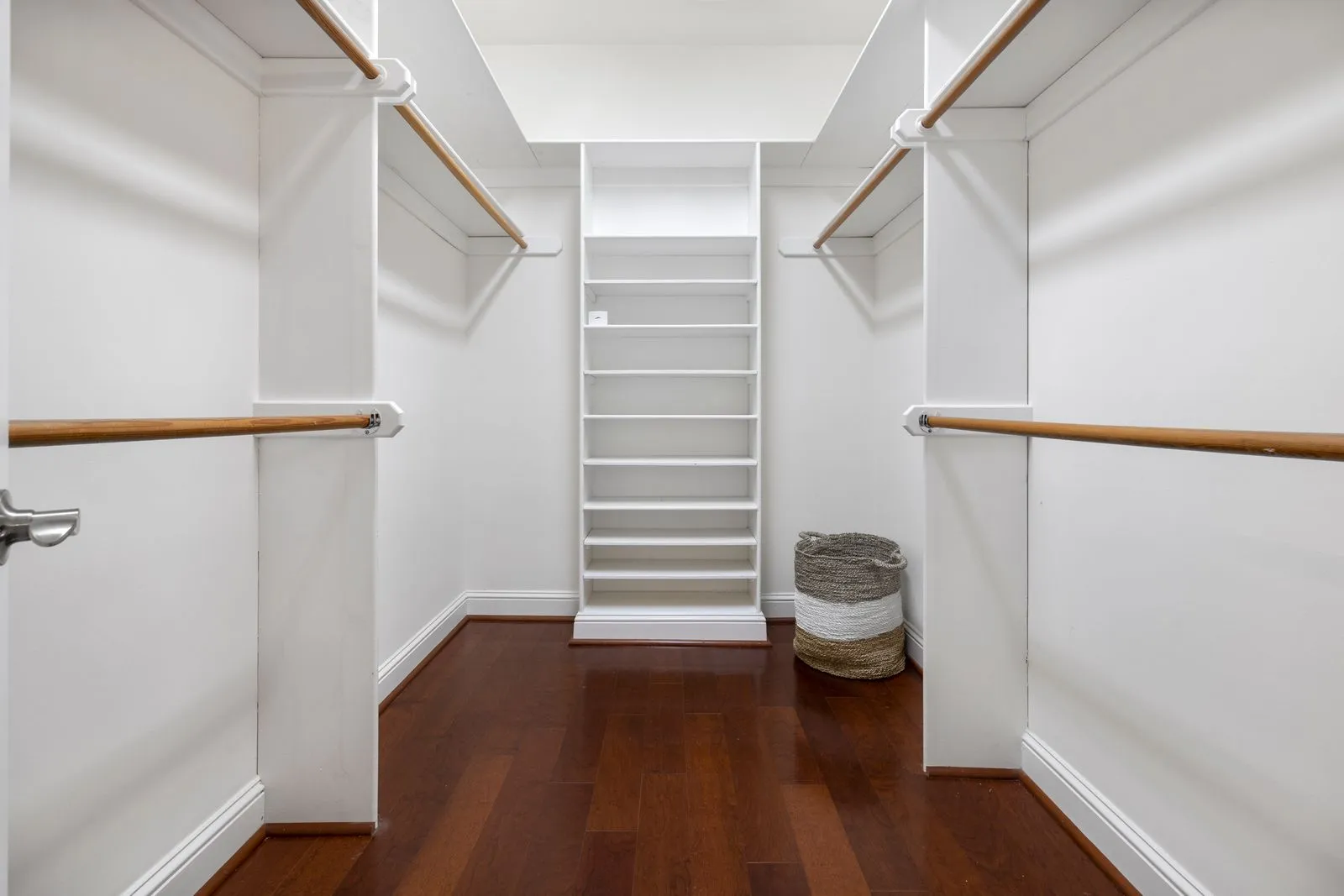
- Inside a closet, a second rod below the main one. This is the fastest way to double hanging space for shirts and folded pants.
- Under the kitchen sink, as a rail to hang spray bottles above the cabinet floor.
Tension rods hold well in compression and badly in shear. That means they carry weight pressing straight down on a short span, and they slip when something yanks sideways. Choose a rod rated above what you plan to hang, keep the span short, and check the tension every few weeks. Put a small furniture pad between the rod’s rubber foot and painted drywall so it does not print a mark into soft paint over time.
4. Over-the-door racks for the vertical space you already own
Every door in the apartment has a strip of dead vertical space behind it, roughly 24 to 30 inches wide and taller than you can reach. Over-the-door racks use it with no wall contact whatsoever.
Hooks that fold over the top edge of a door are the simplest version. Full-panel organizers with pockets hold shoes, cleaning supplies, or pantry packets. A slim wire rack on a pantry door adds what amounts to a whole extra shelf.
Two fit details matter. First, measure your door’s thickness. Interior doors in US apartments are usually 1 3/8 inches, but a solid-core or older door can be thicker, and a hook sized for a standard door will not seat. Second, check the clearance at the top of the door frame. If the rack is thicker than the gap, the door will not close.
Slip an adhesive felt pad on the back of the hook where it contacts the door face. That prevents the scuff mark that develops when a loaded rack rubs the same spot for two years.
5. Freestanding vertical storage that leans, not mounts
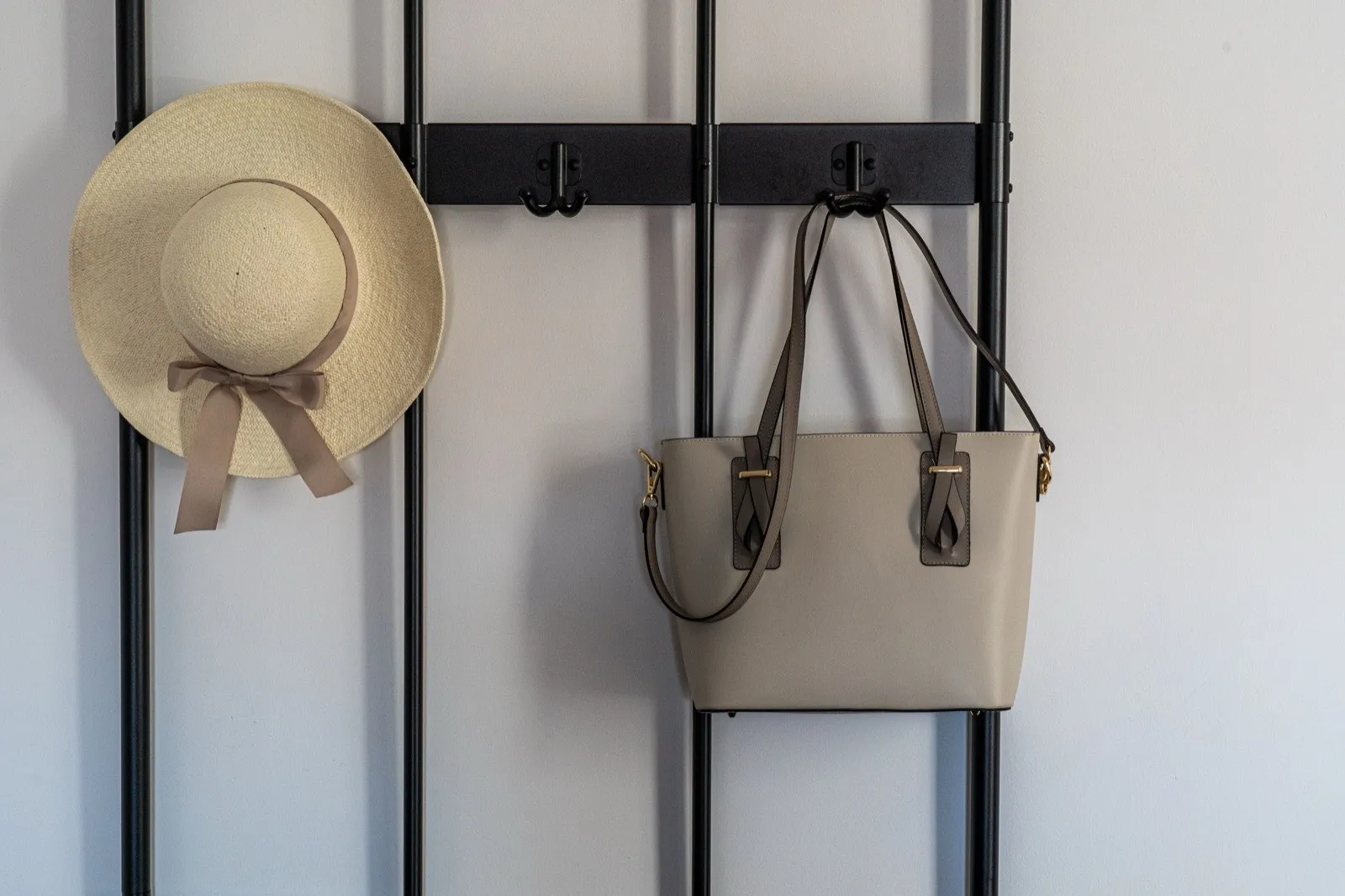
When adhesive will not hold and there is no facing wall for a tension rod, go freestanding. Leaning ladder shelves, narrow bookcases, and rolling carts add vertical storage with zero wall contact.
Look for a footprint under 14 inches deep so it does not crowd a small room. A leaning shelf gives you four or five levels in about 18 inches of floor width, which is often less floor space than the pile of stuff it replaces.
One safety point that is not optional. Tall freestanding furniture tips, and that is a serious hazard in a home with kids or pets. Most units ship with an anti-tip strap. If your lease allows a single small screw, that is the one place to spend it. If it truly does not, keep the unit short, load the heavy items on the bottom shelf, and place it where a fall would not land on anyone.
Removal is part of the install
The point of damage-free storage is move-out day. Do these things and the wall goes back to blank.
Pull the tab straight down, slowly. Adhesive strips are engineered to release when stretched parallel to the wall. Pull outward and you take paint with you. Stretch the tab down, slowly, until the strip lets go. If the tab tears off, warming the strip with a hairdryer for 30 seconds and working dental floss behind it usually gets it moving.
Take everything down before you paint or patch anything. Remove hooks first, then assess. Most of the time there is nothing to fix.
Photograph the walls at move-in and again at move-out. This costs two minutes and settles deposit disputes.
Do not leave adhesive up for years without checking it. Some strips get harder to remove cleanly with age and heat. If a hook has been on a sunny wall for two years, expect removal to take longer and be gentler with it.
What not to try
Poster putty for anything with weight. It holds paper. It stains paint and eventually oozes.
Duct tape or packing tape on a painted wall. These pull paint off in sheets. There is no gentle removal.
Stacking adhesive strips to increase capacity. Doubling up does not double the rating. It creates a thicker, weaker joint.
Mounting to wallpaper. The strip may hold. The wallpaper will not, and you will pull a patch off the wall.
Start with one wall
Do not try to fix the whole apartment in a weekend. Pick the wall that causes the most daily friction, usually the one by the front door or the one behind your desk, and set up just that one. Live with it for a week and see what you actually reach for before adding more.
If the front door is your problem spot, the layout and load-order details in our guide to small entryway organization build directly on these mounting rules. If it is the closet, the same damage-free logic applies to small closet organization, where tension rods do most of the heavy lifting.