7 Tension Rod Storage Hacks That Need Zero Tools
Look inside any cabinet in a first apartment and the same thing is happening. There is a stack of stuff on the shelf, then eight inches of nothing above it, then the next shelf. Multiply that by every cabinet, every closet, and the space under the sink, and a 600-square-foot unit is wasting the equivalent of a whole closet in air.
Standard shelving does not fix that, because you cannot add a shelf without drilling. A tension rod can. It is a spring-loaded or twist-locked tube that braces between two surfaces and holds by friction alone, it costs about six dollars, and installing one takes under a minute with nothing but your hands. What follows is seven places a rod earns its price, plus the sizing and weight numbers that decide whether it stays up.
How a tension rod actually holds
A tension rod does not grip. It presses. Twisting the rod extends it until the end caps push outward against two facing surfaces, and the friction from that pressure is the only thing holding it in place. Everything about using one well follows from that.
Three numbers matter. Diameter sets the stiffness: a 5/8-inch rod is for curtains and light bottles, 3/4-inch handles clothing on a short span, and 1-inch or larger is what you want for anything you would call heavy. Span is the enemy of capacity, because a rod rated for 20 pounds at 24 inches may sag visibly at 48. Rated weight on the package assumes a perfect install, so plan for about half of it.
Buy a rod whose range brackets your opening near the middle, not at the end. A 28-to-48-inch rod set to 47 inches has almost no thread left engaged, and that is the one that ends up on the floor at 3 a.m.
1. A spray bottle rail under the kitchen sink
The cabinet under the sink has vertical air around the drain pipe that nothing sits in. Set a small 5/8-inch rod across the cabinet, side wall to side wall, about 4 to 6 inches below the P-trap.
Hang spray bottles by the trigger so the neck rests on the rod and the body hangs free. A 30-inch sink base takes five or six bottles this way, and the cabinet floor underneath stays open for a bin. Six full bottles is roughly 9 pounds, which is fine for a short span, and the load presses straight down, which is the direction a rod handles best.
Load it up and close the door before you call it done. Bottles that clear the pipe with the door open sometimes swing into it when the door shuts.
2. Vertical dividers for baking sheets and cutting boards
Flat things stored flat are a trap. You need the sheet pan at the bottom, so you lift four things off it every time.
Two short rods set vertically, front to back inside a cabinet and spaced 2 to 3 inches apart, turn the space into slots. Baking sheets, cutting boards, cooling racks, and serving trays each stand on edge in their own gap, and you pull one out without touching the others.
For this one the rods brace between the cabinet floor and the underside of the shelf above, which is usually a 12 to 16 inch span. Short spans are where tension rods are strongest, so even a light 5/8-inch rod holds. The load here is sideways lean, not hanging weight, so keep boards roughly vertical rather than letting them slump against a rod at an angle.
3. A curtain that hides open shelving
Open shelving looks good in photos and honest in real life, which is to say it looks like your groceries. A rod and a panel of fabric fixes it in about two minutes.
Mount the rod inside the shelf opening, 1 to 2 inches back from the front edge so the curtain hangs clear of the shelf lip. A 5/8-inch rod is plenty. A curtain panel weighs 1 to 3 pounds, which is nothing, and the whole point is that the fabric moves with a light pull.
The same trick works on a doorless closet, a laundry alcove, and the gap under a pedestal sink. Use clip rings rather than a rod pocket if you want it to slide easily, and hem or cuff the panel so it clears the floor by half an inch. A curtain that drags picks up dust and eventually pulls the rod off level.

4. A second hanging tier in the closet
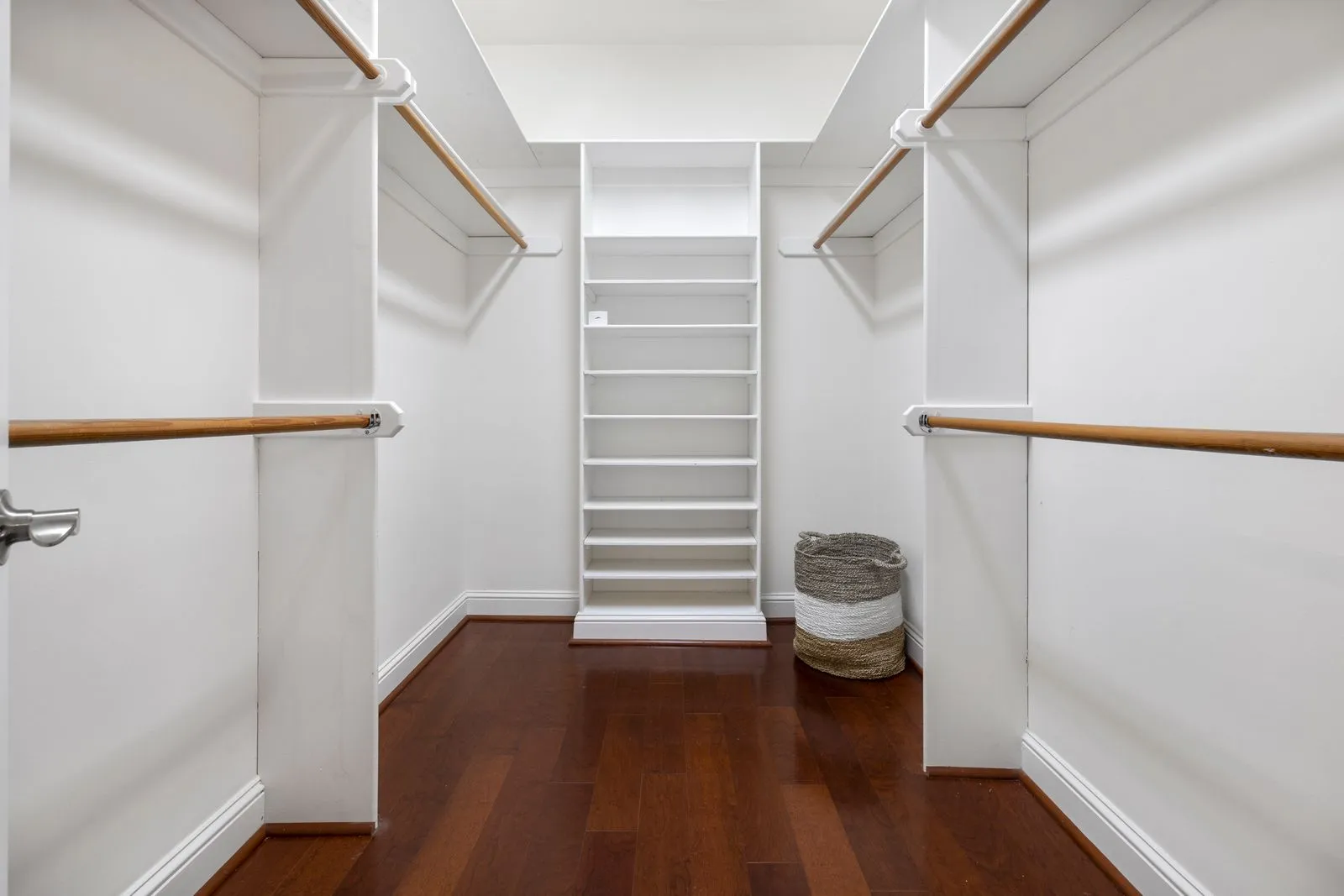
This is the highest-value use of a rod in any apartment. Most closets have one rod at about 66 inches and then 30-plus inches of dead air below the shirts.
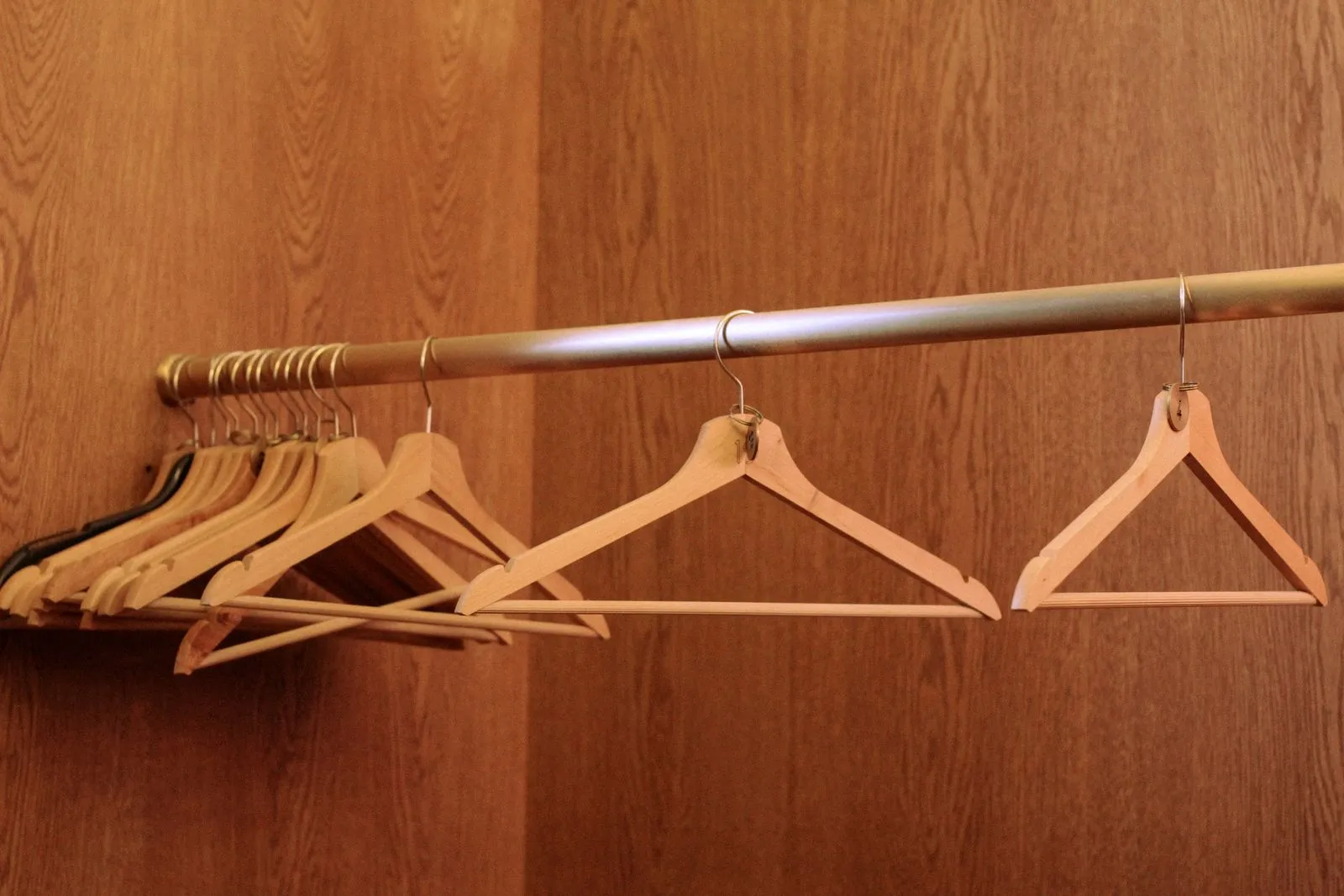
Add a second rod at 40 to 42 inches off the floor, spanning the same two side walls. Shirts, blouses, and folded pants over a hanger all fit in a 40-inch tier, so you get a second full row of hanging space for the cost of one rod. Keep the long items, coats and dresses, on one side of the original rod and give the doubled section to short items only.
Use a 3/4-inch or 1-inch rod here and check the rating. A dozen shirts on wood hangers is about 12 to 15 pounds, and that is real weight on a 24 to 30 inch span. If the closet is wider than about 48 inches, use two shorter rods in sequence rather than one long one, or accept a visible sag in the middle.
5. A room divider or window curtain with no brackets
Curtain brackets mean screws, and screws mean patching. A tension rod set inside the window frame carries a curtain with zero hardware in the wall.
Inside-mount only. Measure the width of the recess itself, not the trim, and pick a rod whose range puts your number in the middle. A 36-to-54-inch rod in a 44-inch window is right. Sheer or light cotton panels are the safe choice at this scale; heavy blackout drapes on a wide window are past what most spring rods hold, and that is the install people report failing.
The same rod across an alcove or a short hallway makes a divider. It does not work wall to wall in a studio, though. Rooms are 10 to 12 feet across, far past any tension rod’s span. Over about 6 feet, this is not the tool.
6. Shower storage without a suction cup
Suction cups fall off tile. A second tension rod inside the tub, running the same direction as the shower rod but set lower and toward the wall, gives you a rail for hanging caddies, mesh bags, and a squeegee.
Tile and fiberglass are slick, so this is the one place where a plain rubber end cap slips. Use a rod with a textured or grippy foot, keep the load under about 5 pounds, and re-check the tension every few weeks. Wet surfaces reduce friction, which means a rod that felt solid dry can creep down over a month of showers.
7. A divider inside a deep drawer or bin
Cut-to-length rods sold for drawers do the same job as a full-size rod at small scale. Set one across a deep drawer and it stops the stack of dish towels from migrating into the foil.
In a deep bin, a short rod near the top edge holds a small hanging pouch for lint rollers or clothespins. Nothing here carries more than a pound or two, so any diameter works.
Mistakes that put a rod on the floor
Overloading. Half the printed rating is the working number. If a rod is rated 20 pounds, treat 10 as your ceiling and remember that yanking a coat off adds a sudden load well above its resting weight.
Bracing against the wrong surface. Tension rods need two rigid, parallel, facing surfaces. Drywall between studs flexes, hollow cabinet side panels bow, and tile and glossy paint are too slick. Soft-set drywall is the most common failure: the rod holds for a week, then dents inward and drops.
Not measuring the opening. Measure the actual span at the height you plan to mount, not the width of the room. Cabinet openings taper, closets are rarely square, and half an inch of difference between the top and bottom of a closet decides which rod size you need.
Overtightening. Cranking the rod as hard as it goes does not add capacity, it just concentrates pressure on two small spots. Turn until it is firm and the rod does not rotate under hand pressure, then stop.
Ignoring the marks. A rubber foot pressed into painted drywall for two years leaves a ring. Put a small felt furniture pad between the cap and the wall on day one, and move-out is clean.
Set up the first one this week
Do not buy five rods. Buy one, put it under the kitchen sink, and live with it for a week. That spot has the shortest span, the lowest stakes, and the most obvious payoff, so it tells you quickly whether the rest of the list is worth doing in your unit.
The rod under the sink works best as part of a real plan for that cabinet, and the measuring steps in our guide to under-sink cabinet organization cover the clearances to check before you buy anything. If the bathroom is your tighter room, the same no-drill logic runs through our renter-friendly bathroom storage guide, where rods and over-door racks do most of the work.