Closet Organization on a Budget: Bins, Labels, and Dividers
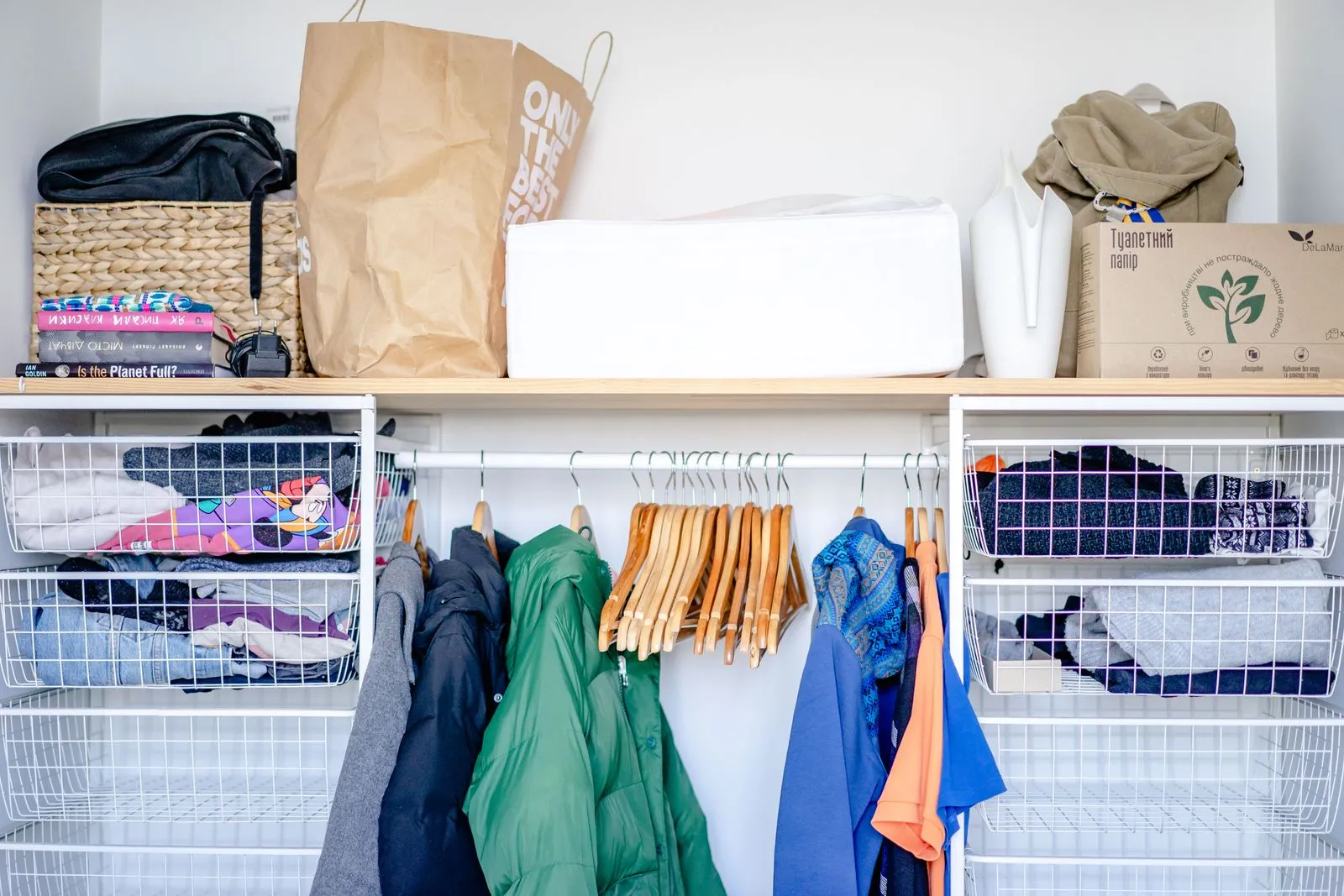
The closet door barely closes. A sweater is wedged in the gap, one shoe sits on top of a shoebox instead of in it, and the shelf above the rod is a landslide of things that might be seasonal decorations or might be nothing anyone remembers buying. A full renovation would fix it, but a full renovation is not happening on a first-apartment budget, and it does not need to. A chaotic closet is not a space problem most of the time. It is a container problem, and containers are cheap.
This system runs on three purchases: bins, a set of dividers, and a label maker or a roll of masking tape and a marker. Total spend stays under fifty dollars, nothing gets mounted with anything more permanent than adhesive strips, and the whole rebuild fits into an afternoon.
Empty everything and cut before you buy anything
Before a single bin comes home, the closet has to be empty. Pull every item out onto the bed, sorted into four piles: keep and wear, keep but rarely worn, donate, and trash. Anything that has not been touched in a year goes in the donate pile without debate, and anything stained, stretched out, or missing its match goes in the trash pile.
This step matters more than the shopping trip that follows it. A ten-dollar bin bought to hold twenty sweaters when only twelve are actually worn is a bin that is already too small, and the temptation is to cram instead of edit. Most closets shrink by 20 to 30 percent once the unworn and unusable items are gone, which changes the whole math on how many bins and how much shelf space the rebuild actually needs.
Set the budget and shop in this order
Fifty dollars stretches further when it is spent in a specific sequence, because each purchase should fix the biggest problem first.
Bins first, roughly $20 to $25. A set of four to six fabric or canvas bins, each about 10 to 13 inches wide, covers a standard closet shelf. Discount home stores and big-box retailers carry basic canvas bins for $3 to $6 each, which is the single best value in this whole project.
Shelf dividers second, roughly $10 to $15. Clear acrylic or wire dividers that clip onto an existing shelf edge run $4 to $8 a pair, and three pairs handle a typical 6-foot closet shelf.
A label maker or labels last, $8 to $20. A basic handheld label maker with adhesive tape runs about $15 to $20. A twelve-dollar roll of chalkboard-style labels with a wet-erase marker does nearly the same job for less, and it is the better choice for anyone who expects to swap categories seasonally.
Skip anything marketed as a full closet system with tracks and brackets. Those start around $150 and are designed to be mounted into studs, which is the opposite of what a rental budget or a rental lease wants.
Zone the shelves with fabric bins
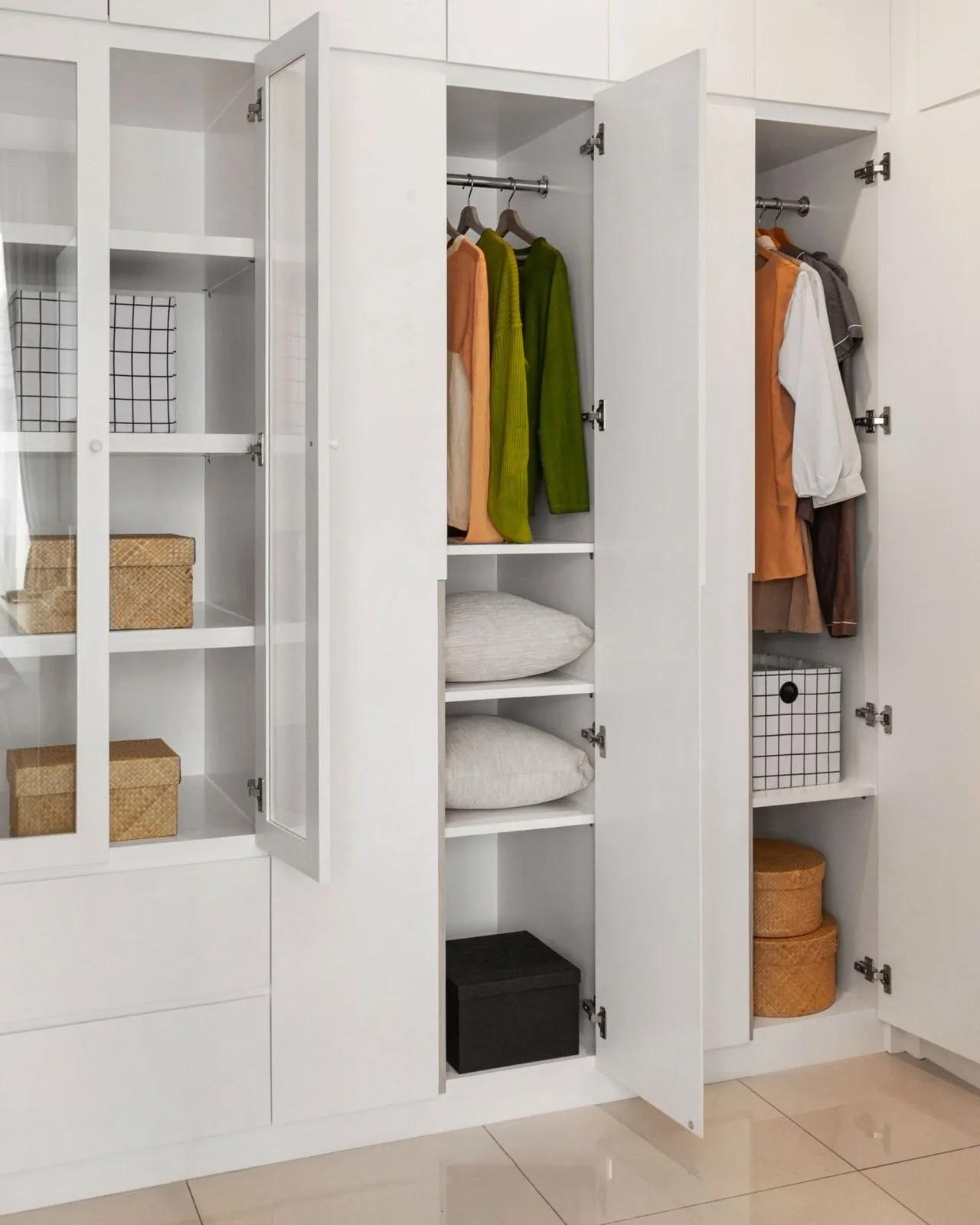
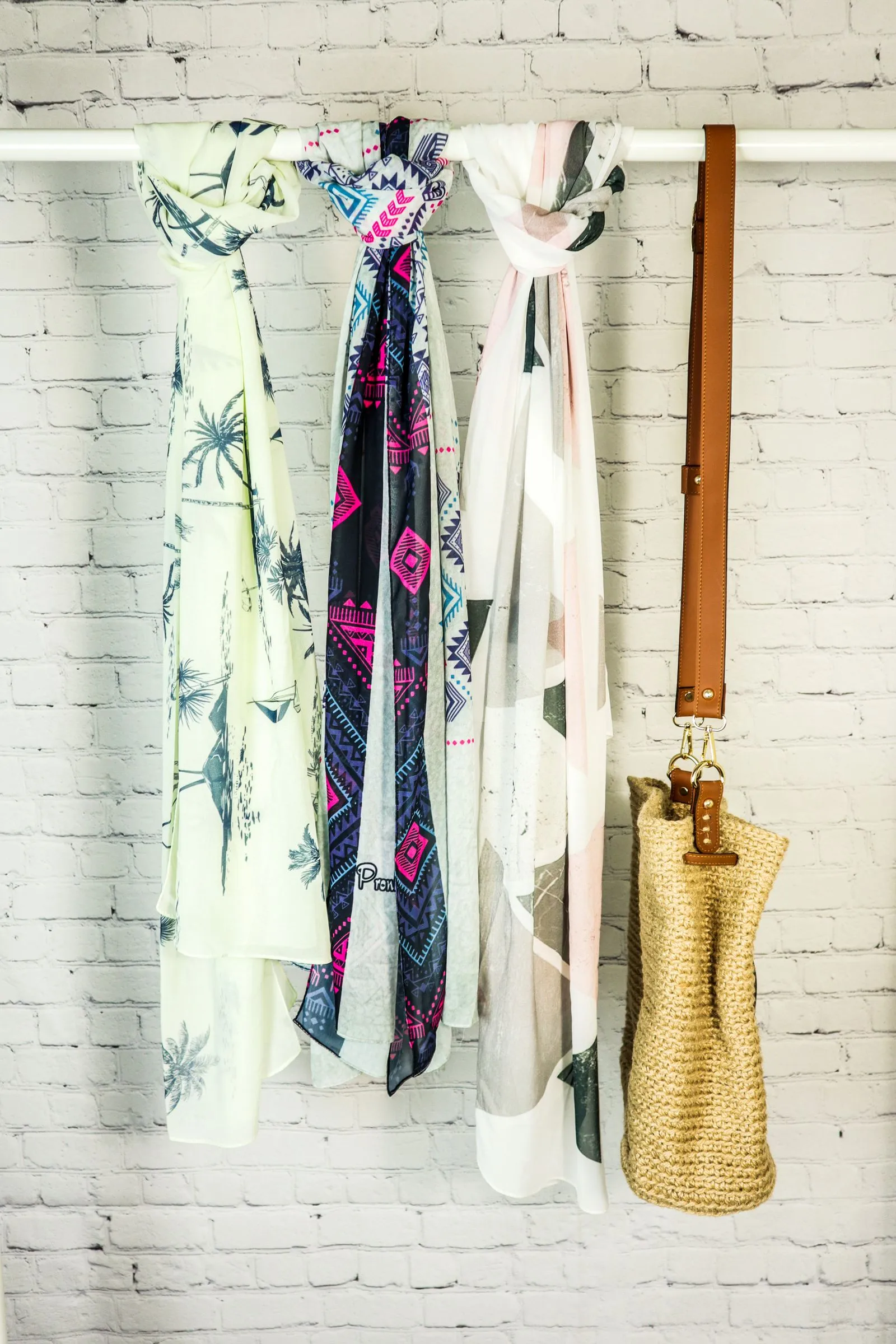
Once the closet is empty and edited, the shelf above the rod stops being a catch-all and becomes real storage. Split it into zones by category instead of letting items land wherever there is a gap: one bin for off-season clothing, one for accessories like scarves and belts, one for bags, and one for anything that does not have an obvious drawer or hook.

Fold rather than roll for the shelf bins. Folded sweaters and sweatshirts stack to about 4 to 5 inches per item, so a 12-inch-tall bin holds two to three folded layers before anything gets crushed against the shelf above it. Rolling works better in a drawer, but on an open shelf, folded stacks keep their shape and make it obvious at a glance whether the bin is full or half empty. If the closet shares space with shoes on the floor, the layout ideas in our guide to small closet organization cover how to fit a shoe zone into the same footprint without eating into the bin shelf.
Split the hanging space and shelf stacks with dividers
Dividers solve the problem bins cannot: the space where clothes are folded flat on an open shelf rather than contained in a bin, like stacks of jeans or heavier sweaters that are too bulky to fold into a fabric bin without losing their shape.
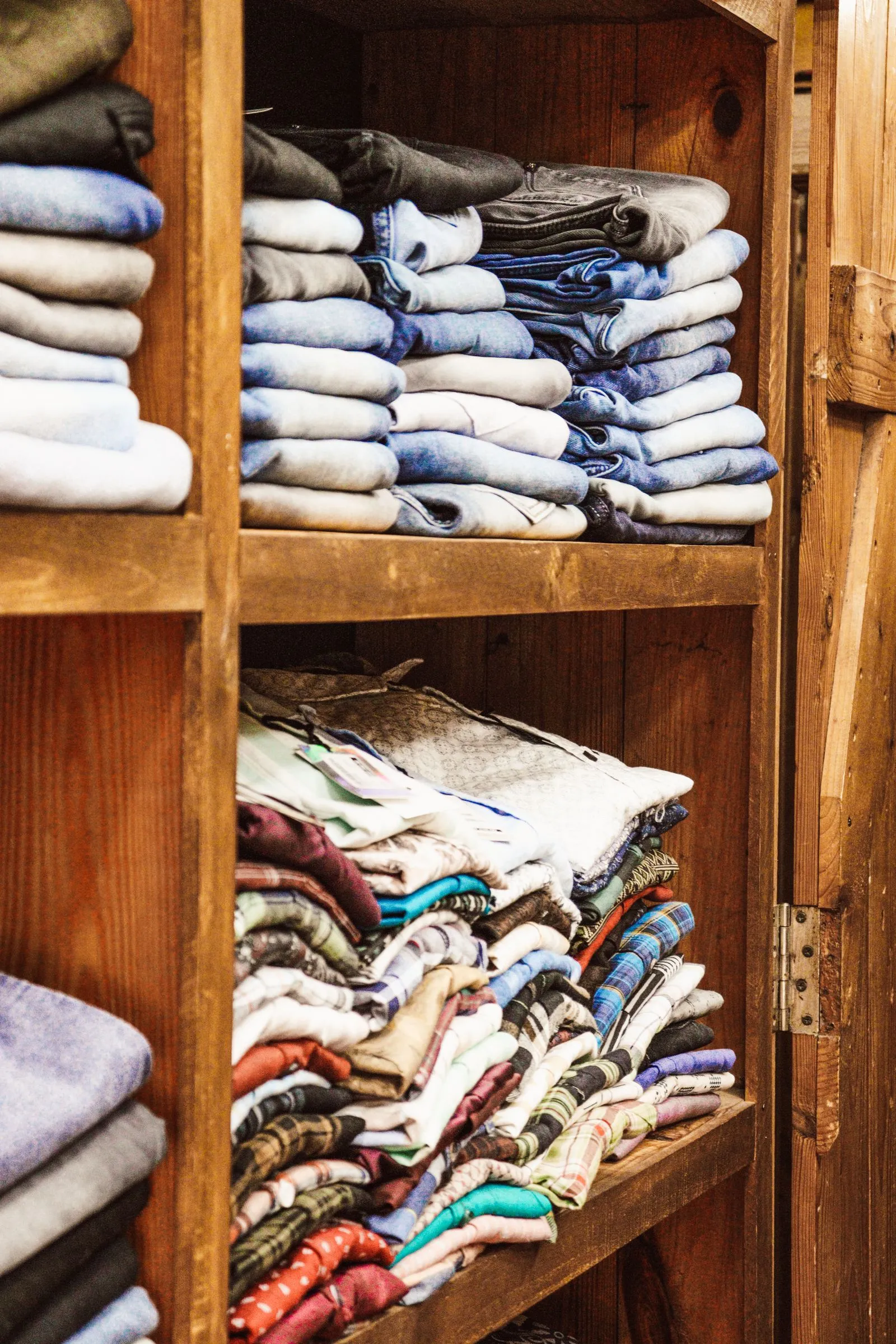
Clip a divider every 10 to 12 inches along the shelf, which keeps each stack around six to eight folded items tall before it becomes unstable enough to topple into its neighbor. Without dividers, a shelf of folded jeans slowly avalanches into one wide pile the first time someone pulls an item from the middle of a stack. With dividers, pulling the middle item only disturbs its own six-inch column. The clip-on style needs no drilling and no adhesive on the shelf itself, which matters in a rental where the closet shelving is original to the unit and not something to modify. For the rest of the closet, the no-damage hardware covered in our guide to command hook and wall storage hacks for renters handles hanging rails, hooks, and mirrors the same way, without a landlord ever noticing.
Label every bin and shelf the same way
A bin without a label reverts to a junk drawer within a month, because “I’ll remember what’s in here” stops being true the moment a second bin looks identical to the first. Label the front of every bin in the same format: category name, nothing more. “Scarves,” not “winter scarves and maybe some gloves and that one hat.” A short label is one a five-second glance can process; a long one gets skipped.
Label the shelf edge too, directly below or beside each zone, not just the bin. When a bin gets pulled down to grab something and set back in the wrong spot, a shelf label is what puts it back in the right zone instead of wherever there was room. This single habit is what separates a system that lasts six months from one that lasts two weeks.
The five-minute reset that keeps the closet from sliding back
A labeled, bin-and-divider closet does not stay organized because the containers are good. It stays organized because of a five-minute habit done at the end of each week: refold anything that got left on the shelf instead of back in its bin, check that no stack against a divider has climbed past eight items, and confirm every bin is still in the zone its label describes.
Skip that reset for a month and the closet drifts back toward the pile it started as, one misplaced sweater at a time. Do it every week and the fifty-dollar system holds indefinitely, because the real fix was never the bins themselves. It was giving every single item, down to the last scarf, one specific place it is supposed to live, and cutting down the total to what actually fits there. The door closes flat against the frame now, no sweater wedged in the gap, and finding anything takes seconds instead of a full excavation of the shelf.