Belt, Scarf, and Bag Organization Ideas for a Small Closet
One hook by the closet door is holding four belts, six scarves, and a lanyard, all knotted into a single fabric ball that has to be unpicked every morning. The handbags gave up on the hook entirely and now slump in a pile on the shelf above, so grabbing the one you actually want means moving three others out of the way first. Nothing here is really broken. There is just no home for any of it, so everything ends up in the same one or two spots by default.
Accessories are the hardest category in a closet because they do not hang the way clothes do and they do not stack the way shoes do. A belt has no shoulders for a hanger. A scarf slides off a rod in under a minute. A bag collapses into a shapeless heap the second it is not holding its own weight upright. Solving accessory clutter takes a different kind of storage for each shape, not one more hook.
Sort before you buy anything
Before a single hook goes on the wall, pull every belt, scarf, bag, and loose accessory out of the closet and lay it on the bed. This takes 10 minutes and it is the step that gets skipped, which is exactly why the pile keeps rebuilding itself even after a fresh organizing push.
Separate into four piles: belts, scarves, bags, and small accessories like jewelry, hair clips, and sunglasses. While you are at it, cull. A belt that has not been worn in a year and does not fit the current rotation goes to donate. Scarves with pulled threads or a smell that will not wash out go too. Most closets are storing 30 to 40 percent more accessories than actually get worn, and that excess is what makes every system, no matter how good, feel too small.
Count what is left in each pile. That number tells you how many hooks, loops, or shelf slots to actually buy, instead of guessing and ending up short by the end of the week.
Give belts a row of hooks, not one
A single hook holding four or five belts forces you to pull the whole stack off just to find the brown one, then re-hang all of it. The fix is a row of individual hooks, spaced 2 to 3 inches apart, mounted on the inside of the closet door or a strip of unused wall.
A cup hook or a small coat hook, screwed in at a slight downward angle so the belt buckle catches and holds, works for about $1 to $2 per hook. Six to eight hooks in a row handles most people’s entire belt collection with each one hanging separately and visible at a glance. If drilling into the door is not an option, an over-the-door hook rail with 6 to 10 pegs does the same job with zero holes, usually for $12 to $18.
On a wall you can drill, a single multi-hook rail spares you the job of lining up eight separate screws at even spacing. Umbra’s Tempo 6 wall hook runs 18.6 inches long with six staggered hooks rated 5 pounds each, which covers a six-belt collection off one mounting. At around $30 it costs more than loose cup hooks, so it earns its price mainly where the hooks are visible from the bedroom rather than hidden behind a closet door.
Hang belts buckle-up so the leather strap falls straight down without folding at a crease. A belt stored folded over a hook for months develops a permanent crack right at the fold line, which is the single fastest way to ruin one that otherwise had years of life left.
Loop scarves onto rings instead of a shared rod
Scarves are the accessory most likely to end up in a tangled pile because a rod or a single hook lets them slide together and knot. A ring system solves this in a way a bare rod cannot.
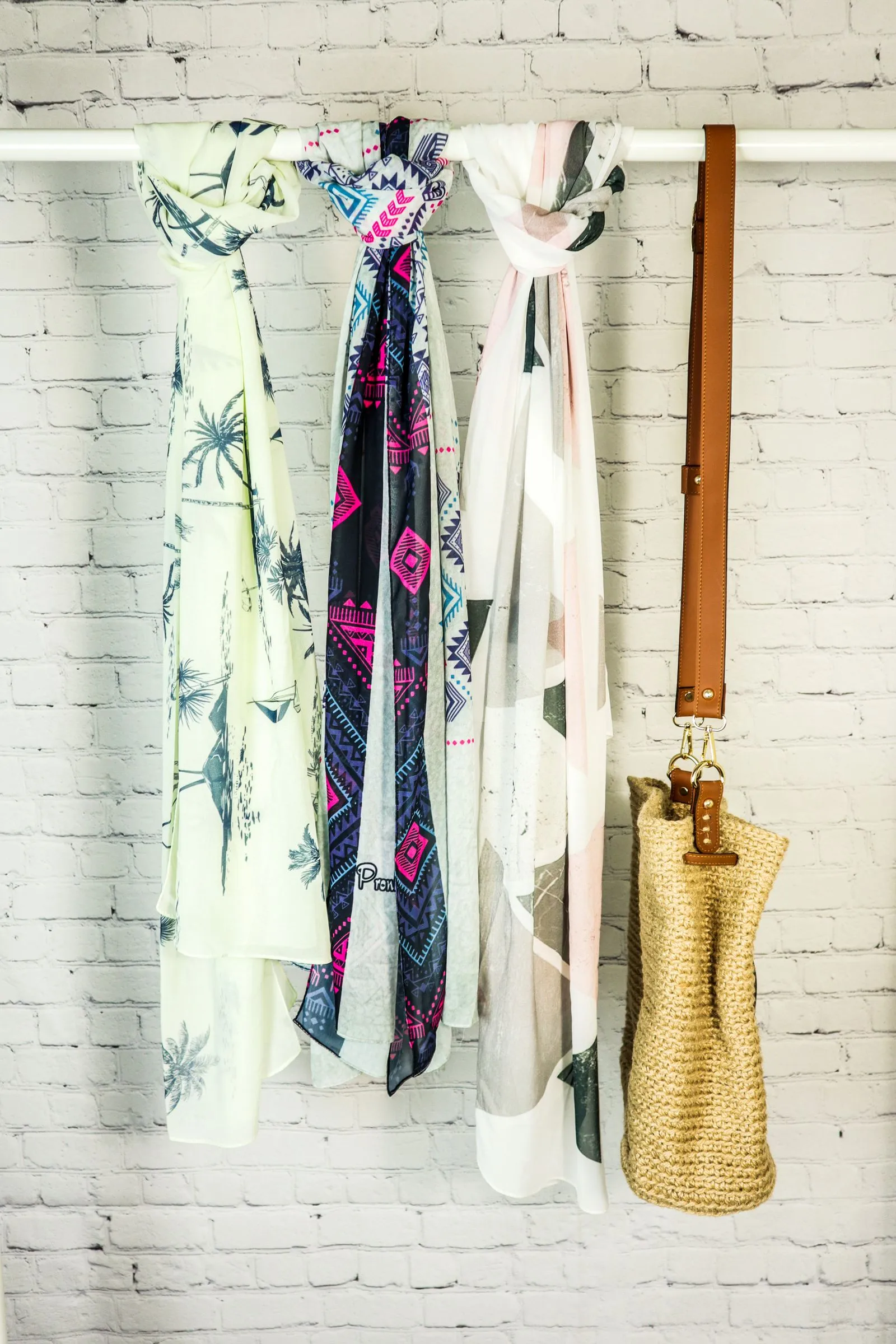
Clip 8 to 12 curtain rings or S-hooks onto a hanger, or use a dedicated scarf hanger with the rings already built in, and loop one scarf through each ring. Every scarf gets its own slot, hangs separately, and pulls free without disturbing the others. The whole thing takes up the width of a single hanger, so it costs almost no closet space while replacing what used to be a spot on the floor or a drawer nobody could close.
If a scarf is bulkier, like a chunky knit winter one, fold it in thirds lengthwise before looping it through the ring so it does not stretch out of shape hanging by one corner for months. Lighter silk and cotton scarves can loop through as-is with no folding needed.
Line bags up with shelf dividers so they stand
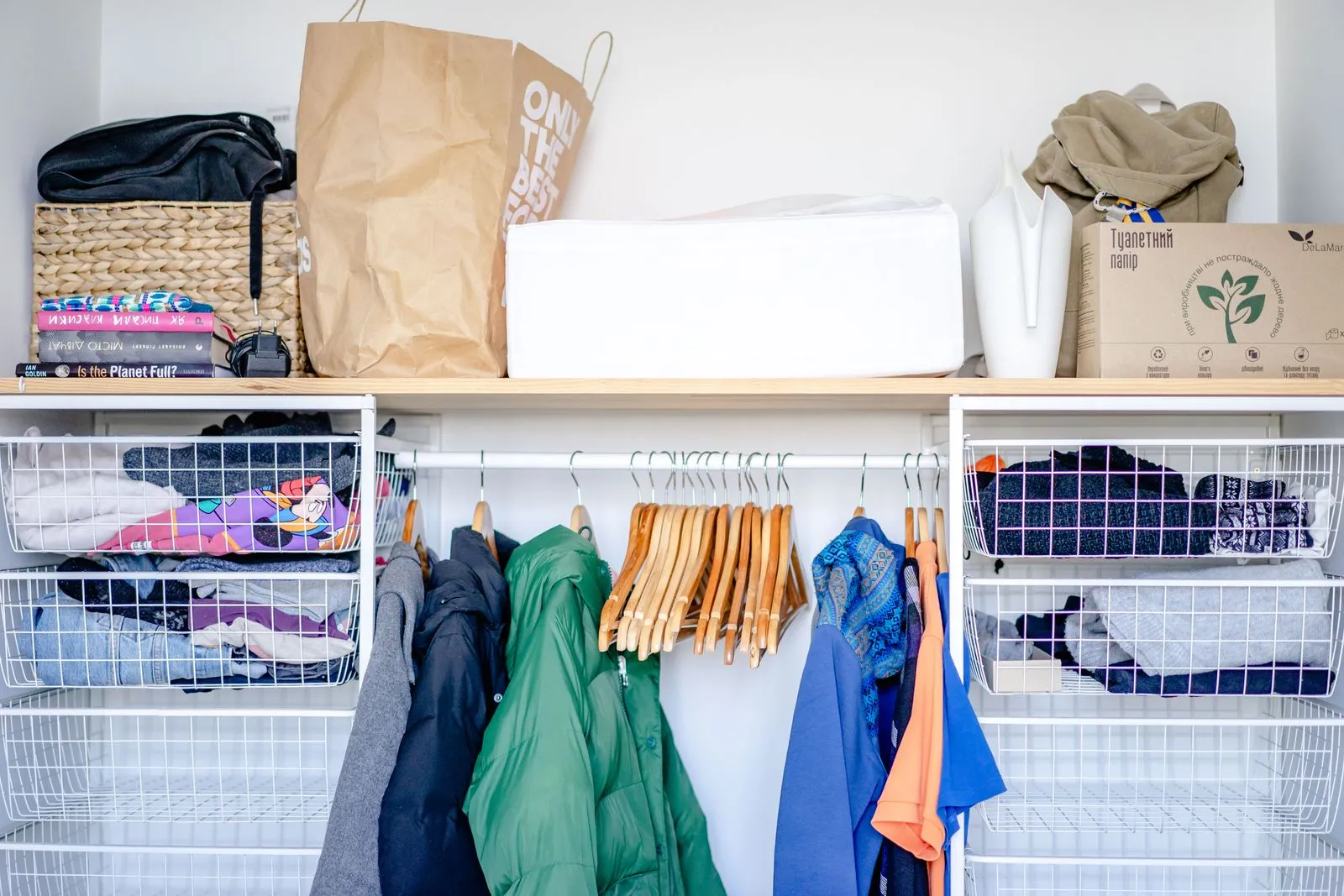
Bags are the item most likely to defeat a shelf, because a soft-sided tote or an unstructured leather bag has no shape of its own and slumps sideways the moment it is not stuffed or held upright. Left alone on an open shelf, three or four bags collapse into one lopsided pile within a week.
Shelf dividers, the kind that clip onto a wire or wood shelf edge and stand up vertically every 6 to 8 inches, turn one wide shelf into a row of individual bag-sized slots. Each bag gets its own slot, stands upright the way a book stands on a shelf, and stays visible from the front instead of getting buried. A set of four to six dividers runs about $15 to $25 and needs no tools beyond a screwdriver for most clip-on styles.
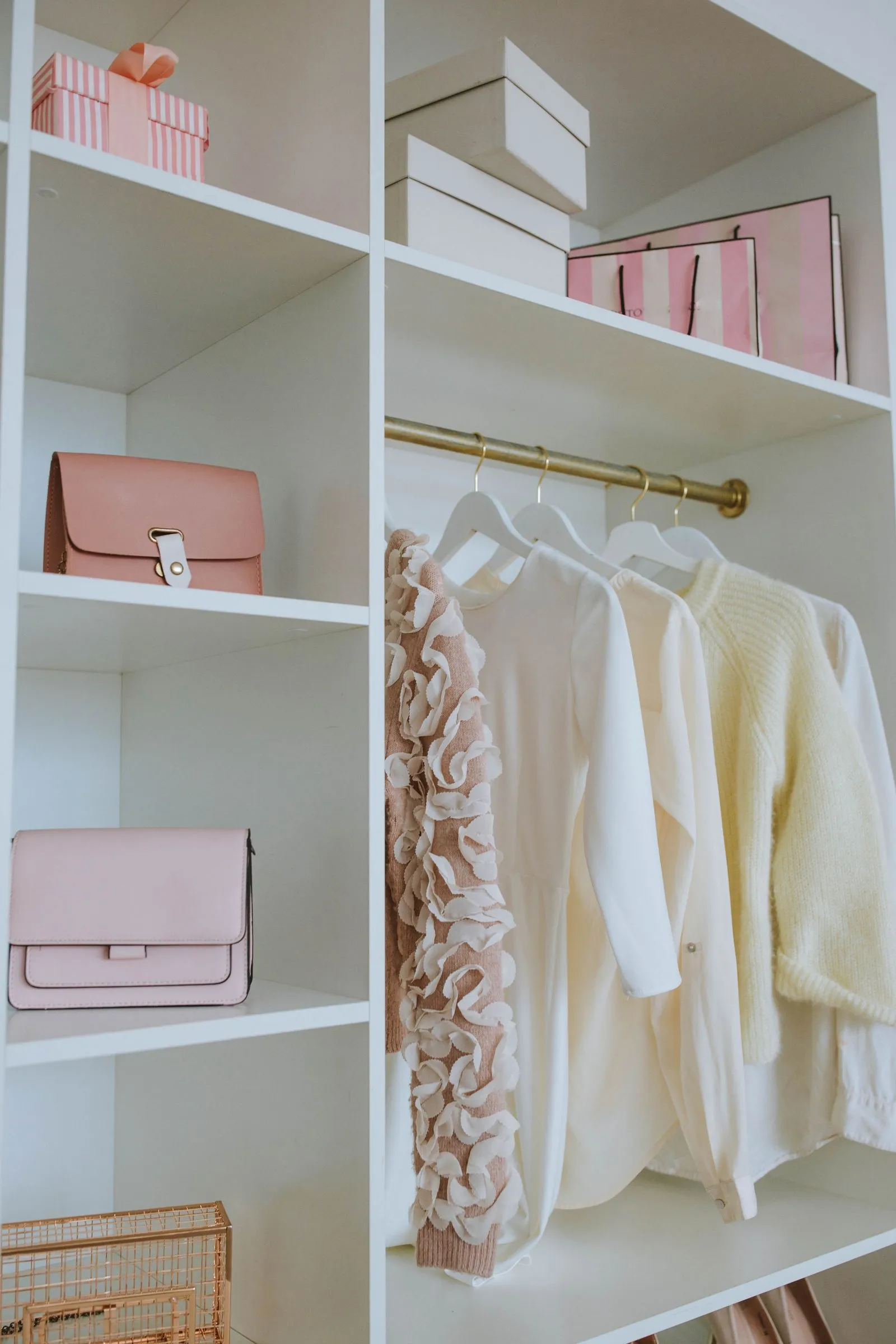
Stuff structured bags with a rolled towel or bubble wrap before shelving them so they hold their shape between uses instead of caving in on themselves. If your closet has built-in cubbies instead of a flat shelf, even better: one bag per cubby is the same principle already built into the shelving, and it is one of the easiest wins if you are working from our guide to small-space closet organization.
Corral small accessories in a divided drawer
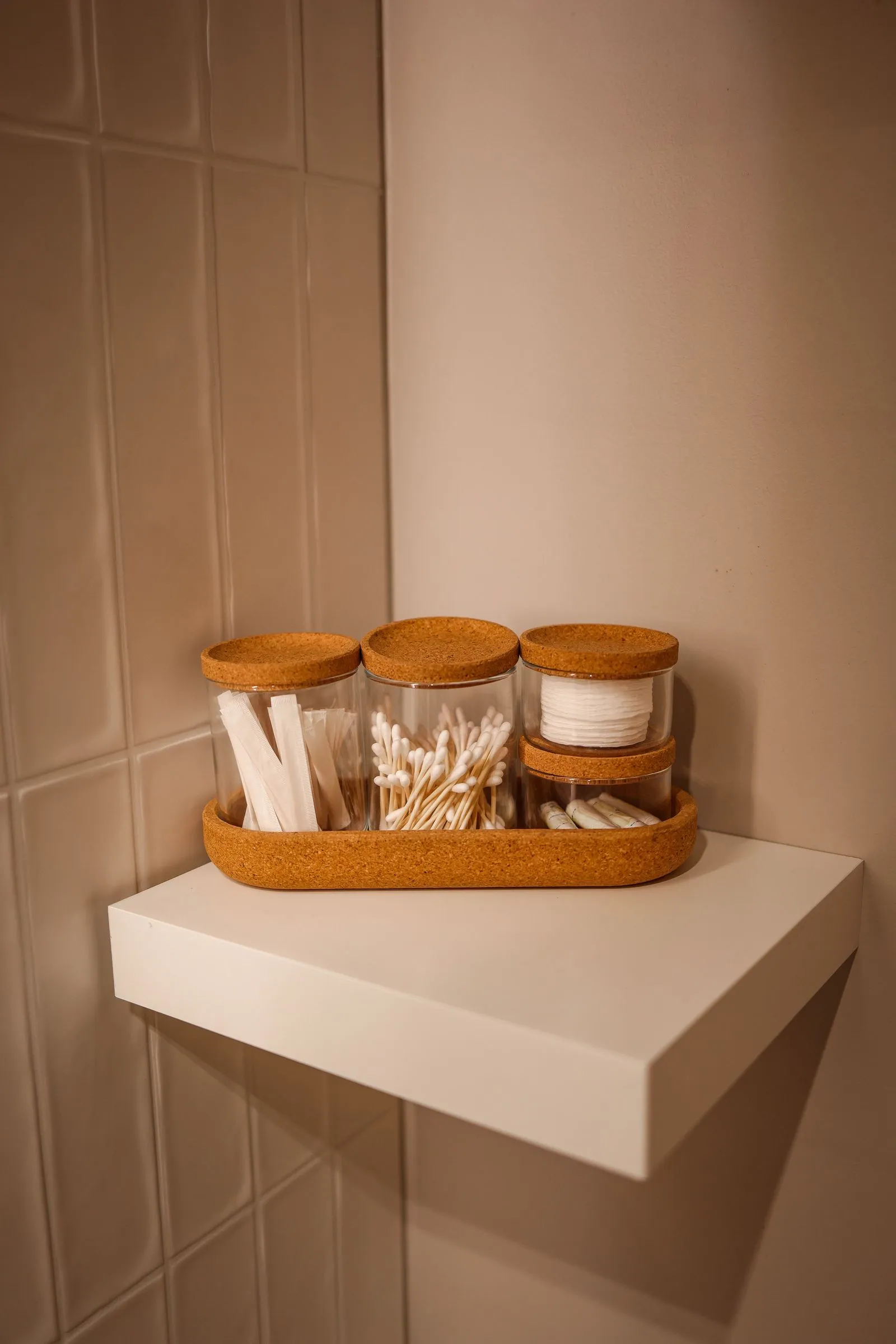
Jewelry, hair clips, sunglasses, and the loose belt buckles or scarf pins that do not fit any of the systems above need a container of their own, or they end up as loose clutter on top of the dresser. A shallow divided tray, the kind with 6 to 12 small compartments, sized to fit inside a closet drawer, solves this for about $10 to $15.
Give each compartment one category: rings in one, bracelets in another, hair clips in a third. A tray with mixed categories turns back into a jumble the first time someone is in a hurry and drops a necklace in whatever slot is closest. If closet drawer space does not exist, a small stackable set of clear bins on the shelf does the same job, just without sliding in and out.
A stacked tray is the version of that with the compartments already built in. Umbra’s Terrace 3-tier jewelry tray puts three linen-lined trays, each divided differently for rings, bracelets, and longer chains, into a footprint of 10 by 7 inches and 7.75 inches tall, and each tray slides out on its own. Three categories get their own level instead of three times the shelf width. At $60 in walnut-finished rubberwood it is several times the price of the basic drawer tray above, which is the honest trade: it is built to sit out in the open where a bare plastic divider would look like a bare plastic divider.
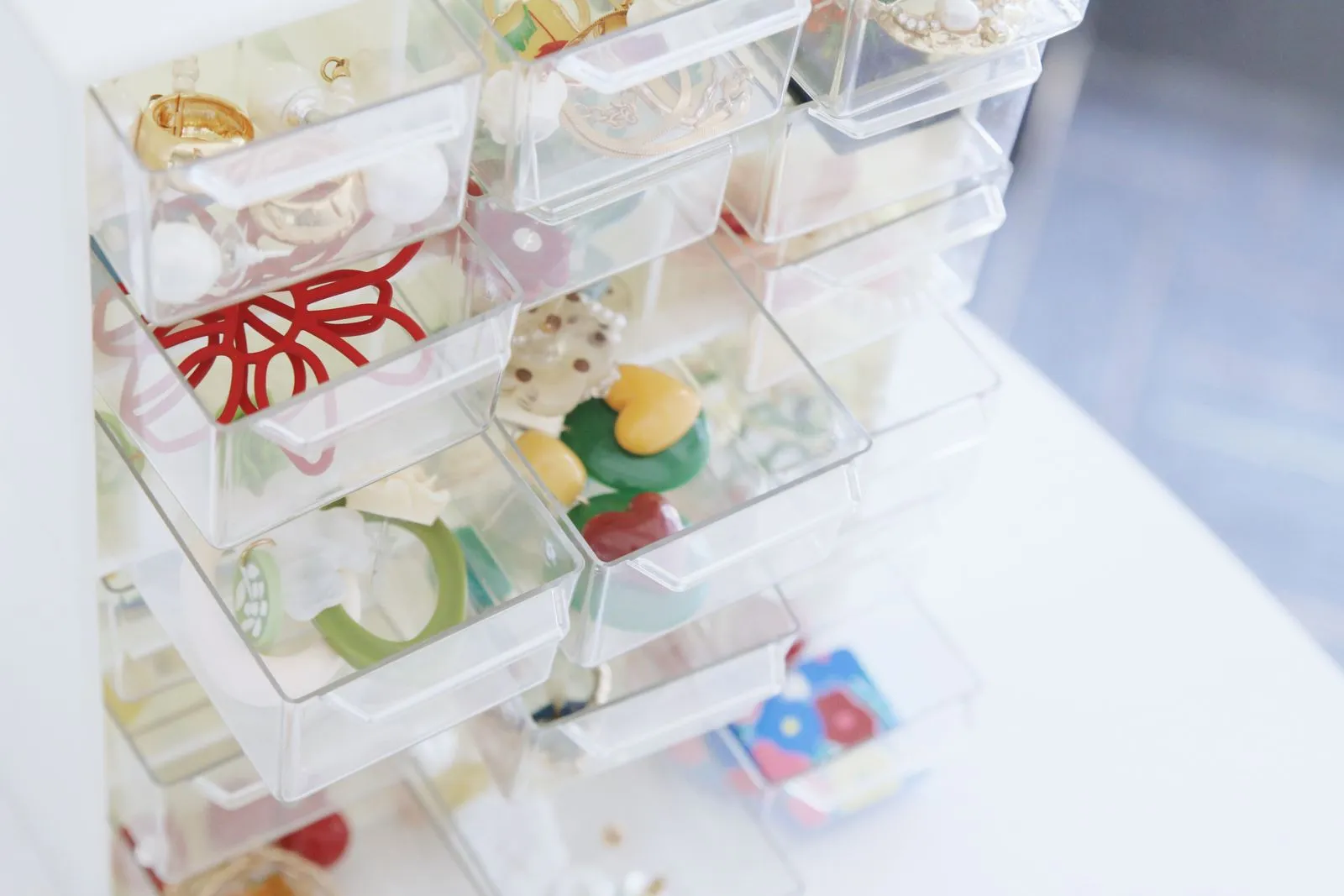
Keep this tray near the belt hooks and scarf rings rather than across the room. Small accessories get abandoned on a dresser mostly because the real home for them is one extra room away from where the rest of the outfit gets put together.
The reset that keeps every system working
None of these systems survive on their own. They survive because putting something back takes less effort than dropping it on the floor or piling it on the shelf, and because the habit of using them gets repeated every single day.
After getting dressed, take 20 seconds before leaving the closet: buckle the belt back onto its own hook, loop the scarf back through its ring, slide the bag back into its shelf slot, and drop any jewelry that came off back into its compartment. That is the entire reset. It takes less time than retying a shoe.
Skip that 20 seconds for a week and the belt goes back onto whichever hook is closest, the scarf gets draped over a doorknob, and the bag lands on the floor because the shelf slot is “just for a minute.” The system did not fail. It just was not used. Do the reset every time, though, and the closet door hook that used to hold four tangled belts stays empty, because every accessory finally has a slot that is faster to use than the floor. If shoes are the next pile fighting for space in the same closet, the slot-and-divider approach in our closet shoe storage guide follows the same logic that just fixed the accessories.