Medicine Cabinet Organization Ideas for a Tiny Shelf
Open the medicine cabinet and something hits the sink before the door is even halfway open. A travel-size lotion, a loose nail clipper, a cotton ball that missed its jar weeks ago. The shelf is maybe 14 inches wide and 4 inches deep, and right now it is holding closer to double that in bottles stacked two and three deep. Nothing in there is easy to find, because finding it means knocking over whatever is standing in front of it first.
That crowding does not happen all at once. A new serum gets pushed in front of the old one. A backup bottle of pain reliever joins the one already open. Six months later the shelf has no order left, just density. The fix is not a bigger cabinet, since most apartments and older homes only have the one built into the wall. It is a system that respects how little room three glass shelves actually give you.
Pull everything off and measure the actual space
Before anything goes back in, take every single item out and set it on the counter. You cannot organize what you cannot see, and a crowded cabinet hides duplicates and expired products behind whatever is in front.
While the shelf is empty, measure it. A standard medicine cabinet interior runs 14 to 16 inches wide, with three glass shelves spaced about 4.5 inches apart and only 3 to 4 inches deep. That is barely enough clearance for a standing pump bottle, which is exactly why oversized lotions and tall vitamin bottles are usually the first things to get wedged in sideways. Write the shelf height down before you buy a single organizer. A tray that is 4.75 inches tall will not fit under a 4.5-inch shelf, full stop.
Sort what came off the shelf into rough piles: daily medicine and vitamins, first aid basics, skincare, dental care, and small tools like tweezers, a nail clipper, and a thermometer. Seeing five piles instead of one heap already makes the next step obvious.
Cull before anything goes back in
A crowded cabinet almost always holds more than one household actually uses. Go through each pile and look for three things. Duplicates: it is common to find two half-used tubes of the same ointment or three nearly empty bottles of the same pain reliever, bought because the first one could not be found. Consolidate what is the same into one container. Expired items: check the date printed on the label or cap, and if a product is past its date or you cannot find a date at all, it goes. Most pharmacies have a medication take-back box for anything you are unsure how to throw out, and the product label itself usually lists disposal instructions if a take-back location is not nearby. Condition: a dried-out ointment, a crusted-shut bottle cap, or a bent tweezer that no longer closes is done, no matter how new it looks.
Most households find they are storing three or four products for jobs that one basic pain reliever and one adhesive bandage box already cover. Cutting the lineup down to what gets used monthly is what makes the trays in the next step actually close.
Group what’s left into small stackable trays
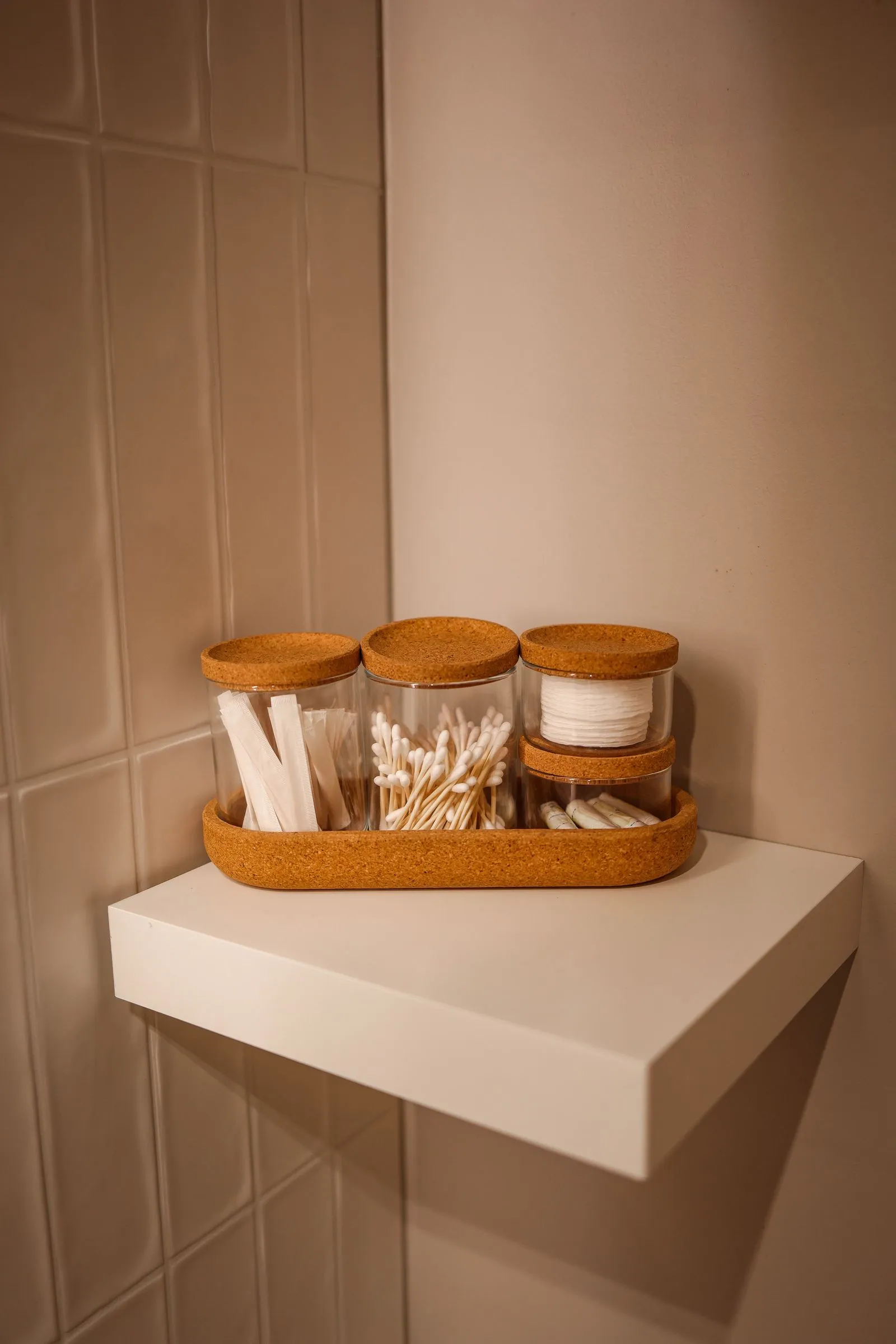
This is the change that fixes the shelf for good. Instead of setting bottles directly on the glass where they slide and topple, put them into small trays sized to the shelf, roughly 6 by 4 inches or 8 by 4 inches, and give each tray one category. One tray for daily medicine and vitamins. One tray for nightly skincare. One tray for dental care and small tools.

Stackable trays, sold in sets of two or three for about 8 to 15 dollars, let you use the shelf’s height instead of just its floor space. A short tray of tablet bottles can sit under a taller tray of skincare droppers without either one crowding the other. The entire point is that a tray lifts out as one unit. Reaching for the daily vitamins means lifting one tray to the counter, not walking your hand through six loose bottles first.
Give each shelf one job
Once the trays exist, assign each of the three shelves a single purpose instead of letting items migrate wherever there is a gap. The top shelf, usually the hardest to see into, works best for backstock and anything used only occasionally, like a spare bottle of allergy medicine or a first aid kit. The middle shelf, at eye level, is prime real estate: put the tray you reach for daily right there. The bottom shelf, often the shortest, holds shorter items like the dental care tray or a shallow tray of adhesive bandages and antiseptic.
If there are young children in the house, it is worth keeping medicine on a shelf they cannot see or reach without help, which is one more reason the top shelf earns its keep. This is a household habit, not a special product, and it costs nothing to put in place today.
Let the counter and door catch the overflow
Not everything survives the cull, but not everything fits on three 4-inch shelves either. Bulk backstock, a hair dryer, or a large bottle of lotion belongs somewhere other than the medicine cabinet.
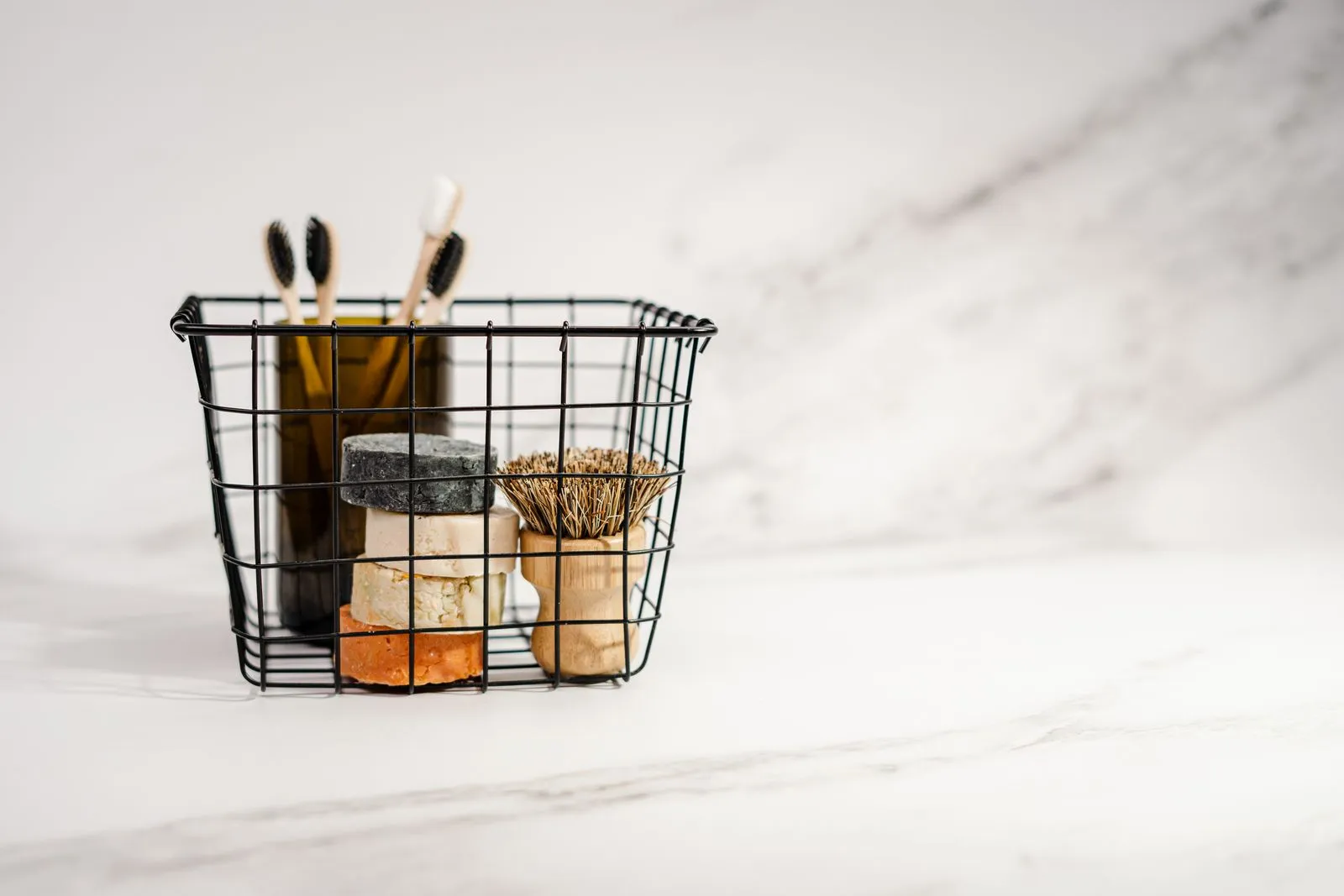
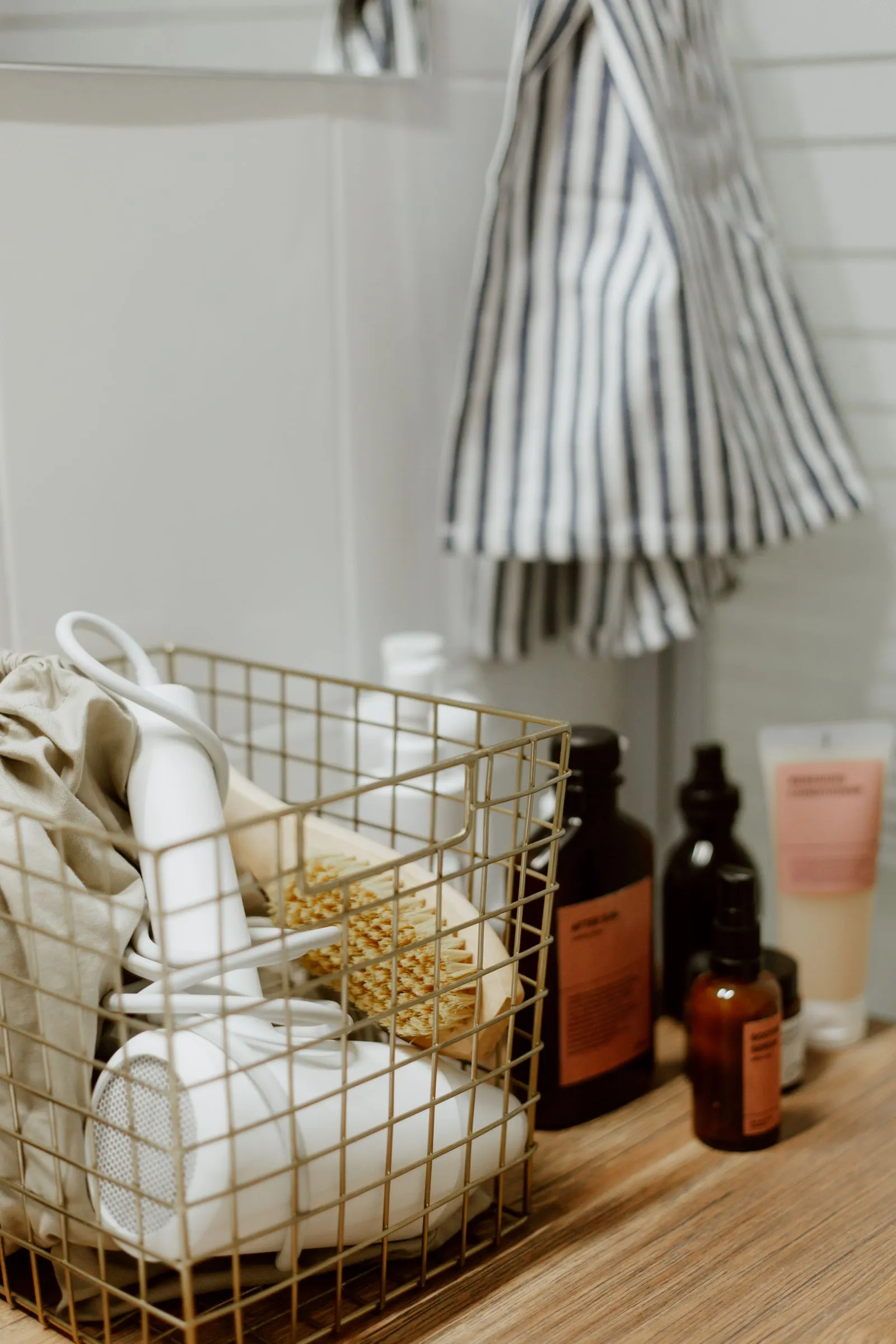
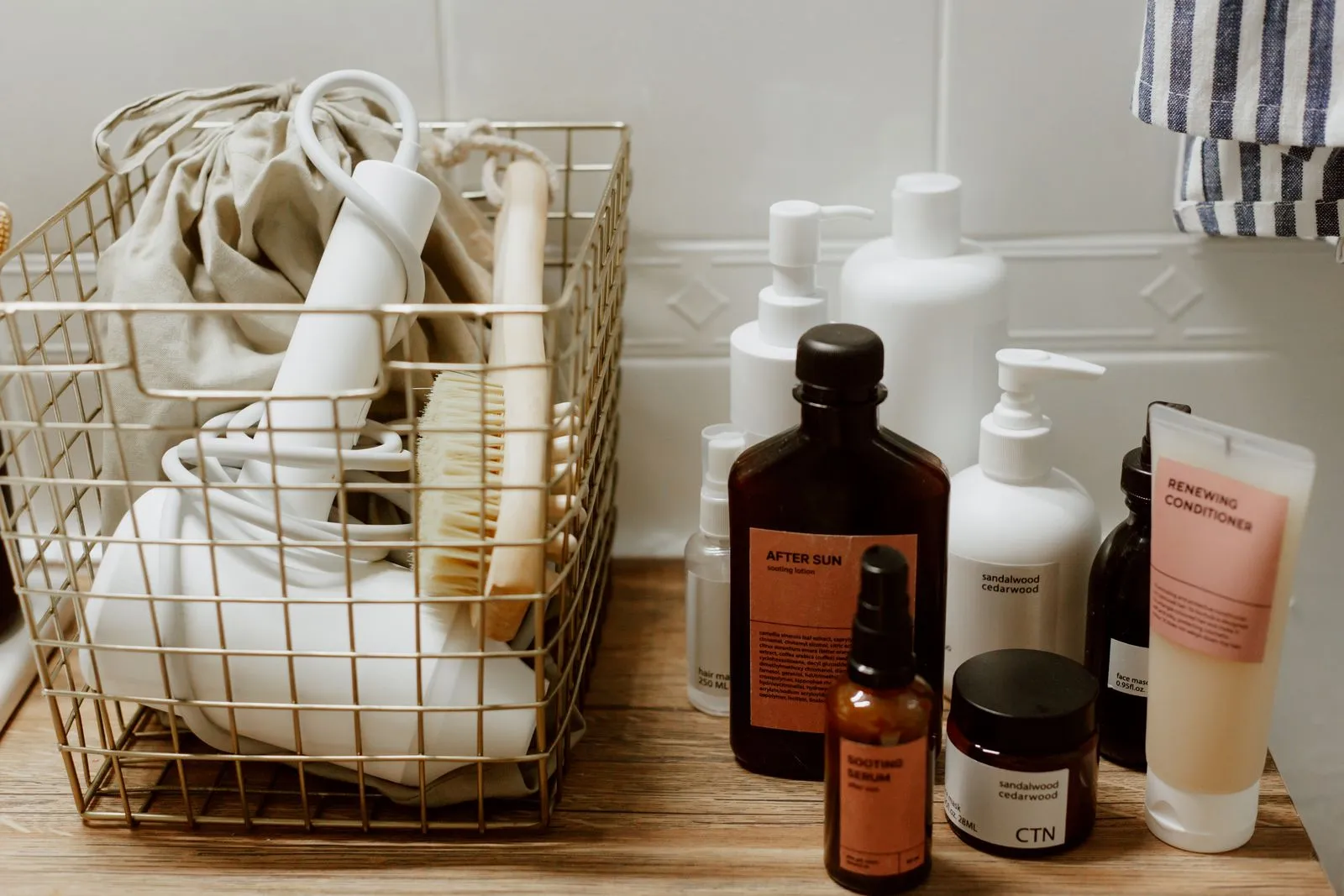
A small basket under the sink or on an open shelf near the vanity, like the one above, gives overflow a home without it creeping back onto the cabinet shelves. If the counter itself tends to collect the same clutter, our guide to bathroom counter organization covers grouping what lives out in the open so it does not compete with what belongs behind the mirror. For a bathroom where every surface is tight, the layout ideas in small-space bathroom storage apply the same tray-and-zone logic to the rest of the room.
The inside of the cabinet door is dead space most people never use. A slim adhesive strip or a small over-the-door rack, usually 5 to 10 dollars, holds tweezers, a nail clipper, or a contact lens case flat against the door instead of rolling around a shelf.
The one-minute reset that keeps it working
A tidy cabinet stays tidy because of a habit, not because of the trays themselves. After using something, the reset takes under a minute: wipe the shelf if anything dripped, set the tray back exactly where it lives, and glance at whether anything in it is running low.
Do that every time and the shelf stops climbing back toward the pile it started as. The next time that door opens, one tray lifts out, nothing else moves, and nothing lands in the sink.