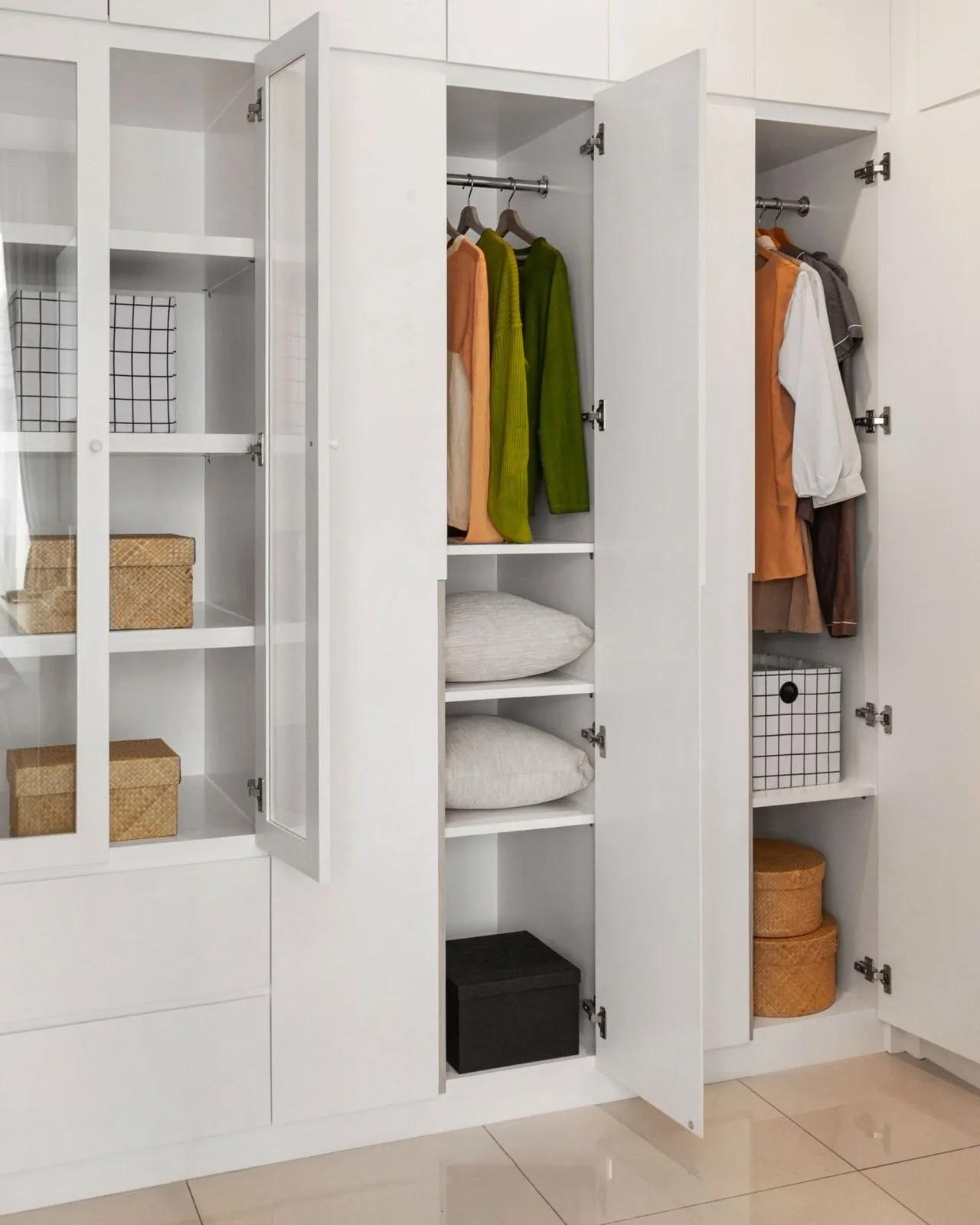
Hanging Closet Organizer Ideas That Add Shelves Without Tools
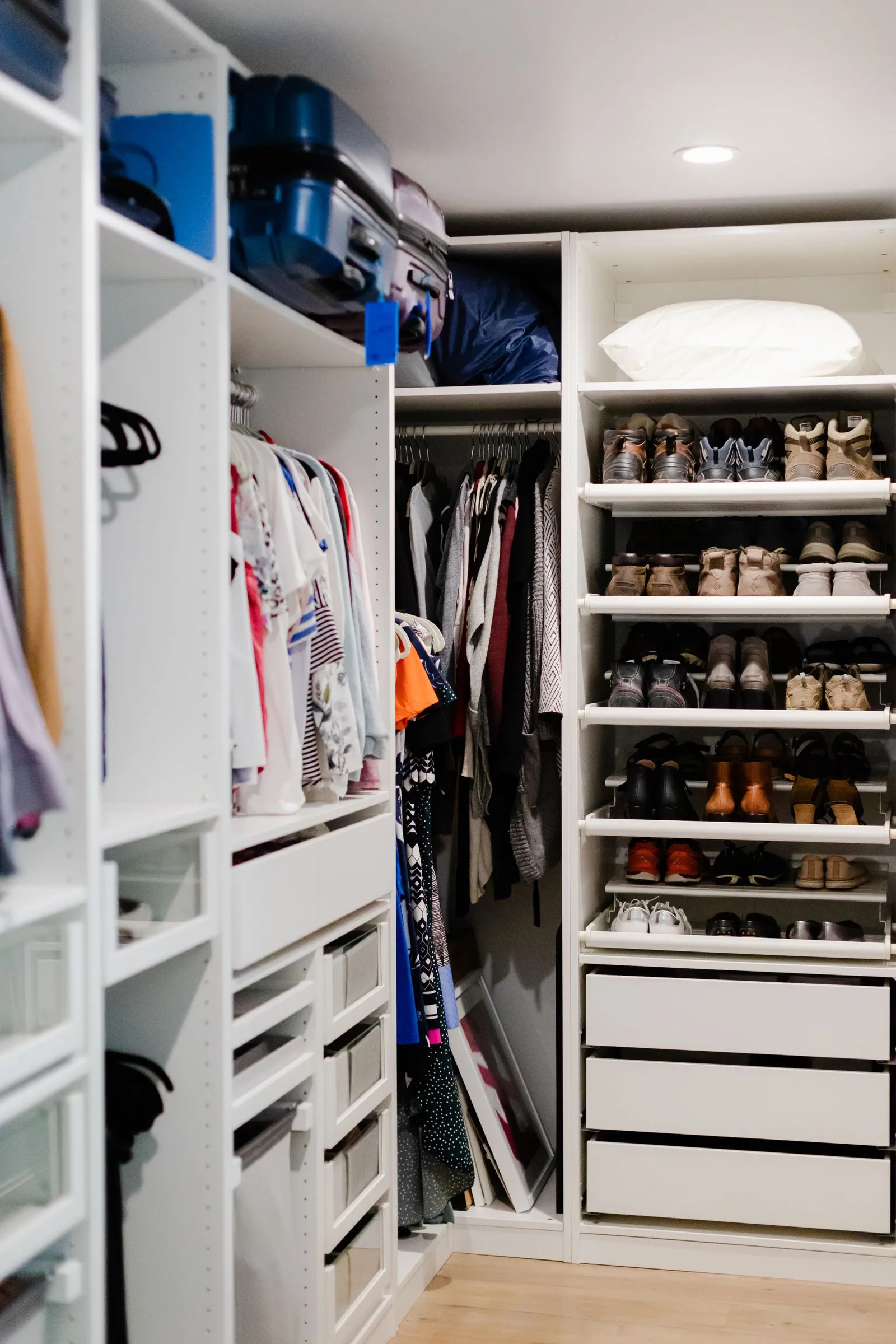
One rod. One shelf. A pile of clothes on the floor that keeps growing because there is nowhere else for it to go. That is the standard small closet, and it punishes anyone who owns more than a week of clothes. Sweaters get stacked in a leaning tower on the single shelf until it topples. Shoes end up in a heap under the hanging clothes because the floor is the only flat surface left. None of this is a clutter problem. It is a shelf shortage, and the rod above the mess is unused vertical space doing nothing but holding hangers.
The fix does not require a drill, a stud finder, or a Saturday afternoon of assembly. A fabric hanging shelf organizer clips directly onto the rod that is already installed and drops down as a column of five or six shelves, ready to load in under a minute. It is the fastest, cheapest way to multiply storage in a closet that renters cannot modify and homeowners do not want to redo.
Why the rod is your untapped storage space
Every closet rod already holds two things: the rod itself and the hangers on it. What it rarely holds is anything below shoulder height on either side of the hanging clothes, and that dead zone is exactly where a hanging organizer lives. A standard fabric hanging shelf unit is 11 to 12 inches wide and drops 40 to 54 inches, which is short enough to clear the floor in most closets and long enough to hold five to six shelf compartments.
Because it hangs from two hook-and-loop straps or built-in hooks that loop over the rod, it takes up almost no horizontal rod space, usually 10 to 12 inches. That leaves the rest of the rod free for hanging clothes on either side. You are not choosing between hanging storage and shelf storage. You get both, stacked in the same six inches of depth the closet already has.
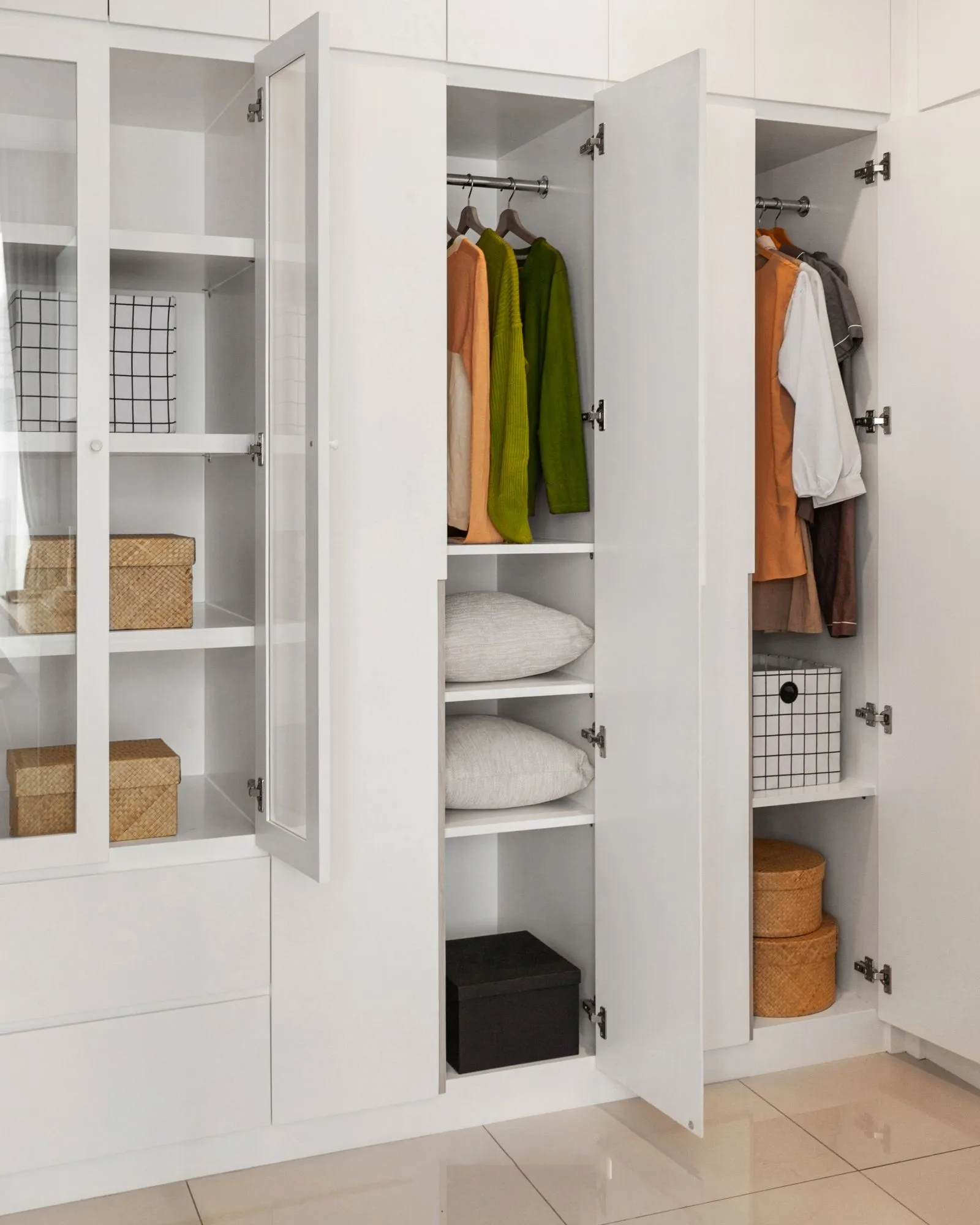
The built-in shelving under the rod in a closet like this one is the layered look a hanging organizer recreates in the dead space beside your clothes, minus the carpentry.
Clip it on in under a minute
The entire installation is two straps and a rod. Unfold the organizer, thread the top hook-and-loop strap over the closet rod, press it closed, and let the shelves drop into place. Most units come with a second strap partway down for taller versions, which keeps the whole column from swinging when you pull a folded sweater off the bottom shelf.
There is no leveling, no screws, and no waiting for anything to dry or set. If you decide the placement is wrong, you unclip it and move it six inches over. That portability is the entire point for renters: nothing about this storage method leaves a mark, a hole, or a security deposit dispute when the lease ends.
Load shelves by weight, not by category
The instinct is to organize a hanging shelf unit by type of item, all sweaters on one shelf, all t-shirts on another. Weight distribution matters more than category for a unit that is hanging, not standing on the floor. Put your heaviest folded items, jeans and sweaters, on the top one or two shelves closest to the rod, where the straps carry the load most directly. Lighter items like t-shirts, folded scarves, or workout gear go in the middle shelves. The bottom shelf or two, closest to the floor, work best for shoes, since that is the shelf that takes the most daily in-and-out traffic and benefits from being at a low reach.
Most fabric hanging organizers list a per-shelf weight limit around 3 to 5 pounds and a total unit limit closer to 20 pounds. That is enough for a genuine wardrobe of folded knitwear, but it is not a place for a stack of hardcover books or a winter boot collection. Respect the limit and the straps will hold for years. Overload it and the top strap is what stretches out first.
Use both sides of the rod, not just one
A single rod usually has more width than one hanging organizer needs. If your closet rod runs 36 inches or wider, there is room for a hanging shelf unit on one end and a full run of hanging clothes on the rest of the rod, or even two smaller units on each end with hanging clothes concentrated in the middle. This is where a hanging shelf system earns its keep over a free-standing shelf tower: it does not compete for floor space at all, so the floor stays clear for a hamper, a shoe rack, or simply open space to move around in.
If the closet is narrow enough that one hanging organizer takes up most of the usable rod, pair it with a second rod-mounted piece instead of hanging clothes, like a second hanging shoe organizer or a slim hanging caddy for accessories. Two hanging units side by side still leave the floor untouched, which is the actual goal.
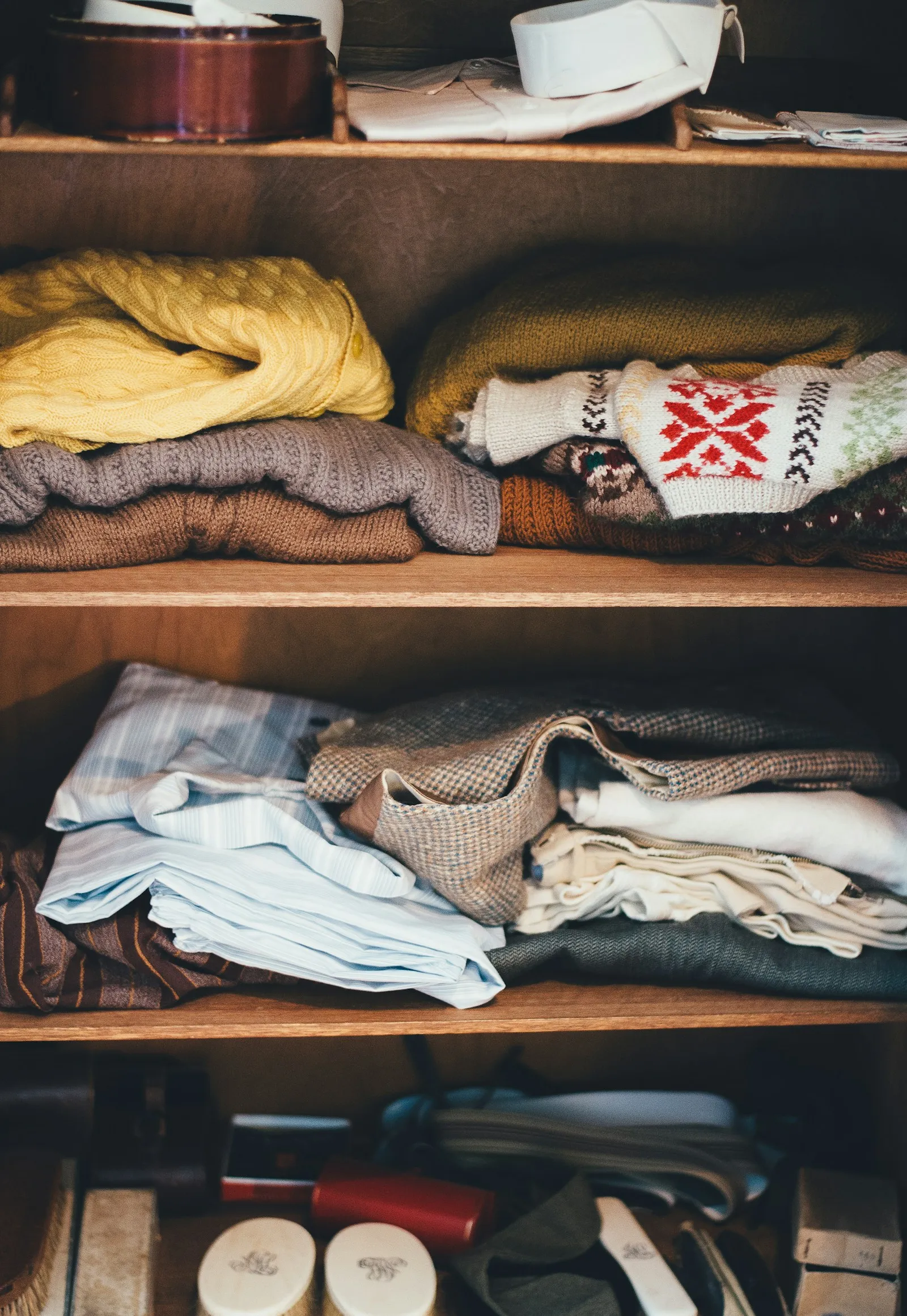
The end result mimics what built-in shelving gives a walk-in closet, a neat column of folded stacks, without the renovation, the drilling, or the cost.
Fold for the shelf, not for the drawer
A hanging shelf compartment is shallower and more open on the front than a drawer, so a drawer fold does not always hold its shape once you slide it in. For sweaters and knitwear, fold in thirds lengthwise, then fold in half so the finished stack sits about 8 inches wide, short enough to clear the shelf’s front lip without sagging forward. For t-shirts, a simple flat fold with the sleeves tucked in behind holds up fine, since lighter fabric does not slump the way a heavy sweater will.
Stack no more than four or five folded items per shelf. Once a stack gets taller than the shelf opening, the top pieces spill forward every time you pull from the bottom, and that is what turns a tidy hanging organizer back into a slouching pile within a week.
Match the unit to what your closet actually lacks
Not every closet needs the same version of this product. A reach-in closet with one rod and one shelf benefits most from a full-height, five- or six-shelf unit that replaces the missing shelf entirely. A closet that already has a shelf above the rod but nothing below it does better with a shorter, three- or four-shelf hanging unit that fills only the gap between the rod and the floor. If shoes are the main overflow problem rather than folded clothes, a hanging shoe organizer with individual pockets instead of open shelves keeps pairs separated and easier to grab than a general shelf would. If the overflow is belts, scarves, and bags rather than clothes or shoes, those need a different fixture entirely — our guide to belt, scarf, and bag organization covers what holds each one without creasing it.
Measure the drop distance from your rod to the floor before buying. A 54-inch unit in a closet with only 48 inches of clearance will drag on the floor, round the bottom shelf’s fabric, and eventually tear at the seam from the weight pressing down against the ground instead of hanging free.
The one-minute reset that keeps five shelves working
A hanging organizer earns its keep through a habit as much as through the product itself. Once a week, run a hand down the column: check that no shelf has been overloaded past the point where it sags forward, refold anything that has slumped out of shape, and confirm the top strap is still snug against the rod rather than stretched loose. If a shelf’s contents have crept past its edge, that is the shelf to thin out first, since it is the earliest sign the system is one step from tipping back into a pile.
That one-minute check is the difference between a hanging organizer that lasts for years and one that ends up back on the floor within a month. The closet that started with one rod, one shelf, and a pile on the floor now has five working shelves and a clear floor, all without a single hole in the wall. For more ways to squeeze storage out of a small closet without any hardware, our guide to small closet organization and our roundup of renter-friendly tension rod hacks both build on the same no-tools approach.