Spice Organization Ideas for Small Kitchens and Tight Cabinets
You know the smoked paprika is in there somewhere. Behind the cinnamon, under a taco seasoning packet, next to a jar with no label left at all. So you pull out four jars to find the fifth, and by the time it turns up, the oil in the pan has gone from shimmering to smoking.
That is not a cooking problem, it is a shelf problem. A standard upper cabinet is 12 to 14 inches deep, which is more than enough room to stack jars two and three rows back where light never reaches. Round jars set the way they usually get set mean only the front row shows a label at all, and the back row is a guessing game by smell and jar shape. The fix is not a bigger kitchen. It is arranging what you already own so every label faces you, every time, without moving a single other jar to get there.
Pull every jar out and sort into three piles
Before anything gets a new home, everything has to come out. Empty the cabinet or shelf completely onto the counter, because a half-cleared cabinet just means the mess moves six inches to the left.
Sort into three piles as you go. Pile one: jars you reach for at least weekly, the everyday lineup like salt, black pepper, garlic powder, and cumin. Pile two: jars for occasional dishes, maybe cardamom or five-spice, used once a month or less. Pile three: anything expired, anything caked solid, and any duplicate where two half-full jars of the same chili powder can become one. Ground spices lose real potency after about a year; if the color has faded and the smell is faint when you open the lid, it belongs in pile three, not back on a shelf.
Most home cooks find pile one is 12 to 15 jars. That number matters, because it tells you exactly how much rack space you actually need instead of guessing.
Put a tiered rack where the shelf used to be flat
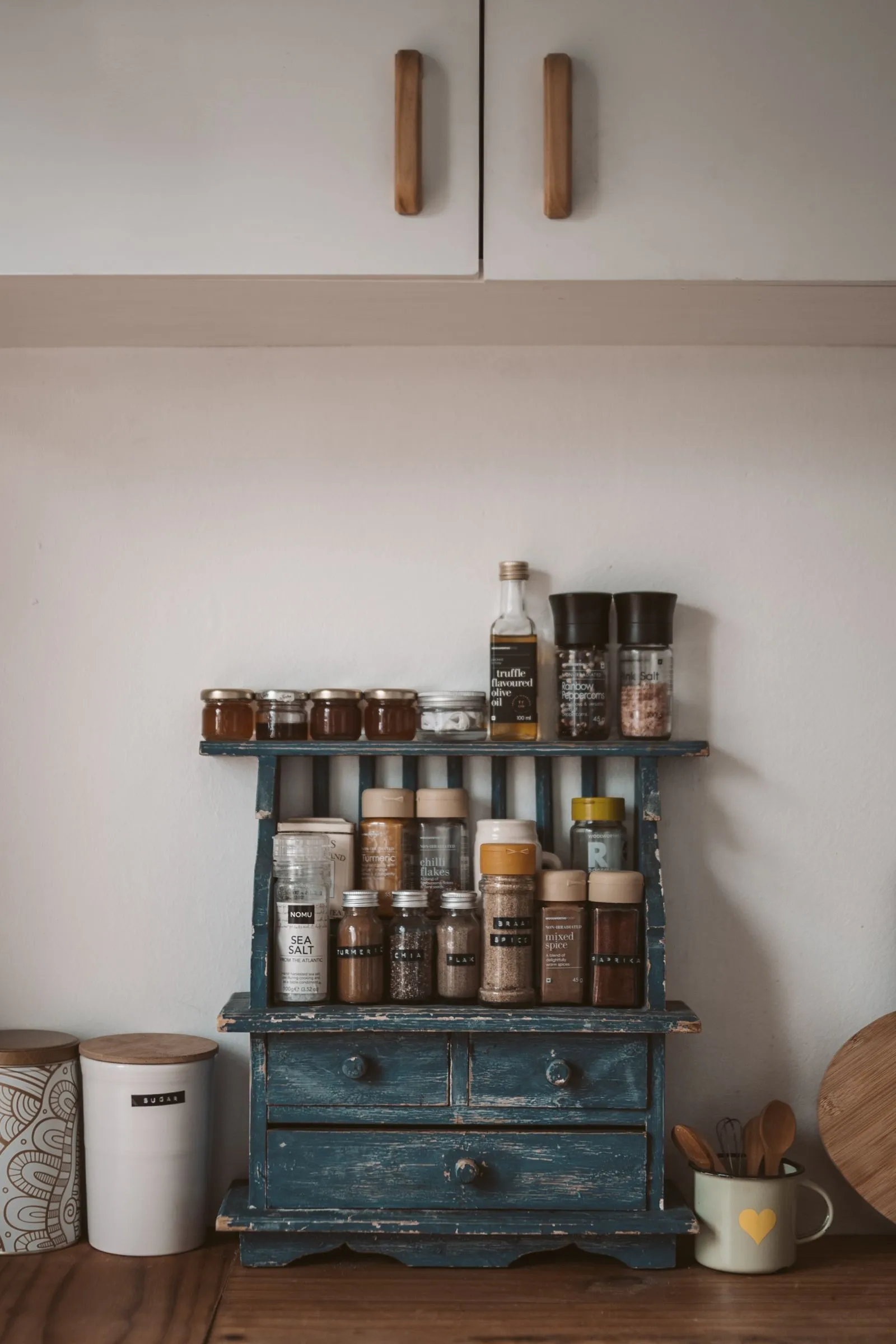
A flat shelf is the root of the problem: anything set behind another jar disappears. A tiered rack solves it by stepping each row up an inch or two so the label on every row clears the jar in front of it.
Tiered shelf risers built for spice jars typically run 10 to 17 inches wide and hold two or three stepped levels, and most fit inside a standard 12-inch-deep cabinet without touching the door. Set your everyday pile on the rack in one layer, tallest jars at the back tier, shortest up front, and every single label reads clearly from a normal standing height. No jar sits directly behind another one anymore, which is the entire trick.
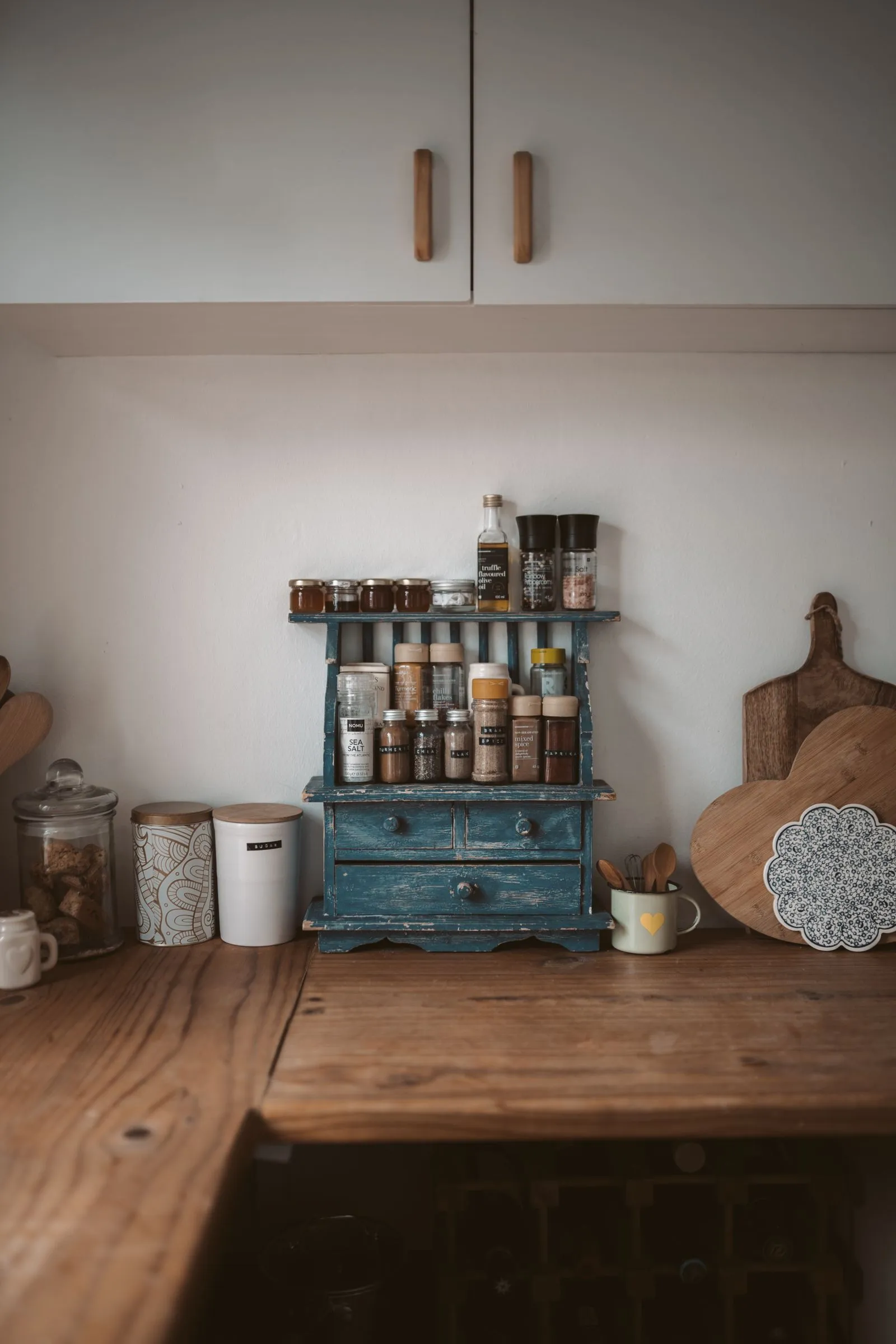
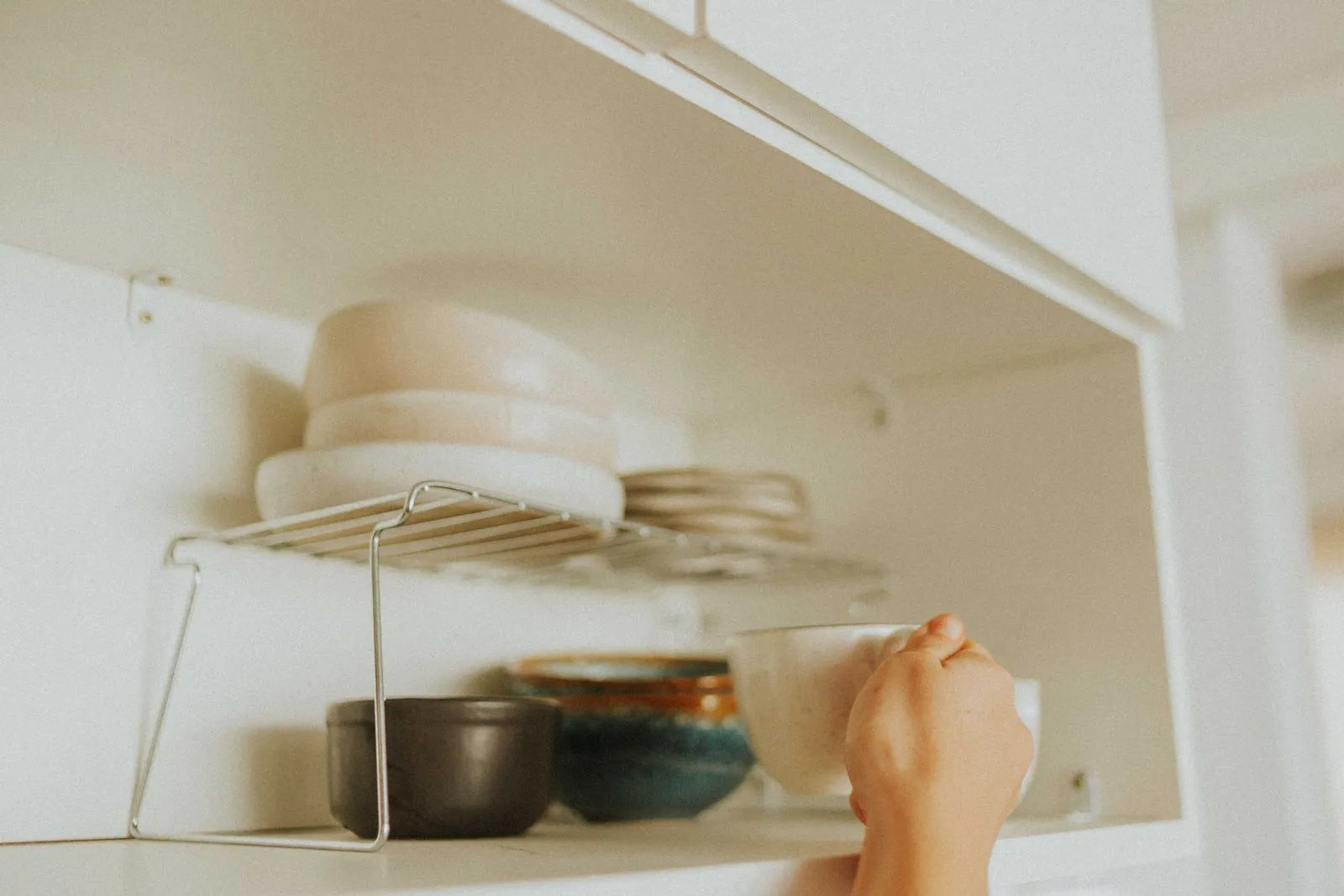
If your cabinet is too shallow for a tiered riser, a shallow wire or acrylic step shelf that adds height in 2-inch increments does the same job in less depth. Either way, the goal is the same: nothing stacked directly behind anything else.
Or mount a rack on the back of the cabinet door
When there is no spare shelf to give up, the inside of the cabinet door is often the only unused real estate in the whole kitchen. A slim door-mounted rack, usually 3 to 4 inches deep so it clears the shelves behind it when the door closes, turns dead space into a second row of storage that opens toward you instead of away.
Measure before buying: subtract at least half an inch from the door’s inside depth to confirm shelves behind it will still close flush, and check that the rack’s screws or adhesive strips match your door material. A door-mounted rack works best for the jars you use daily, since it is the first thing you see when the door opens, and it frees the tiered rack behind it for the pile-two backups.
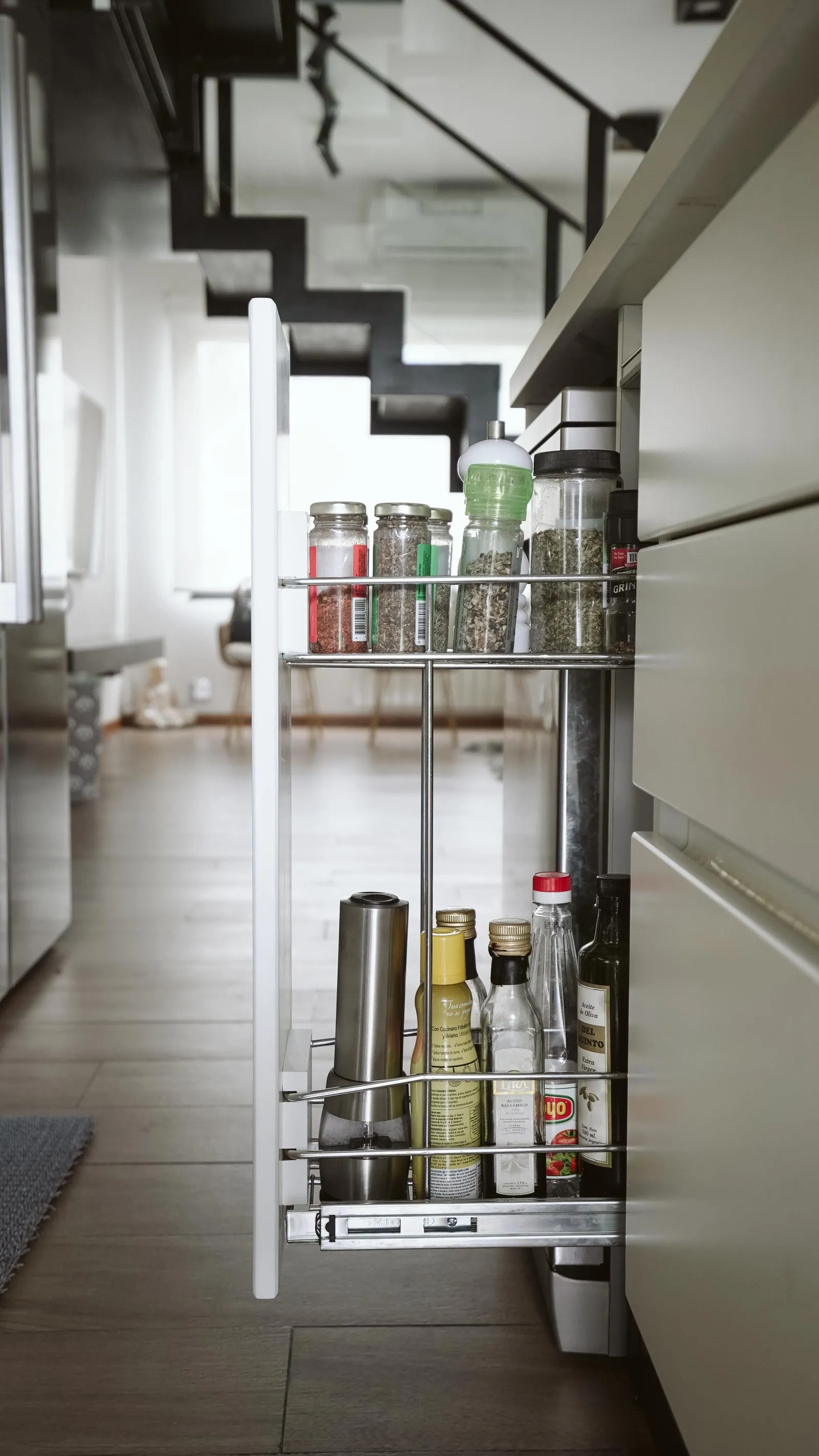
This same door-mounted idea scales past spices too. If the rest of the pantry has the same buried-in-the-back problem, the door racks and bins in our guide to pantry door organization cover the wider shelf-stable side of the kitchen the same way.
Standardize the jars so every label sits in the same spot
A rack only works as well as the jars on it. Mismatched jars in random sizes force random gaps, and a label printed sideways on a round jar only faces forward by luck.
Decant into matching jars where you can, square or hexagonal ones stack tighter than round and keep a flat face pointed outward. A common size for daily spices is a 4-ounce jar, about 2 inches square and 3.5 inches tall, which fits two full rows on most tiered racks. Print or write labels in the same spot on every jar, centered and at the same height, so scanning the shelf reads like a menu instead of a mismatched shelf of hand-me-down containers. This single habit, more than the rack itself, is what makes the whole system fast to scan under pressure.
Group jars by how you cook, not by the alphabet
Alphabetical order looks tidy in photos and falls apart at the stove, because cinnamon and cumin end up next to each other while the five spices in your go-to chili recipe are scattered across three shelves.
Group instead by use. Baking spices, cinnamon, nutmeg, allspice, vanilla, stay together near wherever the mixing bowls live. Everyday savory spices, salt, pepper, garlic and onion powder, paprika, stay front and center on the rack closest to the stove. Specialty or cuisine-specific spices, curry blends, taco seasoning, Italian herbs, get their own section in the back tier. Once the groups are set, the muscle memory of reaching for “the baking shelf” replaces reading every label from scratch.
Fit the system to your cabinet’s actual inches
Every kitchen’s spice storage is a different shape, and the layout has to match the space rather than a photo online. Measure the cabinet’s width, depth, and the clearance between shelves before buying anything, since a rack that is a half-inch too tall will not let the shelf above it close.
If the spice cabinet sits above a stretch of cramped drawers doing the same kind of overflow duty, the same measure-first approach in our small kitchen drawer dividers guide applies directly, sizing inserts to actual drawer inches rather than a standard size that may not fit.
The 30-second reset that keeps every label facing out
A tiered rack or a door-mounted one only stays organized because of a habit, not because of the hardware. After cooking, take 30 seconds to slide any jar that got turned around back into label-forward position, and push anything left sitting loose on the counter back into its group.
Do that reset every time you cook and the system holds itself together: nothing drifts back into a random stack, no label ever disappears behind another jar, and the next time a recipe calls for smoked paprika, it takes one glance and one reach instead of pulling out four jars to find it.