Gift Closet Organization Ideas for the Holiday Season

The candle set for your sister was such a good deal in October that you bought two. By December, one is in the hall closet and the other is missing entirely, and you spend twenty minutes searching before buying a third just in case. Multiply that by eight or ten people on your list and the early-shopping advantage disappears — a good deal from three months ago can vanish into any drawer, tote, or closet corner in a small home.
The fix isn’t more storage — most small homes already have a shelf that could hold every gift bought this season. What’s missing is a system: one spot, sorted by person, tracked on paper, so a gift bought in October is as easy to find in December as it was the day it came home.
Claim one shelf as the only gift spot
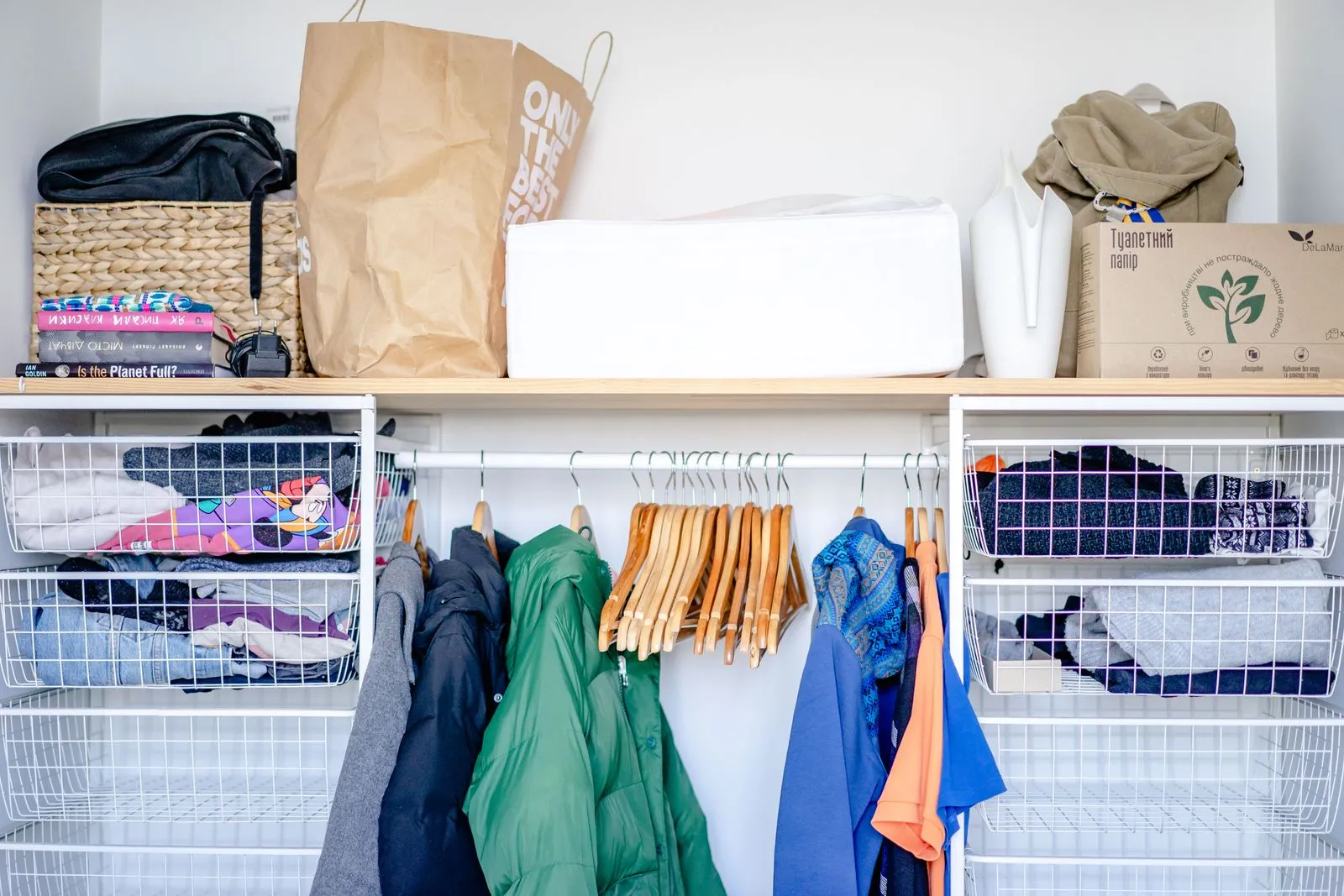
Before anything else, pick a single shelf, closet zone, or under-bed space and declare it the only place gifts live between now and the holidays. A linen closet shelf, the top of a bedroom closet, or 24 inches of shelving in a home office all work, as long as it’s one consistent spot, not “wherever there’s room this week.”
Size matters less than you’d think. A shelf as small as 3 feet wide by 14 inches deep holds a surprising number of gifts once they’re sorted into bins instead of loose. If your home has no spare shelf, a stack of two or three lidded bins in a closet corner does the same job. What makes it work isn’t square footage — it’s that everyone in the house, including whoever shops online at 11pm, knows this is where a gift goes the moment it arrives.
Write it down somewhere visible, even a sticky note on the shelf itself: “Gifts only.” That one label stops the shelf from slowly filling with off-season shoes and extra linens between now and Thanksgiving.
Build a recipient-sorted bin system
Once the gift zone exists, split it by person, not by gift type. A bin labeled “Mom” that holds three different presents is far easier to manage on wrapping night than a bin labeled “small items” that mixes gifts for five different people.
Shoebox-sized bins, roughly 12 by 8 inches, fit most individual recipients. Couples or kids with several small presents can share a bigger bin, around 16 by 12 inches. Label each one with painter’s tape and a marker, or a printed label if you’ll reuse the bins next year. Tape peels off clean in January, which matters if the same bins get reused for birthdays later.

Slide the bins alphabetically by name if the list is long, or in gifting order if that’s more useful. Either way, finding “the gift for Dad” should take one glance at labels, not a search through mixed bags. If something is oddly shaped, like a framed print or a board game, let it sit beside the labeled bins instead of forcing it inside — visible and odd-shaped still beats buried and forgotten.
Keep a running gift list to stop duplicate buying
The candle-set problem almost always traces back to the same cause: no record of what’s already been bought. A single sheet of paper taped inside the closet door, or a note on your phone, solves it. List each recipient’s name, what you’ve bought, where it’s stored, and roughly what you spent.
This list does two jobs. First, it kills duplicate purchases — a five-second glance before checkout tells you Mom already has her candle set. Second, it becomes a budget check: people who track gift spending on paper often end up $50 to $150 under what they’d have spent shopping from memory, simply because the list shows when someone’s budget is already covered.
Update it the moment a gift comes in the door. A list that’s a week behind is a list nobody trusts, and an untrusted list gets ignored, which puts you right back to searching drawers in December.
Hide gifts without losing track of them in a small home
Small homes make gift-hiding harder, since there’s rarely a spare guest room or locked closet. The trick isn’t a more secret spot — it’s sticking to spots on your list so nothing gets hidden well enough to fool you too.
Under-bed storage boxes, roughly 6 inches tall, slide under most bed frames and stay out of sight without needing a dedicated closet. A closet’s top shelf, above eye level for kids, works for anyone under about 4 feet tall. If you share a bedroom with a partner who’s also shopping, agree on separate zones — one shelf each — so you’re not both hiding gifts in the same tote and finding each other’s presents by accident.
Whatever spots you choose, write them on the gift list. “Hidden” only helps if it means hidden from the recipient, not hidden from you.
Corral receipts and gift cards in one pouch
Receipts and gift cards are small enough to get lost in a coat pocket or a kitchen drawer, and they’re the pieces you need most urgently if a gift has to be returned or exchanged in early January. A single zippered pouch or small envelope, kept in the same gift zone as the bins, holds every receipt and card together.
Clip each receipt to a sticky note with the recipient’s name before it goes in the pouch. When Aunt Carol needs to exchange a sweater on December 27th, you want that receipt found in seconds, not after turning out three coat pockets. Gift cards bought as backup or stocking stuffers belong in the same pouch — a card with no name attached is easy to forget until it turns up expired next November.
Set up a pre-wrap staging shelf for early December
Gifts that sit unwrapped in bins all season need a clear moment where they move to wrapping. Around the first week of December, pull everything from the recipient bins onto a table or cleared counter, one person’s pile at a time, and wrap in batches rather than one gift a night for a month.

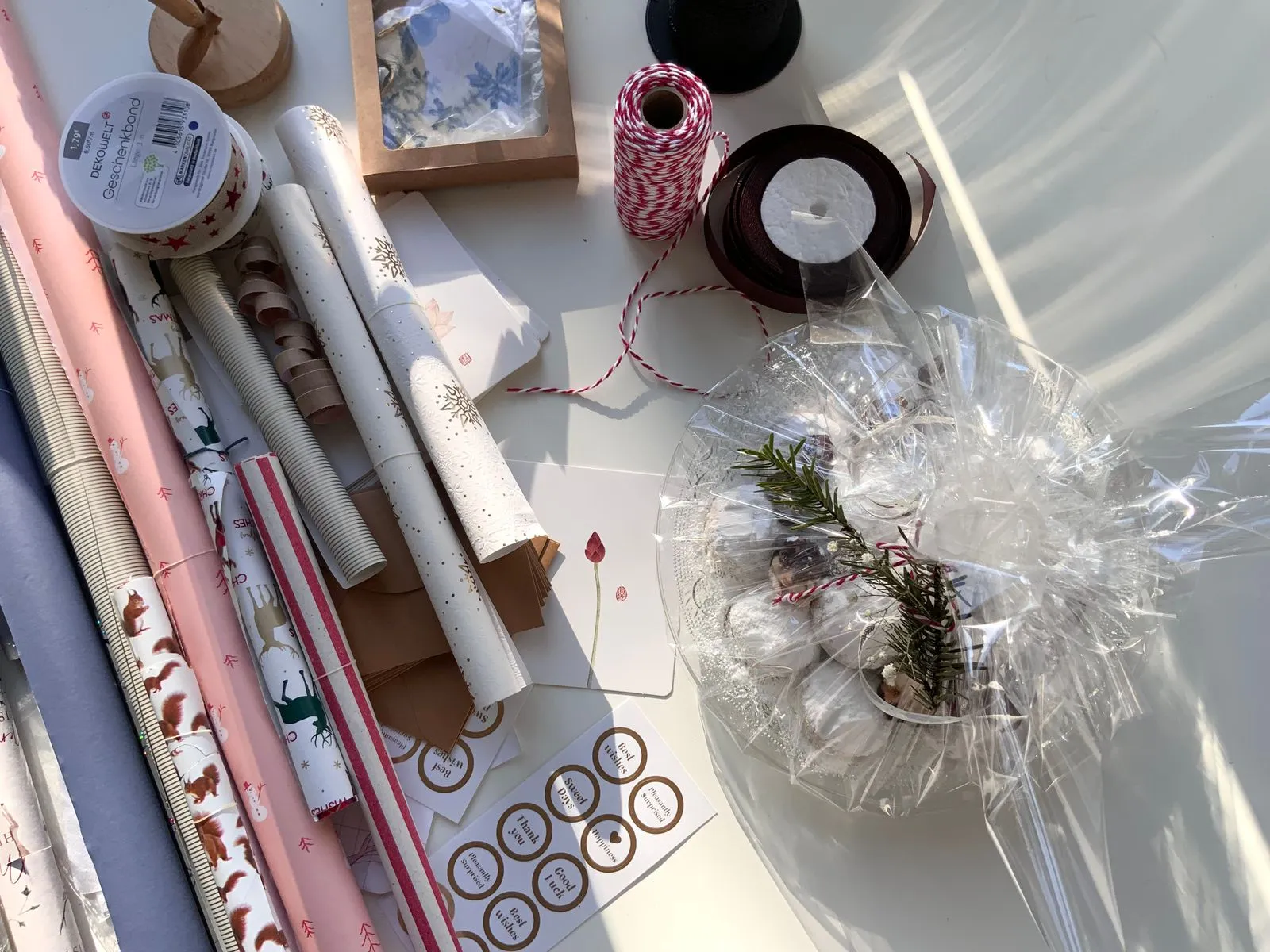
This is also the moment to check your wrap supply against what’s needed. If rolls, ribbon, and tags are scattered the way gifts used to be, our guide to gift wrap storage organization covers a caddy system built for exactly this week. Once wrapped, a gift goes back into its labeled bin — now holding a finished, ready-to-give present instead of a loose item — and the closet stays the single source of truth through the day you hand gifts out.
The December handoff: getting gifts out as smoothly as they went in
The final stretch is where a good system pays off most. Gifts need to leave the closet in the right order — out-of-town relatives packed first, people you’ll see on Christmas morning pulled last. Use the same recipient labels to guide it: a bin marked “Grandma — mailing by Dec 10” flags a deadline, while “Nephew — Christmas morning” stays put until the day itself. Cross names off the master list as each one ships or gets set aside, so a scan shows exactly who’s left.
The five-minute weekly check that keeps it all working
A gift closet stays organized because of a short weekly habit, not a one-time setup. Once a week during shopping season, spend five minutes: update the gift list with anything bought since the last check, confirm every new item lands in its labeled bin instead of getting set on top “for now,” and check the receipt pouch for anything past a store’s return window.
Skip that check for a few weeks and the system slides back toward where it started — gifts scattered across whatever surface was closest when they came in the door. Keep it up, and the candle set you bought in October is still exactly where you left it in December, sorted and ready to wrap. If your holiday storage extends beyond gifts to ornaments and lights, the same one-zone approach carries over well; see our guide to holiday decor storage for how to apply it there too.