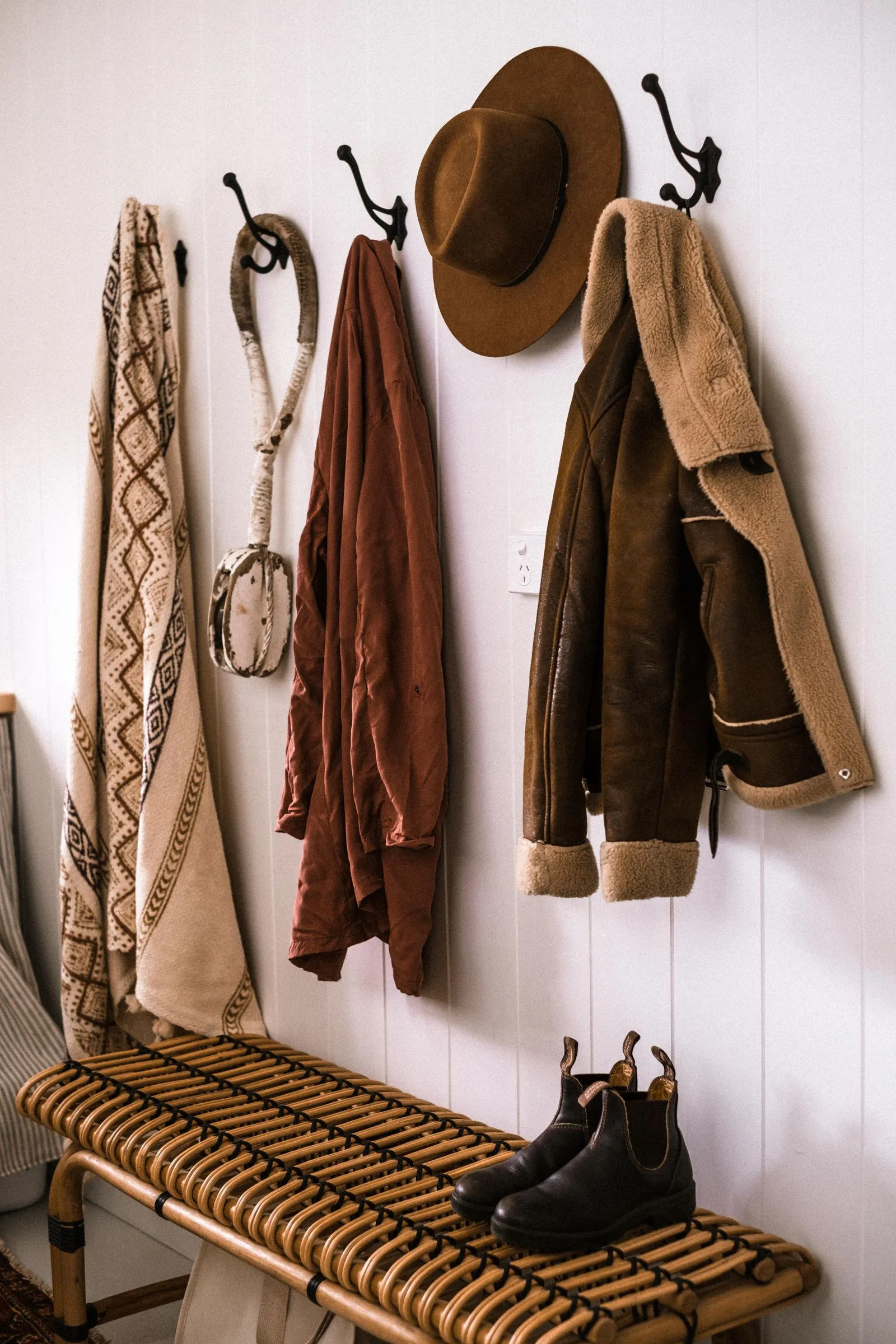
Wrapping Paper and Ribbon Storage Station Ideas
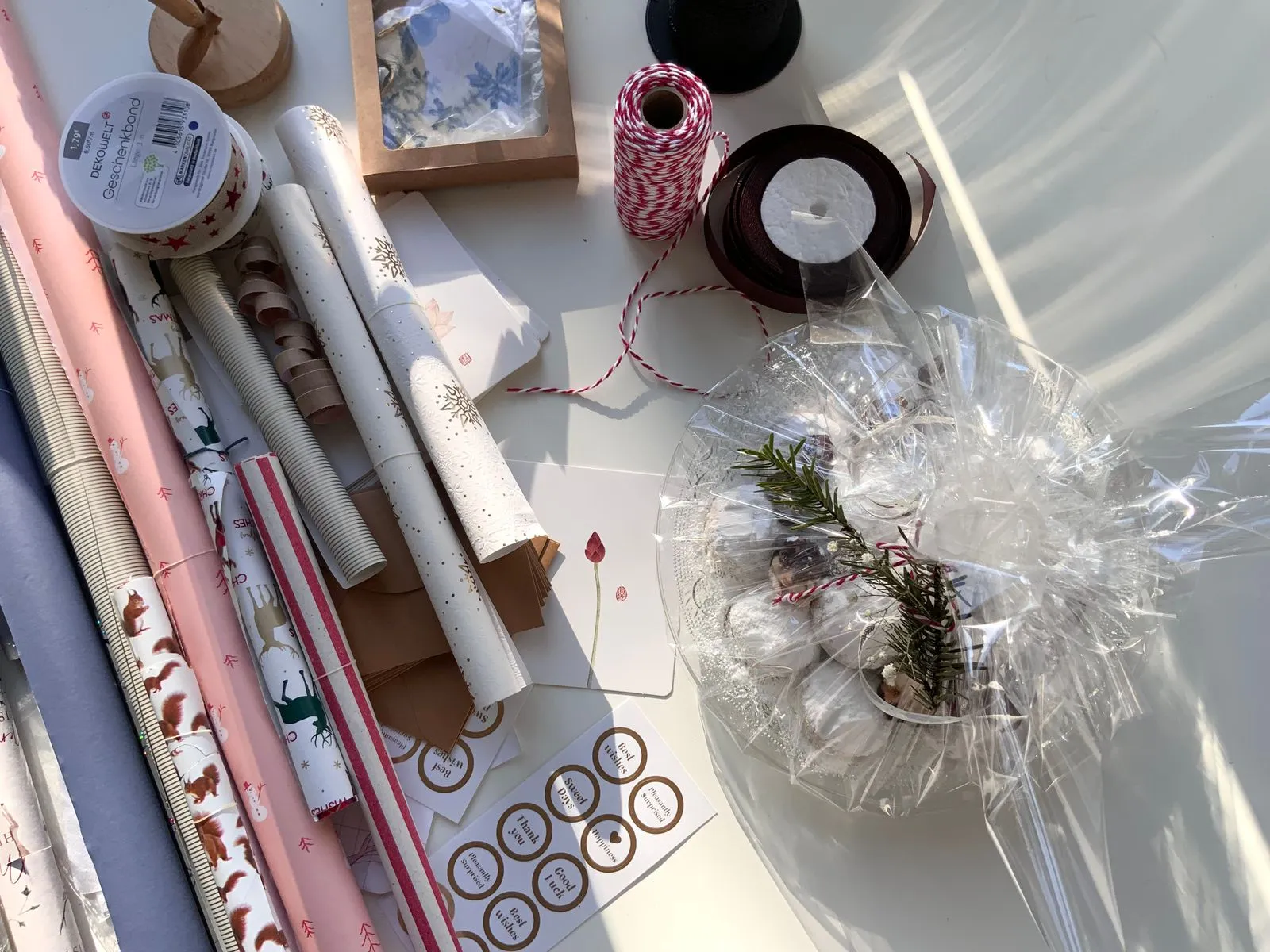
Wrapping one gift should not require the living room floor. But the paper is on a shelf, the ribbon is in a drawer, the scissors are in the kitchen, and the tape is wherever it was left last time, so the only surface big enough to gather all of it is the floor. Fifteen minutes into a five-minute job, a roll is unrolled across the rug, a spool of ribbon has migrated under the couch, and a toddler or a cat is sitting directly on the one clear patch of paper.
That is not a storage problem. A bin in a closet solves where the paper lives for eleven months of the year, but it does not solve what happens the moment someone actually needs to wrap something. What solves that is a station: one unit that holds the whole kit already assembled, comes out for the ten minutes a gift takes, and goes back together just as fast. A station is built to be used standing up, not just kept.
A station is not the same as a storage bin
It helps to be clear about what this is not. A bin that holds rolls upright on a closet floor or under the bed for the off-season is a good system, and if that is all you need, our guide to gift wrap storage covers container sizes and placement in detail.
A wrapping station is different. It is not where the paper sleeps for ten months, it is what you pull out and use in the moment. A storage bin can be packed tight and pushed to the back of a closet. A station has to open, sit at a workable height, and hold the scissors and tape where your hand actually lands, because you will use it while a gift sits on the table in front of you.
Pick a chassis: cart, caddy, or under-bed bin
Three setups work, and the right one depends on how much floor space you have and how often you wrap.
A narrow rolling cart, the three-tier kind sold for bathrooms and craft rooms, is the best option if you wrap more than a few times a season. A cart 12 to 16 inches wide fits the gap beside a dresser or in the back of a closet, and it rolls to whatever table you are using instead of asking you to carry loose supplies to it. Standard tiers run 4 to 6 inches of clearance, enough for rolls laid flat on the bottom shelf, a tool caddy on the middle shelf, and flat bags and tissue on top.
A caddy is the minimum viable station: a single handled tote, roughly 12 by 10 inches, holding the tools and a couple of rolls and nothing else. It works for light wrapping needs, or as the everyday kit that lives alongside a bigger seasonal cart used for actual bulk storage.
An under-bed bin is the flat alternative for anyone without floor space for a cart. A bin around 30 by 16 by 6 inches slides under a bed frame and holds the whole kit lying down. The tradeoff is access: you have to pull it out onto the bed before it is usable, so it suits people who wrap in occasional batches rather than one gift at a time.
Whichever chassis you pick, the test is the same: can you get from “I need to wrap this” to scissors-in-hand in under a minute. If not, the station has too many steps built into it.
Build one caddy insert for the tools
Regardless of the chassis, the tools need their own small container inside it, because loose scissors and tape rattling around a cart shelf are exactly the scattering this setup is meant to prevent.
Use a container around 8 by 6 inches, small enough to lift out with one hand. Commit to a fixed lineup: one pair of scissors, two rolls of tape, a pen, a stack of blank gift tags, and a length of twine for tying bows. That is the kit used on every gift, so it should never be broken up or borrowed from. A second pair of scissors that lives only in this caddy, never in the kitchen drawer, is the single change that saves the most searching.
Keep loose tags in a small zip pouch inside the caddy rather than floating free. A tag that is not contained migrates to the bottom of the cart shelf within a season and comes out creased.
Store ribbon so it does not tangle mid-wrap
Ribbon is the item most likely to turn a five-minute wrap into a fifteen-minute one, because a loose spool unwinds the moment it is jostled, and a station that gets rolled or carried jostles things constantly.
Two fixes hold up under actual use. Slide ribbon spools onto a length of dowel or a spare tension rod mounted across one shelf, so each spool spins in place and dispenses without unspooling into the rest of the bin. Or wrap the loose end of each spool back on itself and pin it with a small clip before it goes back in the kit. Either way, ribbon never goes back into the station loose. That one habit is most of what keeps a cart’s middle shelf usable instead of a tangled mass by the second wrapping session.
Give the station a surface to work on
A station without a work surface just relocates the floor problem. Solve this before you need it, not while a gift is sitting half-wrapped.
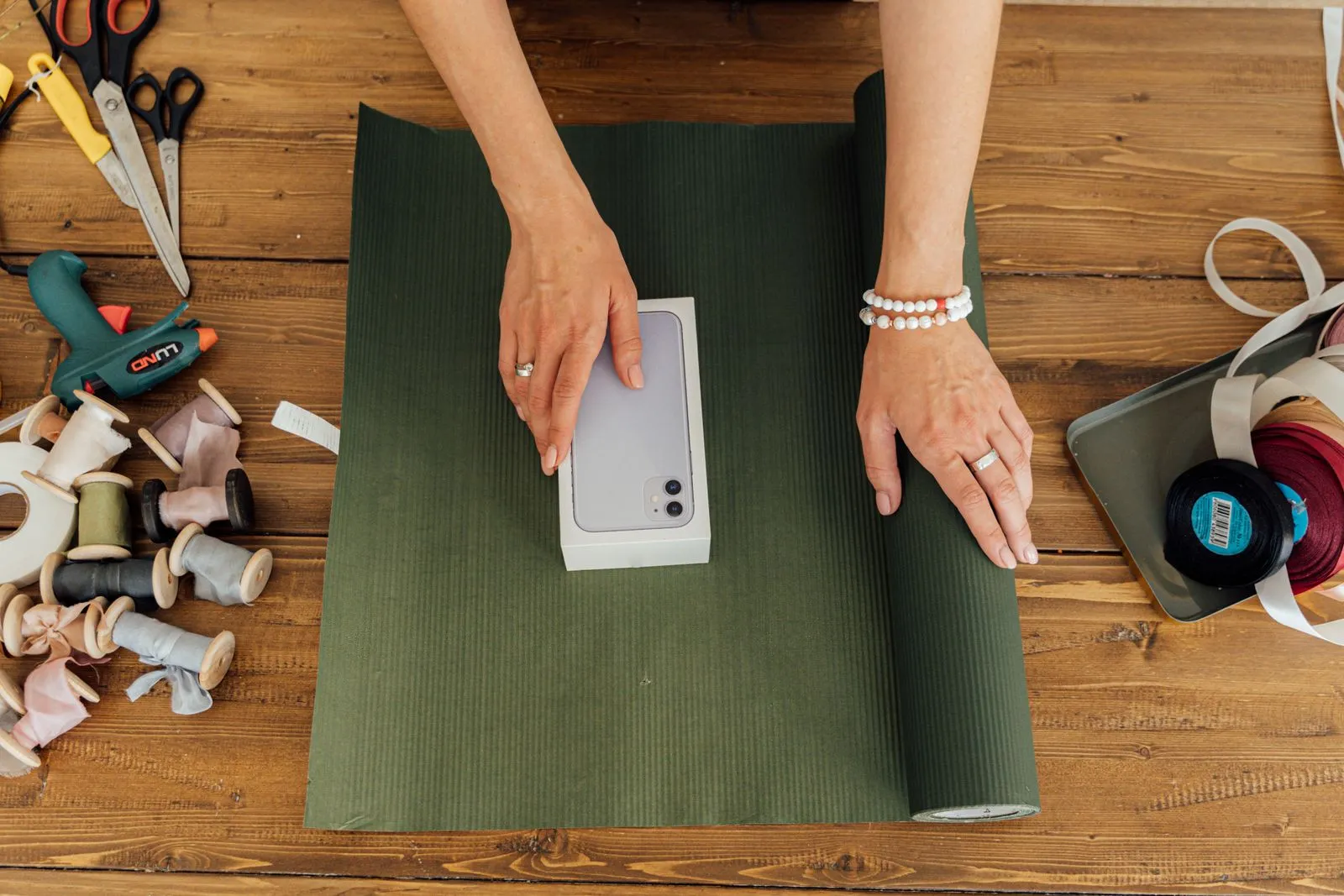
If the cart has a flat top tier, clear it and treat it as the work surface, keeping only a cutting mat there so tape does not stick to the shelf finish. If you are using a caddy or an under-bed bin with no built-in surface, a fold-flat cutting mat, about 24 by 18 inches, stores flat inside the bin and unfolds onto a table or the bed in seconds. It also protects the surface underneath from stray tape and marker bleed, which matters the first time a paint pen leaks onto a wood table.
Keep a small trash bag or a paper grocery sack clipped to the cart handle or tucked in the caddy. Scraps are what turn a wrapping session into a floor covered in offcuts, and a bag within arm’s reach stops that before it starts.
Restock before the next gift, not during it
A station only stays fast if it is never running low when you reach for it. Check it once a season, not mid-wrap.
Confirm the tape has more than a quarter roll left, the scissors still cut cleanly, and the ribbon spools have enough length for at least two more bows. Anything running short gets replaced from backstock before the station goes back into its spot, not noticed for the first time while a gift is half-wrapped and the store is closed. This is also the moment to cull: a roll with a foot of paper left takes the same shelf space as a full one and covers almost nothing.
The five-minute pack-away that keeps it working
The habit that makes a station worth building is what happens right after you finish wrapping, not how it was set up on day one.
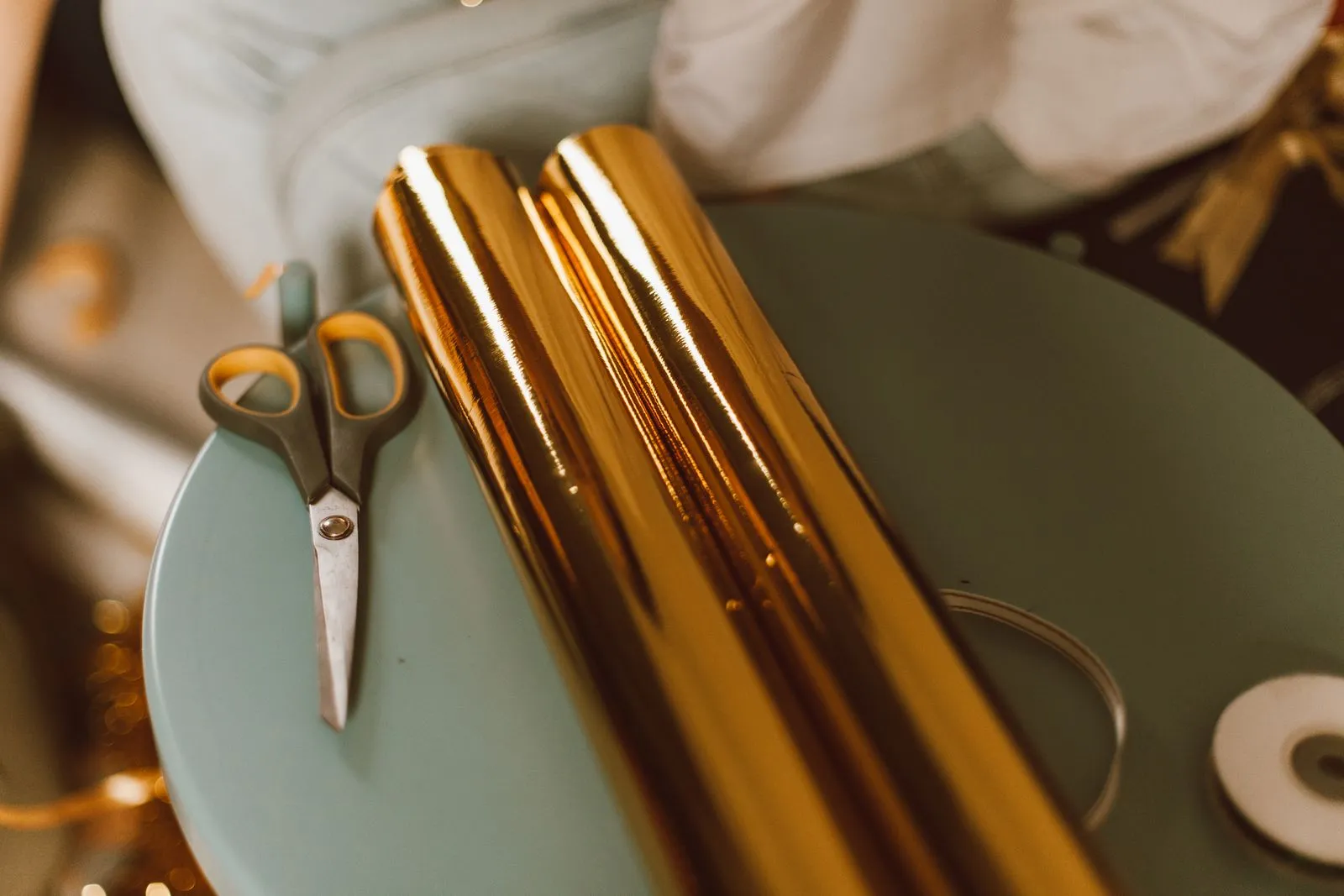
Cap the tape, coil ribbon back onto its spool or dowel, drop stray tags in the zip pouch, and sweep scraps into the bag before it leaves the room. Slide the cart back to its spot, lift the caddy onto its shelf, or push the bin under the bed. That reset takes less time than unwrapping a single box, and it is the entire reason the next gift takes five minutes instead of an afternoon.
Do it every time and the station earns its keep: the paper stays put, the ribbon never tangles, and the living room floor goes back to being a floor. The next gift that needs wrapping starts with rolling a cart to the table, not clearing a spot on the carpet and hoping the scissors turn up.