Kid-Friendly Snack Station Ideas for a Low Shelf
Every parent knows the sound: the pantry door opening at 3:45 p.m., followed by boxes shifting, cans clinking, and a kid standing on tiptoe pawing through the top shelf for something that is not there. Ten minutes later the floor has three cracker sleeves on it, the fruit snacks someone was saving for lunches are gone, and the flour canister has a small handprint in it. Nobody did anything wrong. There was just no shelf that was actually theirs.
That is the whole problem in one sentence: kids dig through the entire pantry because nothing in it is marked as theirs to take. Give them one low, labeled shelf that holds only their snacks, and the digging stops on its own. They stop needing permission, stop needing supervision, and stop needing to touch anything above their own eye line. Here is how to build that shelf.
Pick a shelf they can actually reach without climbing
Before anything else, measure. A shelf that requires a step stool or a boost from a parent is not a self-serve shelf, it is a supervised one, and it will not solve the problem. For a child between about 3 and 8 years old, look for a shelf between 24 and 40 inches off the floor, roughly hip to chest height on a preschooler and knee to hip height on a second grader. If your pantry shelves are fixed and none of them land in that range, an adjustable wire shelf kit or a slim rolling cart parked beside the pantry door is an easy workaround.
Test it with the actual kid, not a tape measure alone. Have them stand in front of the shelf and reach for something at the back. If a shoulder or elbow has to climb the shelf edge to get there, move the whole station down one level or pull it forward with a shallow bin.
Empty the shelf and set a hard boundary
Clear whatever currently lives on that shelf and relocate it. This shelf is getting a single job: kid snacks, and nothing else. No school supplies sliding in from the counter, no seasonal baking pans “just for now,” no bag of dog treats because it fit. Mixed contents are exactly what turns a snack shelf back into a place a kid has to search.
Decide the boundary out loud with the kids in the room: this shelf is yours, everything above it is off-limits without asking. That sentence does more work than any bin or label. It tells them exactly where the line is instead of leaving them to guess by trial and error, which is how flour canisters get handprints in the first place.
Sort snacks into three bins, not one big pile
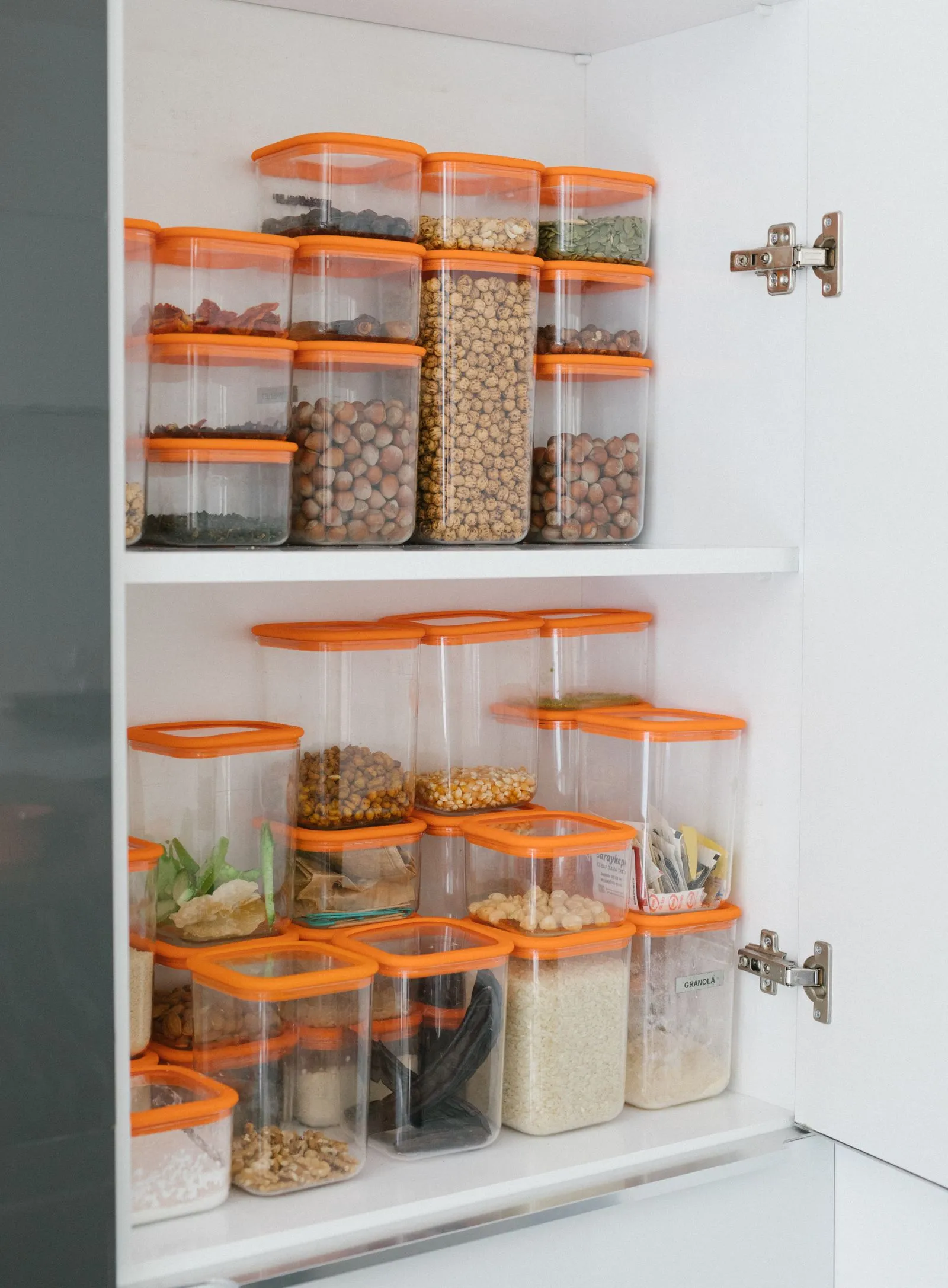
A single bin holding everything from granola bars to fruit pouches to crackers turns into the same dig-and-search problem, just at a smaller scale. Split the shelf into three shallow bins or baskets instead, roughly 9 by 6 inches each, sized to sit side by side on a standard 12-inch-deep shelf.
Grab-and-go bin: individually wrapped items that need no bowl or spoon — granola bars, fruit pouches, pretzel bags, string cheese if it is shelf-stable that day.
Bowl-and-pour bin: cereal, crackers, or trail mix that a kid old enough to use a bowl can portion themselves.
Fruit and veggie bin: shelf-stable produce like apples, clementines, or a bag of baby carrots moved down from the crisper drawer for the day.
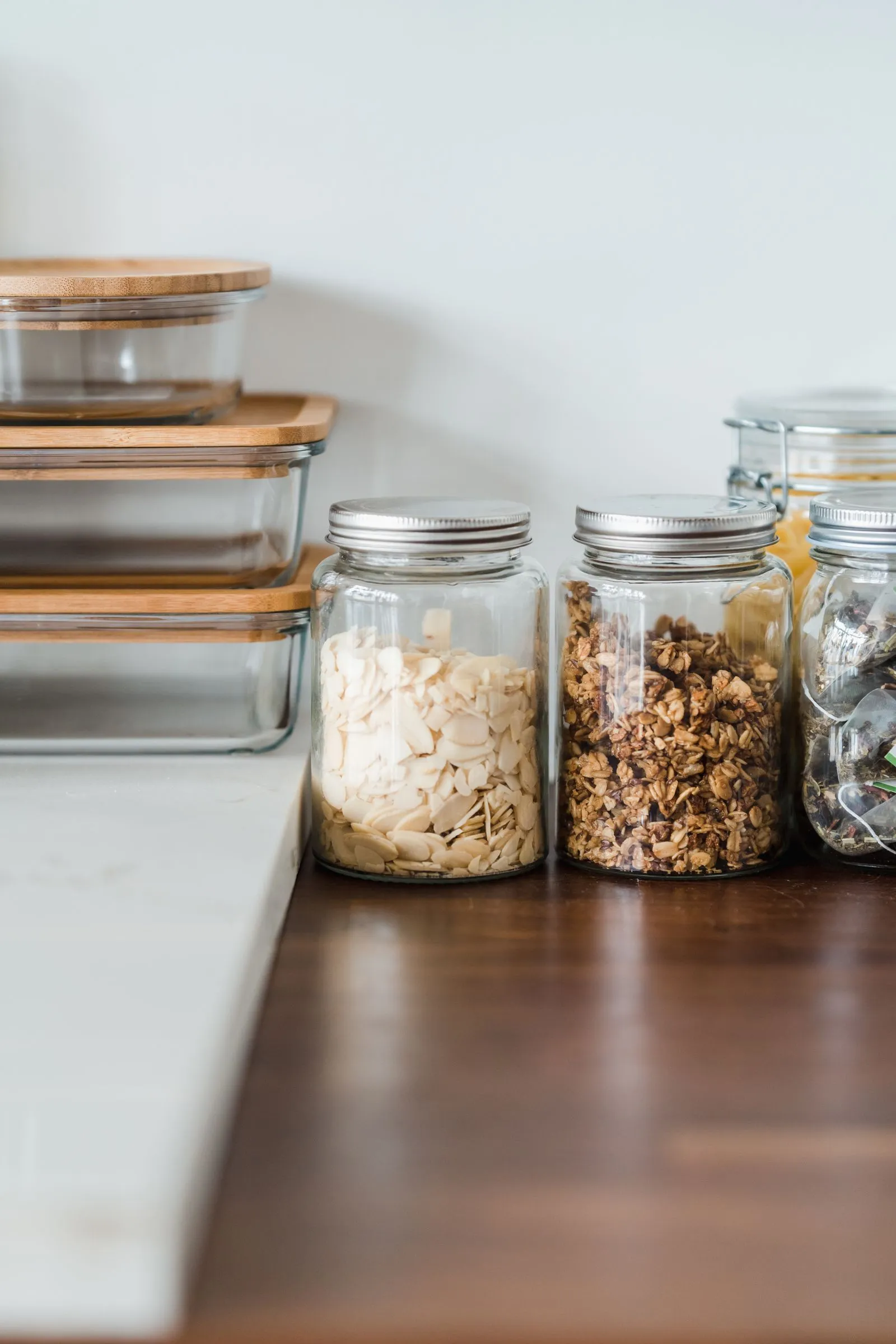
Clear bins beat solid ones here, since a kid can see what is in each one without opening it. That single detail cuts down on the “open every container to check” habit that makes a mess out of a five-minute snack break.
Label at kid height, in words they can read
Labels are what make the shelf usable without an adult narrating it every time. Put the label on the front of the bin at the child’s eye level, not the top, where a bin lid hides it the moment something is stacked on it.
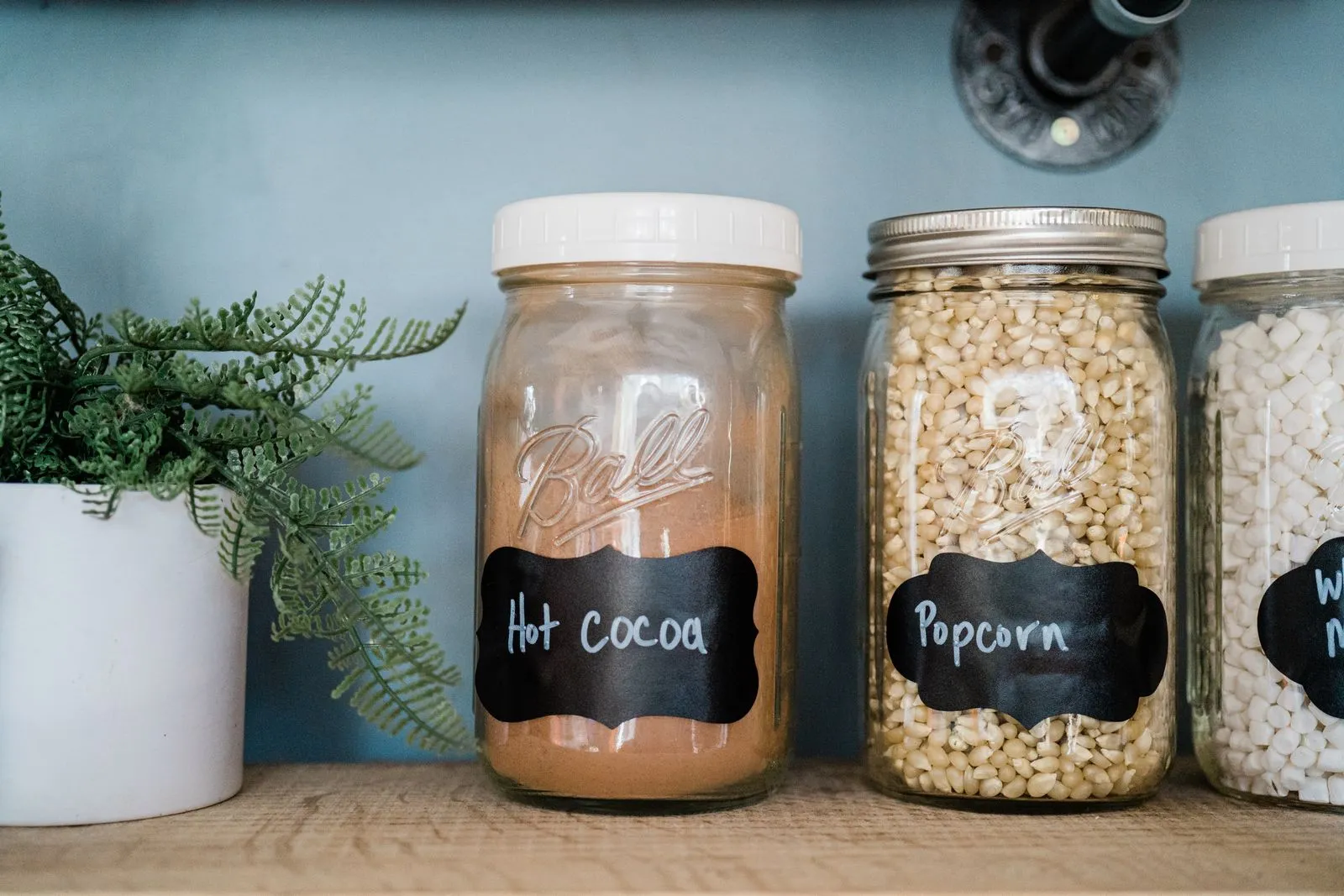
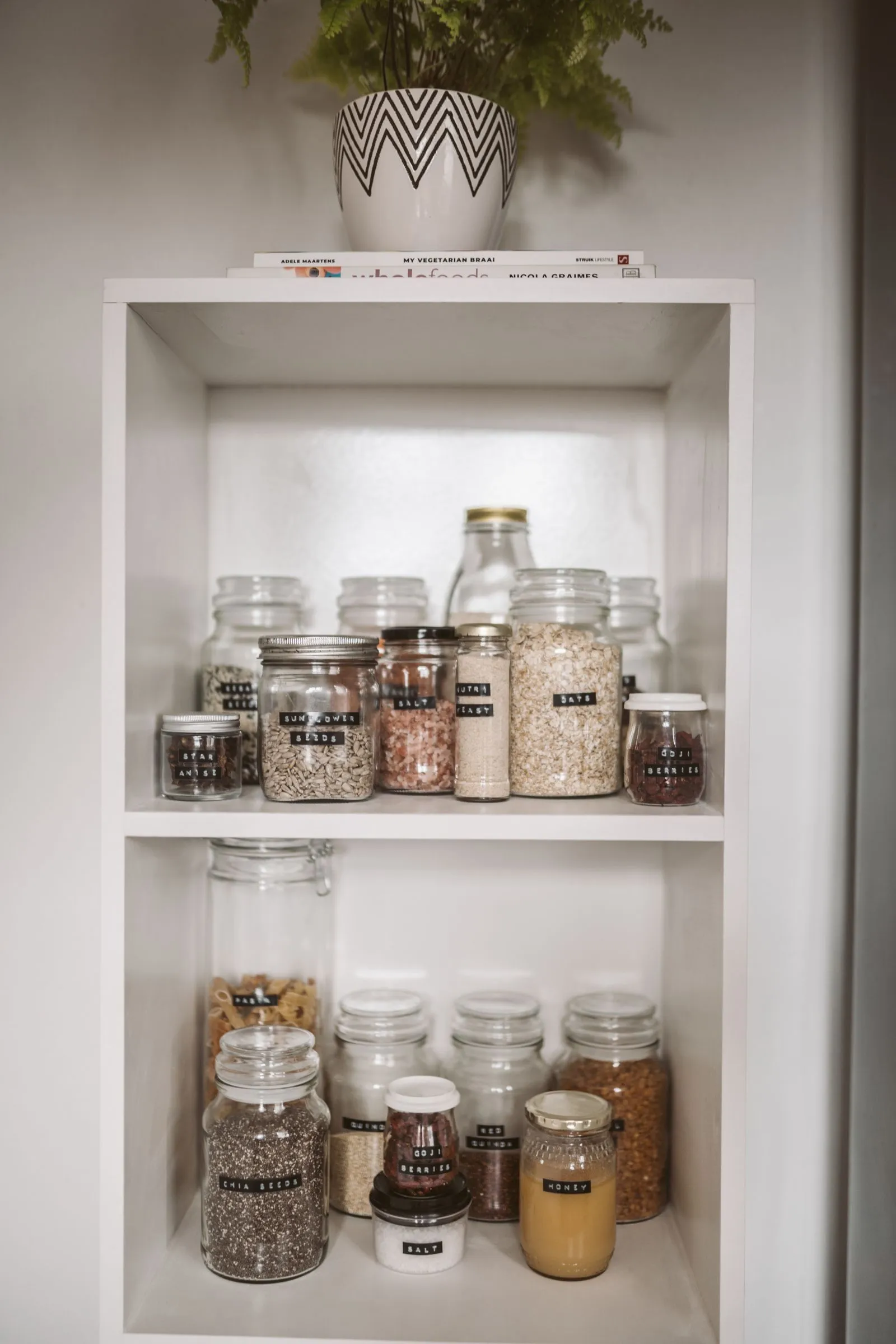
For kids who read, plain word labels work: “Granola Bars,” “Fruit Snacks,” “Crackers.” For kids who are still learning to read or are under about 4, pair the word with a simple picture or a printed photo of the actual snack. A label maker or painter’s tape and a marker both work fine — the labeling system does not need to be fancy, it needs to be legible from three feet away by someone four feet tall.
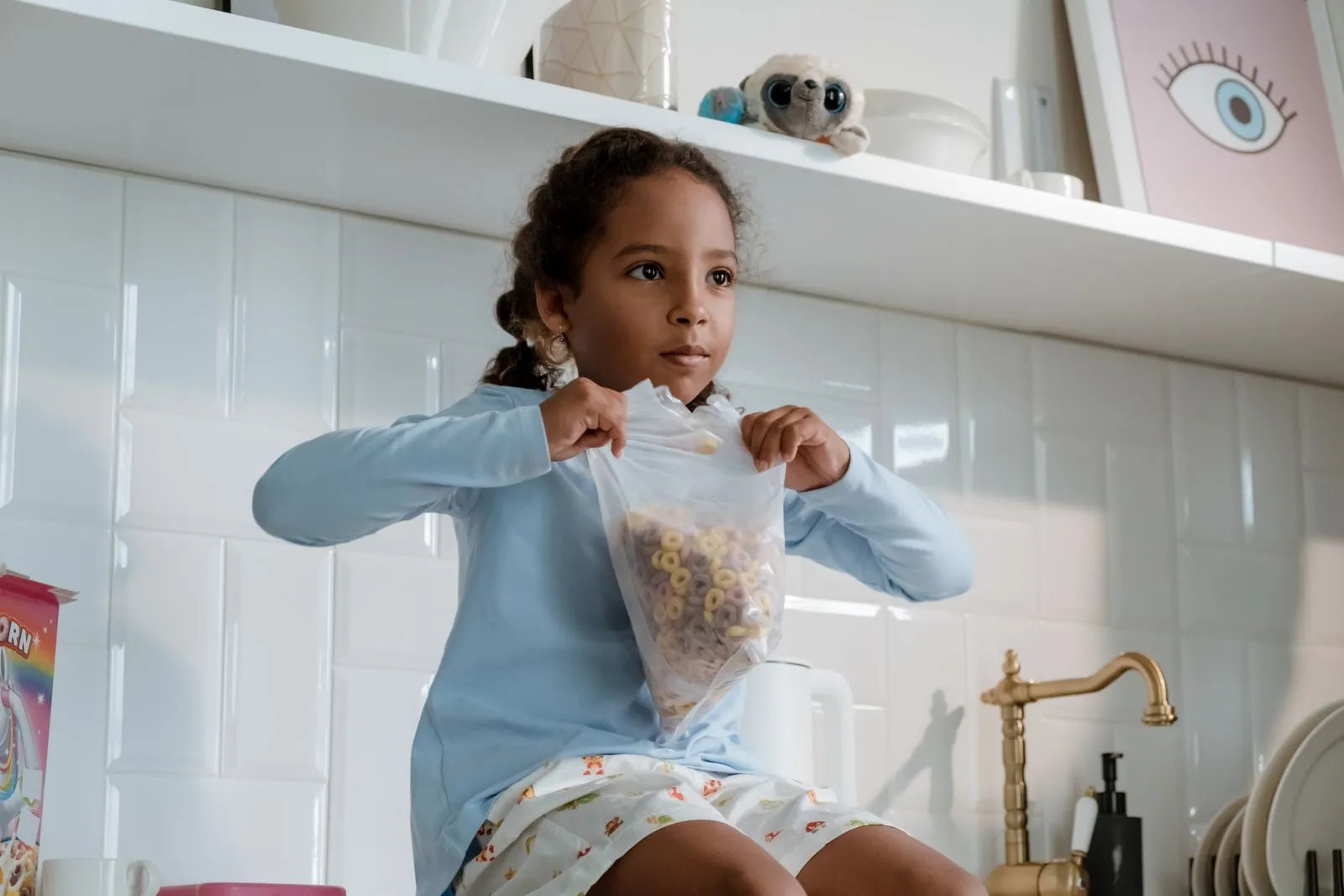
Relabel whenever the contents genuinely change category, but resist relabeling every time the specific brand changes. A bin labeled “Crackers” does not need a new label because the box switched from one cracker to another. The category is what the label is protecting, not the exact product.
Set the one house rule and post it right there
A shelf without a rule turns into an all-you-can-eat buffet by 10 a.m. Pick one simple rule that fits your house and write it on an index card taped to the shelf edge: two items per snack break, ask before a third, or snacks stay in the kitchen and do not travel to the couch. Whatever the rule is, keep it to one sentence a five-year-old can repeat back to you.
Posting the rule at the shelf does something a verbal reminder never quite manages: it moves the enforcement off the parent and onto the shelf itself. A kid arguing about a second granola bar can be pointed at the card instead of getting into a debate, which saves a surprising number of end-of-day negotiations.
Restock from the same spot every time
The shelf only keeps working if it gets refilled from a predictable source. Keep a backstock of granola bars, pouches, and crackers in one bin or shelf directly above the kid shelf, out of small reach but one step away for whoever does the grocery unpacking. When the grab-and-go bin runs low, that is the only place a refill should come from.
This is also where you can rotate in fresh produce that needs eating soon, or swap a fading snack for a new one without redoing the whole system. The backstock shelf is the parent’s job. The kid shelf stays exactly as it is.
The weekly reset that keeps kids out of the rest of the pantry
A snack shelf earns trust over time, and trust is what actually keeps kids from wandering into the shelves above it. Once a week, usually while doing the grocery restock, take two minutes to reset: wipe crumbs out of each bin, toss any wrapper that missed the trash, check expiration dates on anything with a date more than a few weeks out, and confirm each bin still matches its label.
Do that reset consistently and the shelf stops being a project and starts being furniture — a spot everyone in the house, including the shortest members, already knows how to use without asking. The next time 3:45 p.m. rolls around, the only sound from the pantry is one bin opening and closing, not a full-shelf search that ends with crackers on the floor.
If deep or hard-to-reach shelves are part of what makes the rest of your pantry feel chaotic, our guide to small pantry organization covers the canister-and-label system that pairs well with a dedicated kid shelf, and the pantry door organizer ideas are worth a look if you want a second, even lower-effort spot for packaged snacks.