Sliding Drawer and Pull-Out Bin Ideas for Under-Sink Storage
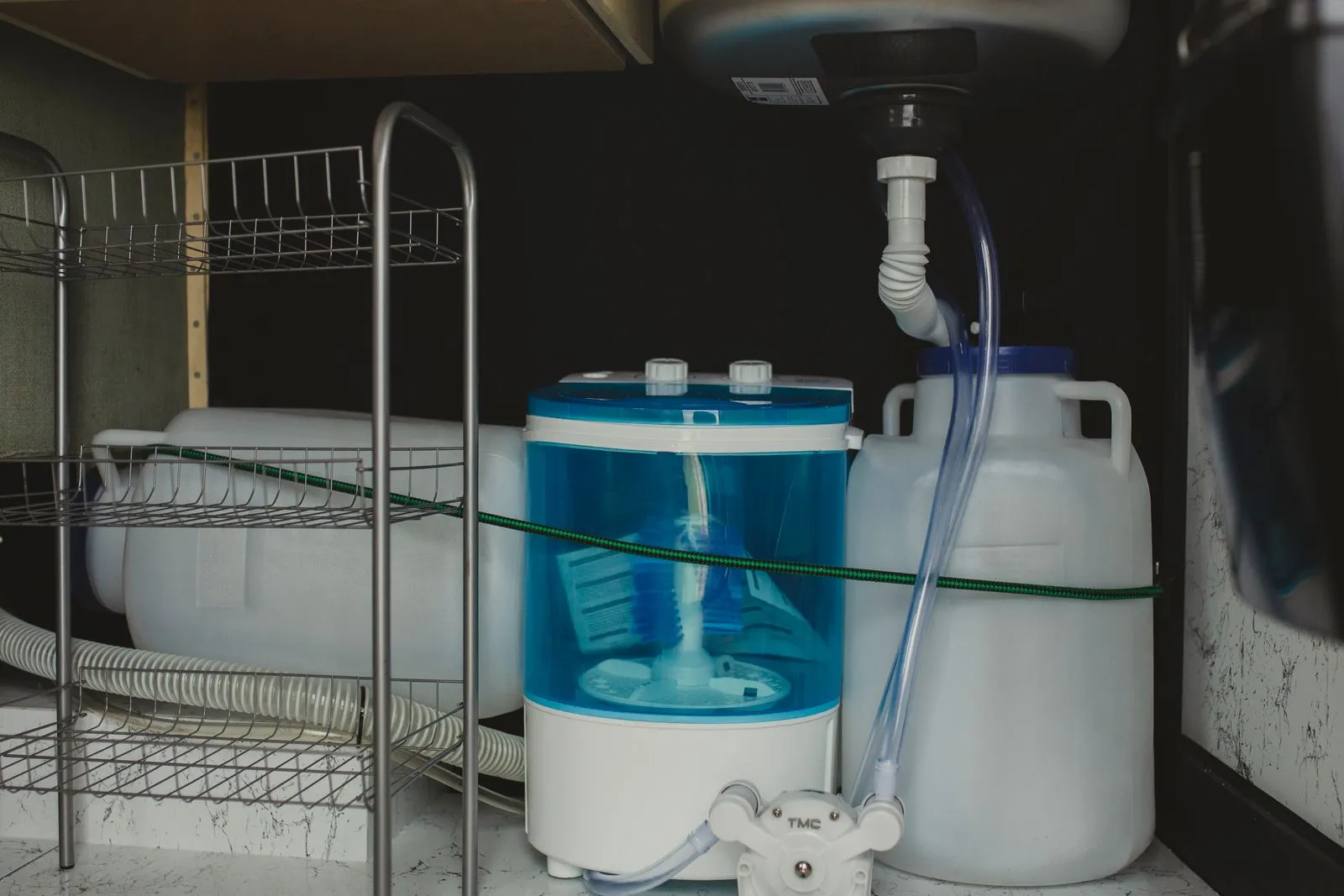
Getting the dish soap refill means kneeling on the floor, sticking your head into a dark cabinet, and patting around behind the P-trap for a bottle you can feel but not see. By the time you find it, your shoulder is jammed against the door frame and there is a damp patch on your knee from the cabinet floor. Whatever is at the very back never gets used until it is expired, because reaching it costs more than it is worth.
The problem is not clutter. It is geometry. A fixed bin sitting flat on the cabinet floor only gives up what is in the front row. Everything behind that first layer is functionally gone until you empty the whole cabinet to find it. A sliding drawer or a pull-out bin fixes that by moving, not by holding more. The entire depth of the cabinet comes to you in one motion, so nothing gets to hide in the back again.
Why a mechanism beats another bin
Most under-sink fixes are still just containers: a caddy, a stackable tray, a turntable. Those help with sorting, but they do not solve the reach problem, because you still have to lean into the cabinet to get to whatever sits behind the drain pipe. A sliding system solves a different problem than a bin does. It is not about holding items neatly. It is about moving the back of the cabinet to the front of the cabinet.
That distinction matters when you are deciding what to buy. If your cabinet is shallow, under about 16 inches deep, a stationary bin is probably enough, since nothing back there is more than an arm’s length away. Past 18 to 20 inches of depth, which is standard for most kitchen and bathroom sink bases, a mechanism that physically travels is what actually changes the daily experience. Measure your depth from the front edge of the cabinet opening to the back wall before you spend money either way.
Measure the track path, not just the cabinet
A sliding drawer needs a straight run to travel on, and the drain pipe is exactly what tends to sit in that path. Before choosing anything, take three measurements.
Clear width on each side of the drain. Most sink bases put the P-trap off-center, so one side typically has 9 to 12 inches of clear width and the other has less. A track-mounted drawer needs to run the full length of that clear zone without the pipe catching the frame.
Clear height to the lowest obstruction. The bottom of the P-trap or the disposal housing sets your ceiling, often just 10 to 14 inches. A drawer taller than that will not clear the pipe when you pull it forward.
Door opening width. The cabinet interior is usually wider than the door frame that everything has to pass through. A track kit that fits the inside perfectly can still fail to fit through the opening during install. Measure the opening itself, not the box the kit came in.
Match the mechanism to what you are storing
Not every pull-out system is the same, and the wrong one for your load turns into a wobbly mess within a month.
Wire pull-out baskets work best for bottles and boxed items, since the open sides let you see what is loaded without pulling all the way out. Look for a stated weight rating, typically 15 to 25 pounds per tier, and stay well under it if you are storing anything glass.
Solid-bottom sliding bins suit anything that could leak or tip, like refill jugs or loose sponges, since a wire basket lets small items or drips fall straight through.
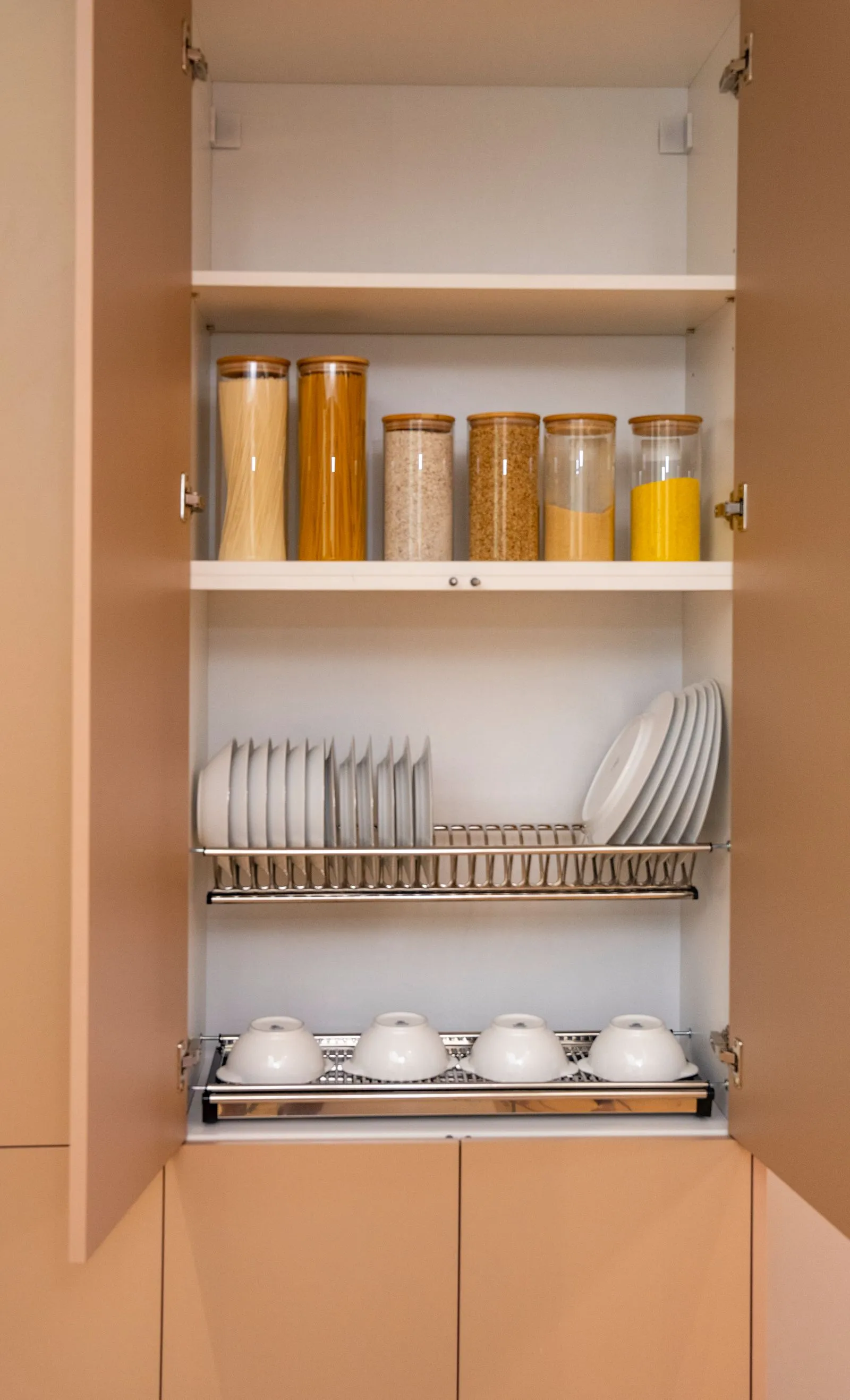
Full-extension drawer glides, the kind shown above, pull the entire tray clear of the cabinet frame instead of stopping halfway. That last few inches of travel is what actually exposes the back corner, so check the product description specifically for “full extension” rather than “3/4 extension,” which stops short and leaves a gap you still have to reach into.
Install without committing to holes
Renters and owners have different tolerance for permanent changes, and sliding systems range across that whole spectrum.
A no-mount option is a wire cart or basket unit that simply sits on the cabinet floor as its own free-standing frame, with the drawers sliding on built-in rails. Nothing attaches to the cabinet itself, so it moves out with you. This is the safest starting point if you rent, and it is also the easiest to remove for a deep clean.
A step up is a track kit that screws into the cabinet’s side walls, which holds more weight and glides more smoothly but leaves screw holes behind. If you own the space, this is worth it for anything you load heavily, since a free-standing frame can tip forward under uneven weight in a way a wall-mounted track will not.
Either way, check the mounting hardware against your cabinet material. Particleboard sides strip out screws faster than solid wood, so use the shortest screw that still holds and avoid over-tightening.
Load by pull distance, not by category
Once the mechanism is in, loading it wrong undoes the benefit. The instinct is to sort by type, all sprays together and all backup bottles together, but that ignores what the drawer is actually solving.
Load the front six inches of travel with what you reach for daily: dish soap, the sponge, the one all-purpose spray in rotation. Load the back half with anything you touch monthly or less: backup bottles, seasonal cleaners, spare sponges. The point of a sliding system is that the back half is no longer a penalty box, but there is still no reason to make yourself pull the whole drawer out for something you need every day.
Keep loose, easily knocked-over items corralled instead of loose on the tray. A single spray bottle and a small bin or crate near the shelf edge, close to where the pipe runs through the cabinet, keeps that one item from rolling to the back of the drawer every time it closes.

If your cabinet has more usable depth than width, pair the sliding drawer with the corner and door-back ideas in our guide to under-sink kitchen cabinet organization, which covers the zones a drawer alone will not reach. And if the daily lineup above still needs a home once it is off the drawer, the grab-and-go caddy system in our cleaning supply organization guide is built to sit right on top of it.
The monthly pull-test that keeps it sliding
A track only stays smooth if it gets used the way it was built to. Once a month, pull every drawer out to its full extension, not just partway. This does two things: it forces a look at whatever has drifted to the back, so anything expired or duplicated gets caught early, and it keeps the glide mechanism from binding, since tracks that only get opened three inches at a time accumulate grime at the edges and eventually stick.
While it is fully open, wipe the tray and check that nothing has shifted to block the rail path. A bottle that has tipped sideways against the track is the single most common reason a smooth-sliding drawer starts sticking six months in.
Do that once a month and the system keeps its one real advantage: everything in that cabinet, front row and back corner alike, is exactly one motion away. No more kneeling on the floor, no more patting around blind behind the pipe. The back of the cabinet finally stops being a place where things go to disappear.