Entryway Bench Ideas With Hidden Storage for Small Spaces
The door swings open twelve inches and stops against a pair of sneakers. Behind them is a boot, a dog leash, and a tote bag nobody remembers dropping there. There is no room for a real piece of furniture in an entry this narrow, so everything just lands on the floor instead, and the door has to fight through it every single time someone comes in.
A bench sounds like the wrong answer to a space problem — one more thing to fit into a spot that already has nothing to spare. But the right bench does not add clutter, it absorbs it. A seat on top, a shoe home at floor level, and a hidden compartment in between means one piece of furniture replaces the pile that was sprawling across the floor. The trick is picking the right size and the right storage style for the specific inches you have, not just the first bench that looks nice in a photo.
Measure the door swing before you measure the bench
Start with the door, not the furniture. Open it all the way and measure how far the leading edge travels into the entry — that arc is the one zone that has to stay completely empty. Mark that distance on the floor with painter’s tape and treat it as a hard boundary.
Most entry benches run 36 to 48 inches long and 14 to 16 inches deep. In a hallway under about 40 inches wide, a bench deeper than 16 inches will eat into walking space even when the door is closed, so measure the full width of the hall too, not just the door swing. If the tape line and the bench footprint overlap at all, go narrower or move the bench to the wall opposite the hinge side, where the door swings away from it instead of toward it.
Choose the storage style that matches how you use it
Hidden storage inside a bench comes in three basic styles, and each one trades off speed against capacity.
Lift-up seat: the entire cushioned top hinges open on a single hinge or two, revealing one large bin underneath. This holds the most volume — a full changeover of seasonal boots, or a stash of pet gear — but everything inside becomes one undivided pile, and something has to come off the top before it opens.
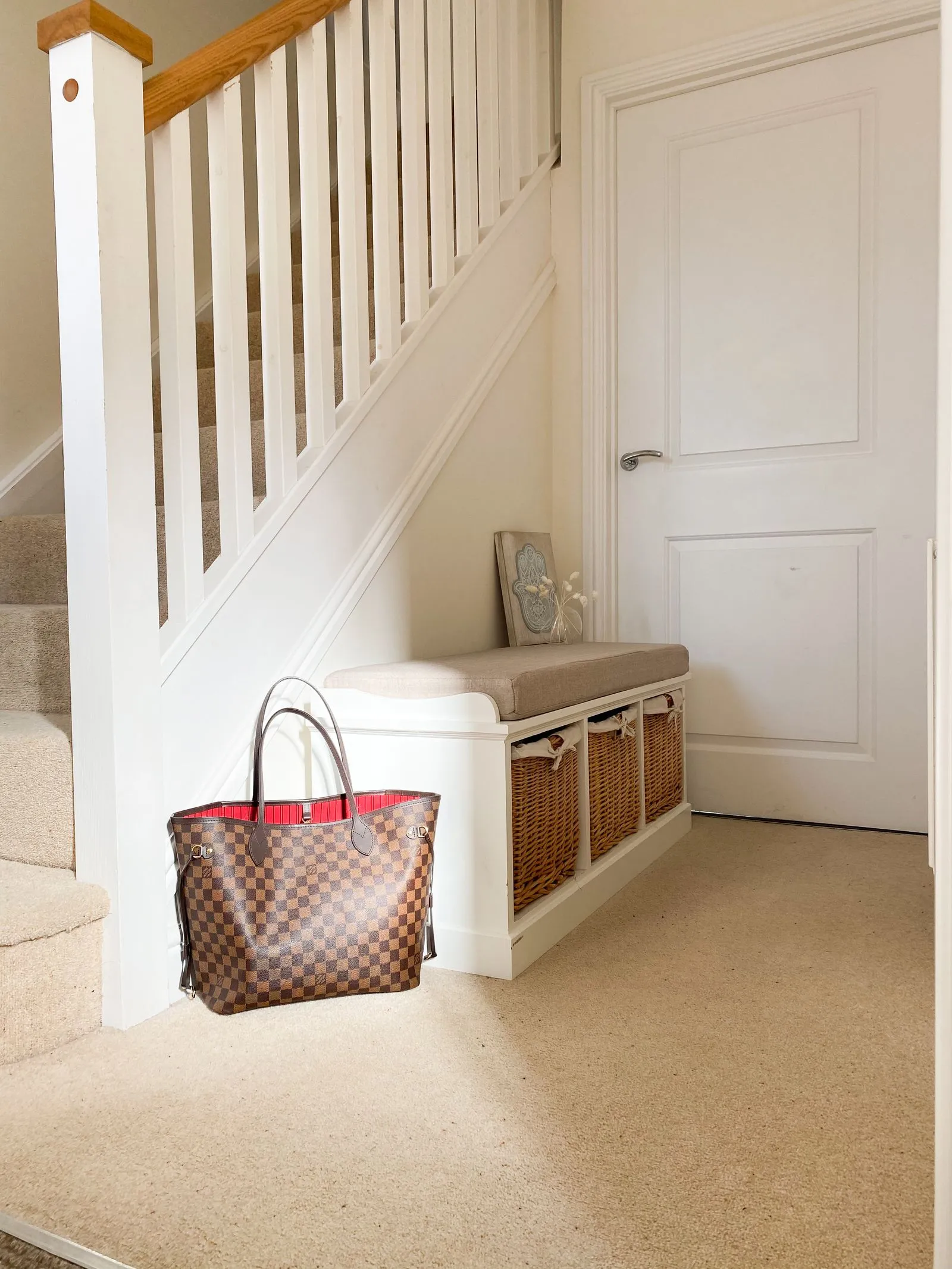
Cubbies with baskets: three or four open compartments, each fitted with a fabric or wicker basket that pulls straight out. Slower to add capacity since each basket has a size limit, but items are separated by person or category, and grabbing what you need takes one motion, no lifting required.
Drawers: a bench built like a low dresser, with one or two drawers under the seat. These close out sight and dust more completely than open baskets, but a shallow drawer under a bench seat is usually only 5 to 6 inches deep, which rules out anything taller than a folded scarf or a stack of mail.
For a five-minute entry — the one used constantly by people rushing in and out — cubbies with baskets win almost every time. The lift-up style suits an entry used more for occasional storage than daily grabbing, like a vacation-home entry or a bench that mostly holds off-season gear.
If you want concrete examples to size against, HOMCOM’s flip-drawer shoe storage bench runs 31.5 inches wide but only 10.2 inches deep — shallow enough to survive the door-swing math above — while a simple three-tier bamboo bench with a cushion covers the open-shelf approach at a lower price. Either way, check whatever you buy against your measured clearances before ordering.
Give shoes a floor-level zone of their own
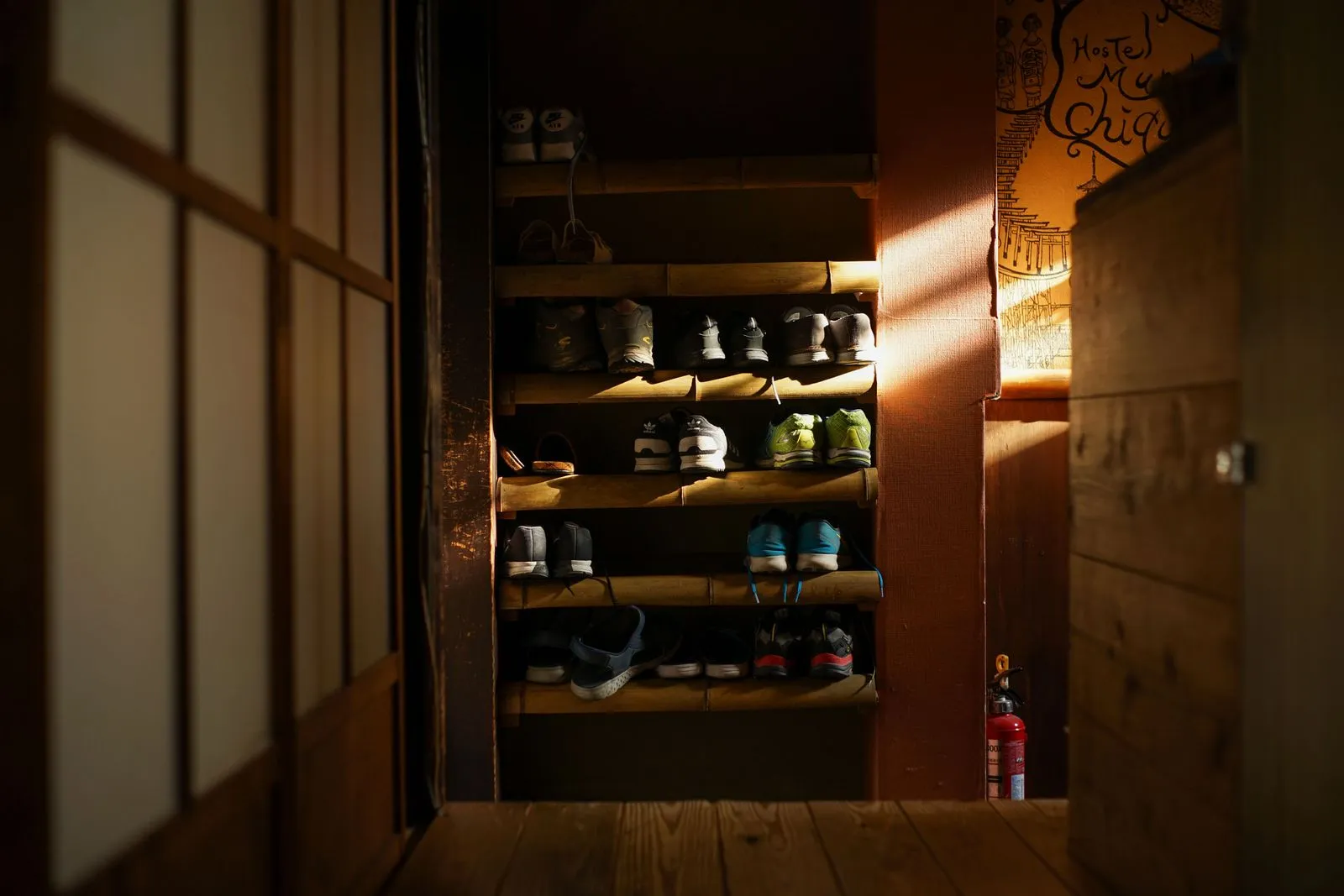
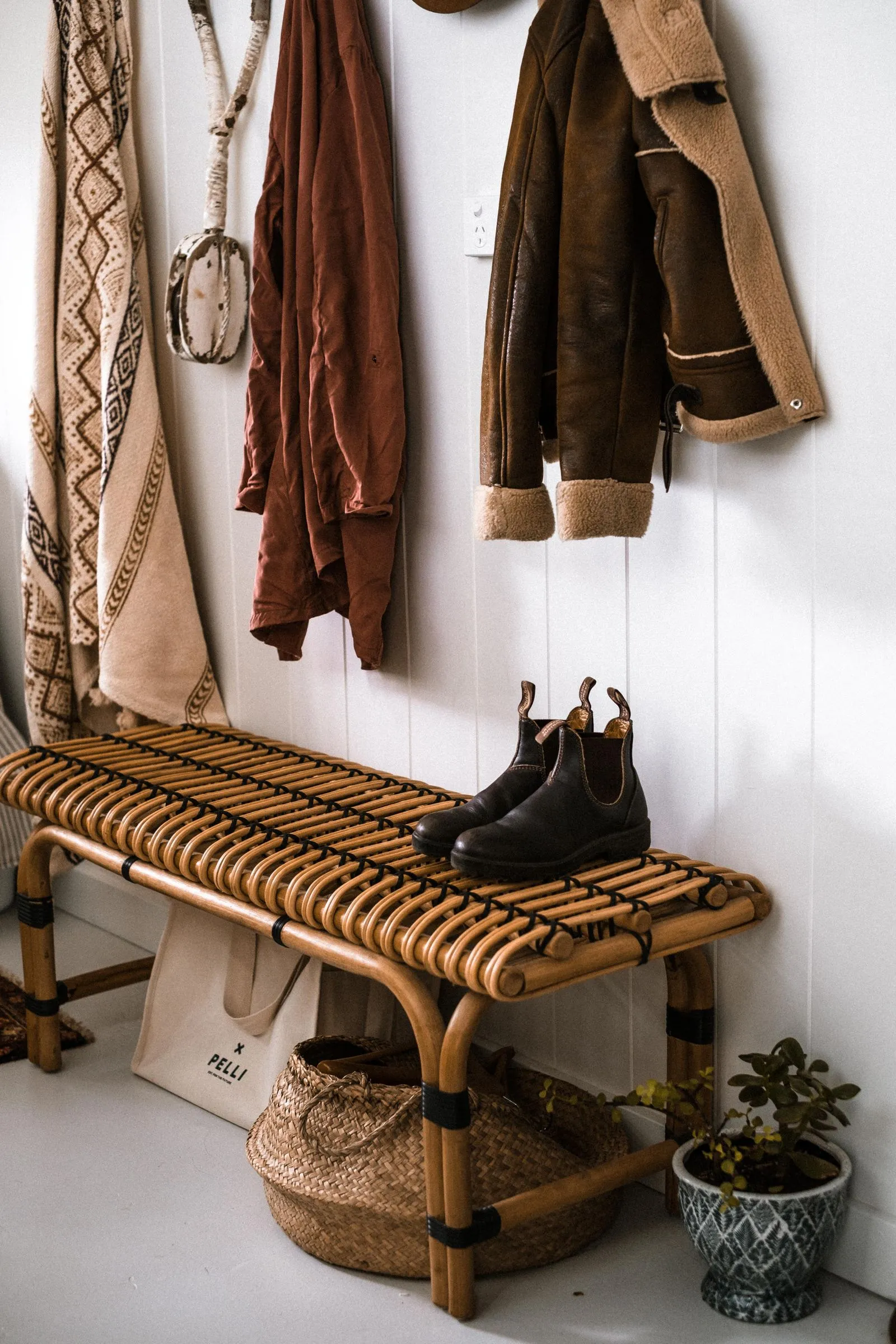
Shoes are the single biggest source of entryway floor clutter, so they deserve a dedicated spot inside the bench rather than a shared pile with everything else. An open shelf at the base of the bench, 8 to 10 inches tall, fits most sneakers and flats standing up, and low boots on their side.
If the household runs three or four pairs deep at any given time, a shoe-specific basket on that lower shelf keeps them corralled instead of sliding out toward the door. For a household with more than four regular pairs in rotation, the bench alone will not solve it — pair it with an over-the-door rack or a slim shoe cabinet nearby, the way we cover in our entryway shoe storage guide, and let the bench handle the day’s most-used pairs only.
Keep the bench top for what needs a hand, not a home
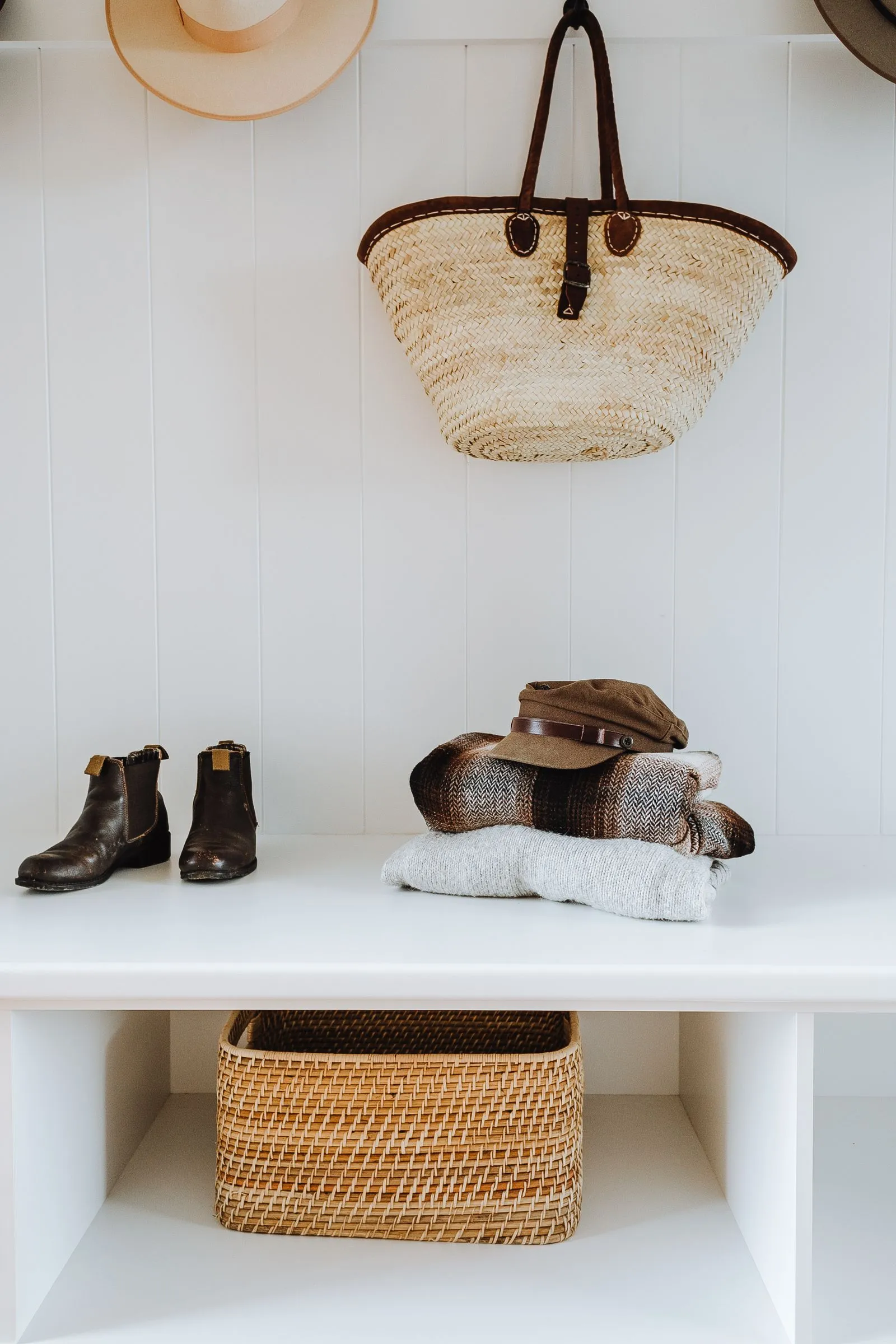
The seat and any surface space on top of the bench should stay reserved for things currently in motion — the bag someone is about to grab, the shoes about to go on, mail on its way to be opened. The moment the top becomes a permanent parking spot for things with no other home, it stops being a seat and turns into the same pile the bench was supposed to replace.
Mail, keys, and anything that gets misplaced daily belong in a dedicated slot next to the bench, not loose on the cushion. A small tray or a mounted rack solves that half of the entry separately — see our entryway mail and key station setup for a system that pairs cleanly with a storage bench underneath it.
Handle bulky gear without overflowing the bench
Umbrellas, sports bags, and winter accessories are usually too tall or too awkward to fit in a shallow bench compartment, and forcing them in anyway is what causes baskets to get overstuffed and drawers to stop closing. Give bulky items their own narrow footprint instead — a slim umbrella stand or a single wall hook next to the bench — so the hidden storage inside stays reserved for items that actually fit it: folded scarves, gloves, leashes, and the day’s shoes.
A bench with storage that also has to double as the umbrella stand ends up doing neither job well. Splitting the two keeps both systems working at capacity instead of one collapsing into the other.
Fit the bench to the rest of a tight entry
In an entry too small for a bench at all, the same hidden-storage logic scales down. A slim console with one drawer, a wall-mounted drop-down shelf, or a single tall cabinet can absorb the same shoes-mail-bags trio in a footprint under 12 inches deep, without ever needing a seat.
The one-minute reset that keeps the door clear
A bench with storage only works if the storage gets used every day, not just on move-in weekend. Build a one-minute habit at the door: shoes go into the lower basket or shelf, not left on the floor in front of it. Anything carried in — mail, a bag, a jacket — gets set inside its zone, not balanced on the seat. Once a week, open the hidden compartment and pull out anything that migrated there by accident, like a toy or a stray charger cord, so the space stays reserved for what it was built to hold.
That habit is what keeps the original problem from creeping back. The door swings all the way open, the shoes have a home instead of a pile, and the one piece of furniture that used to feel impossible to fit is now the reason the entry finally works.